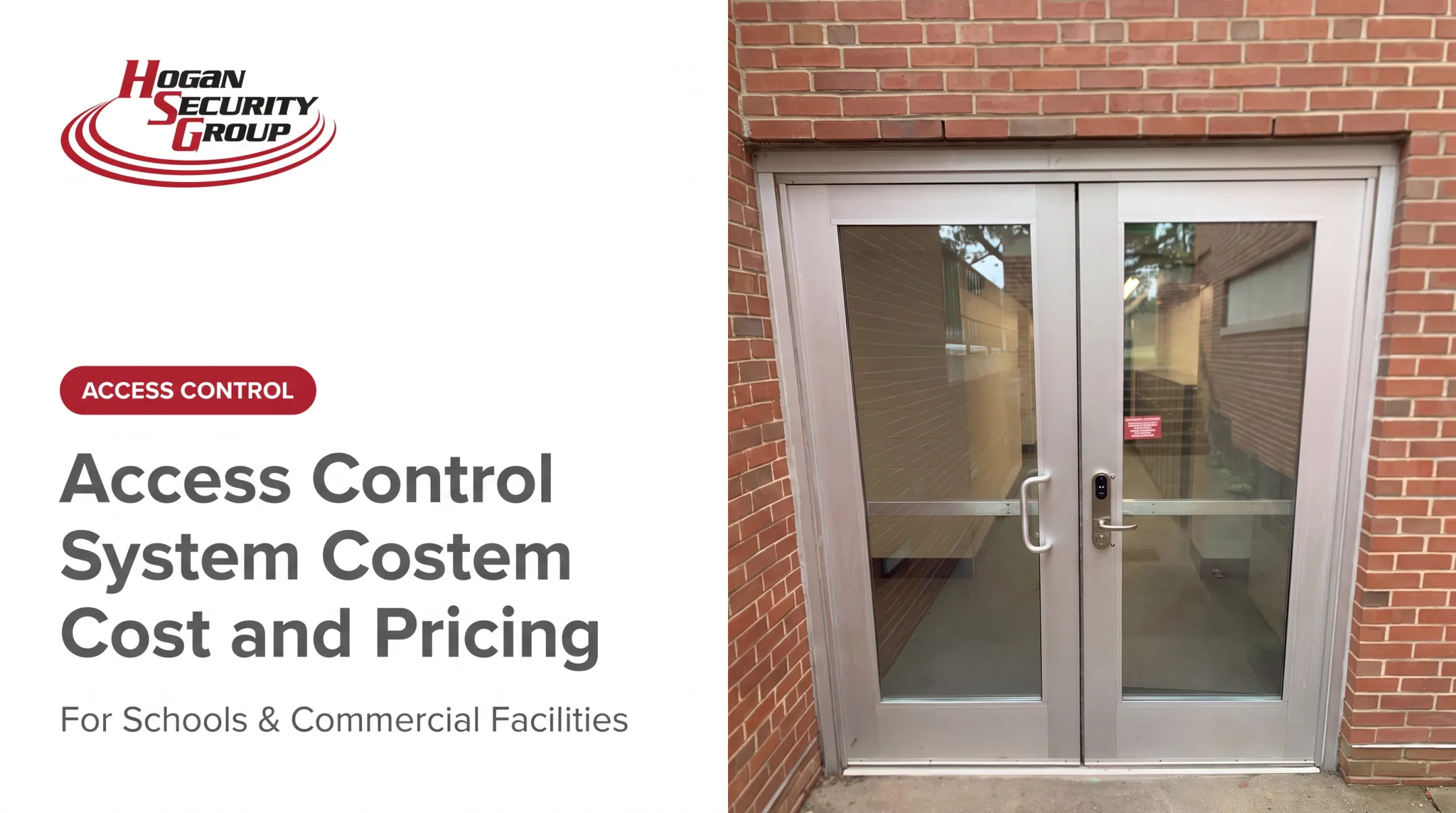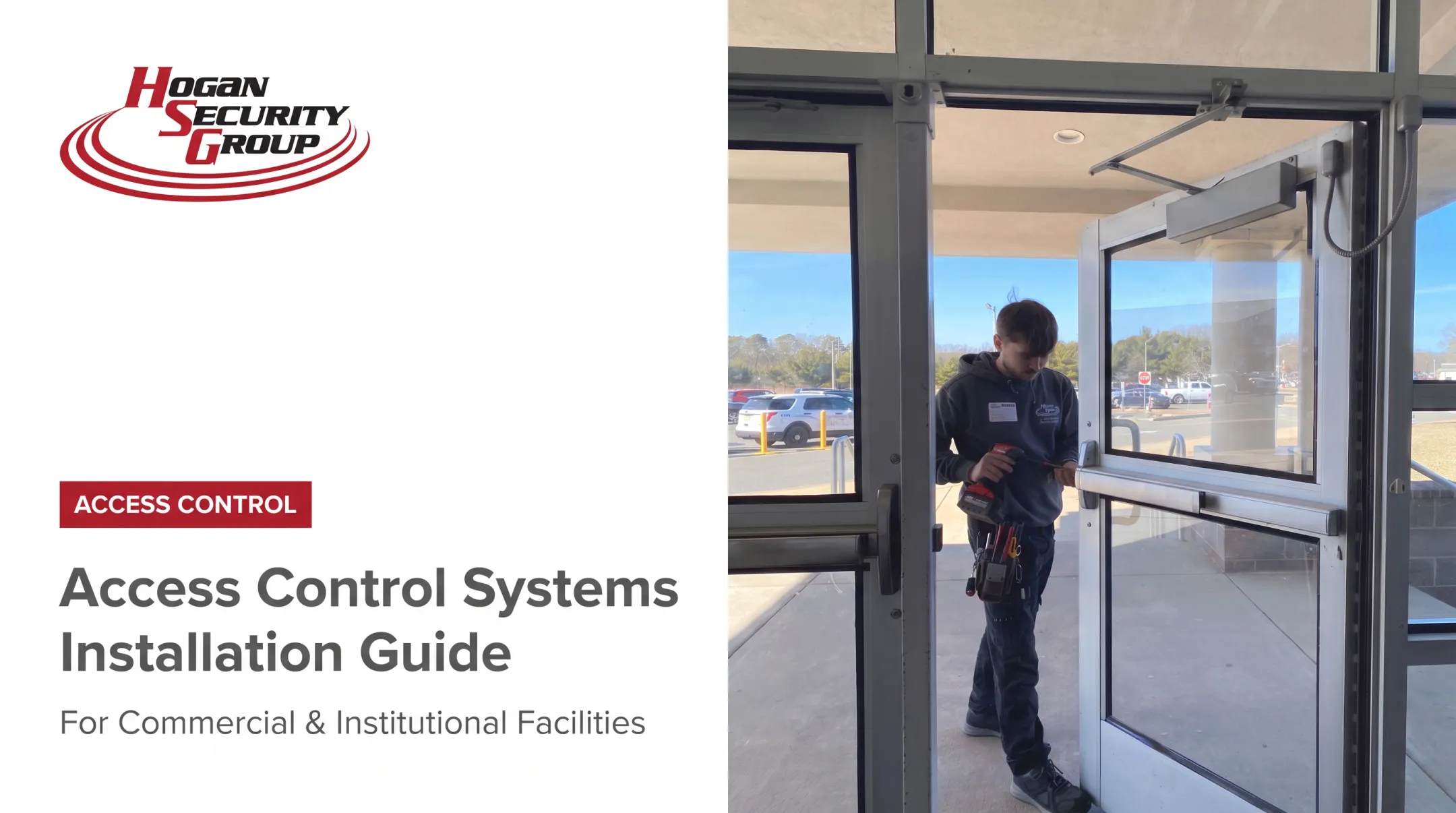

The final number depends on credential type, door hardware, wiring conditions, software licensing, compliance requirements, and the level of ongoing support you need. Many facility managers get burned by generic "per door" estimates that don't match their actual scope.
This guide breaks down current US pricing data, the biggest cost drivers, lifecycle expenses most people forget, and how to budget realistically whether you're securing one entrance or a 40-building school district.
Key Takeaways
- Standalone electronic keypad locks start around $1,000-$2,000 per unit before installation
- Credentials add up fast: proximity cards, fobs, and smart tags are typically sold in packs, not single units
- Cloud-managed systems shift cost from upfront hardware to recurring monthly or annual subscriptions
- The cheapest quote often excludes wiring, commissioning, software licensing, or credential replacement
- A door-by-door site survey beats any generic per-door estimate you'll find online
How Much Does Access Control Cost?
Here's the problem with searching "access control cost": you'll find wildly different numbers because every source describes a different scope. Some quote reader-only prices. Others bundle in locks, controllers, and labor. Few specify whether pricing is per door, per user, or per project.
Misreading a quote creates real problems:
- Underbudgeting when a "per door" figure excludes wiring or electrified hardware
- Choosing unsuitable hardware that doesn't meet fire-rated or egress requirements
- Missing recurring fees for software, cloud hosting, or credential replacement that surface after installation
Typical Pricing Ranges
Published manufacturer list prices give a reliable starting point, even though they don't represent full installed costs. Alarm Lock's 2025 price book lists its DL2700/26D standalone keypad lock at $1,043.29, a BHMA Grade 1 commercial unit with local programming rather than a complete installed door.
The same price book's PDK3000/10B, which adds a built-in HID proximity reader, lists at $1,937.30.
Those figures cover hardware only. A complete installed opening also needs:
- Electronic locking hardware or strike
- Controller board and power supply
- Wiring, conduit, and mounting
- Configuration, testing, and commissioning labor
Current manufacturer and industry data don't establish a consistently scoped installed price per door. A site-specific quote matters more than a number pulled from a search result.
Pricing by System Type
Different credential technologies carry different cost profiles, not just different security levels.
| System type | Typical use case | Cost consideration |
|---|---|---|
| Keypad | Low-traffic single doors | Lowest hardware cost; shared PINs limit auditability |
| Proximity card/fob | Standard commercial buildings | Credential packs add recurring replacement cost |
| Encrypted smart credential | Higher-security commercial sites | Stronger authentication; higher per-credential cost |
| Mobile credential | Multi-tenant, flexible workforces | Reduces physical card costs; may carry per-user fees |
| Biometric | High-security or regulated facilities | Enrollment process adds setup time |
| Hybrid (keypad + reader) | Mixed-use entrances | Higher upfront unit cost, more flexibility |
A door rarely needs just a reader. Request-to-exit devices, door position sensors, and exit hardware all factor into the final price, and these accessories are frequently left out of ballpark estimates entirely.
Key Factors That Affect Access Control Pricing
Pricing reflects five combined variables: technical requirements, building conditions, operational needs, compliance obligations, and the level of professional service your project requires.
Number of Doors, Users, and Locations
Every controlled opening needs its own reader, locking interface, wiring, and programming. More doors mean more hardware, but shared infrastructure, like a single controller serving multiple readers, can lower the average cost per opening on larger projects.
User volume matters too. High staff turnover, frequent visitors, or multiple buildings increase:
- Credential issuance and deactivation workload
- Software licensing (some providers charge per user)
- Training and administrative time
Credential and Authentication Technology
Physical keys, PINs, cards, fobs, mobile credentials, and biometrics each carry distinct cost patterns. According to Genea's cost analysis, credential pricing and software features vary significantly by provider, and some charge per-user licensing fees while others don't.
Published credential examples from Alarm Lock's 2025 list include proximity cards at $474.37 per 100-pack and proximity fobs at $48.90 per 10-pack. Those are purchase prices only. Lost cards, departing employees, and temporary visitor credentials all create ongoing administrative costs that rarely show up in an initial quote.

Door, Lock, and Building Conditions
The existing door and frame often drive labor cost more than the access control hardware itself. Factors that increase cost include:
- Fire-rated doors requiring compatible hardware
- Worn frames or lock preparations needing retrofit work
- Limited power availability requiring new wiring or conduit
- Outdoor exposure requiring weatherproof components
- Work scheduled around occupied building hours
Industry reporting from SDM Magazine's 2025 coverage notes that reusing supported existing hardware, migrating user data, and reflashing boards can reduce scope compared to full rip-and-replace projects. Savings depend entirely on what's already installed.
Software, Integrations, and Deployment Model
Cloud-managed systems shift cost from upfront servers to monthly or annual subscriptions. On-premises systems require you to own and maintain the hosting infrastructure but avoid recurring SaaS fees. Neither model is automatically cheaper over time; it depends on your IT resources and how long you'll run the system.
Integrations add cost on top of either model:
- Visitor management platforms
- Intercoms and elevator control
- Lockdown systems
- Identity-management software
- Custom API connections
Compliance, Security, and Service Requirements
Schools, healthcare facilities, hospitals, and government buildings face documentation and life-safety requirements that standard commercial sites don't.
The 2024 International Building Code requires that doors serving assembly or educational spaces with 50 or more occupants use panic or fire exit hardware rather than standard latches, per the 2024 IBC egress chapter. Access control can never override these egress requirements; it has to work around them.
ADA accessibility standards also apply: operable hardware must sit 34-48 inches above the floor and require no more than 5 pounds of opening force on interior doors. These aren't optional upgrades; they're baseline requirements that shape hardware selection from the start.
Cost Breakdown of an Access Control System
A realistic budget separates one-time costs from recurring ones. Lumping everything into a single "per door" number is how facilities end up surprised by year-two invoices.
Initial Hardware and Devices
Your upfront hardware list typically includes readers, controllers, electronic locks, power supplies, request-to-exit devices, door position sensors, and exit hardware. Published 2025 list prices illustrate the range:
- Standalone keypad lock: ~$1,043
- Controller board with enclosure: ~$1,048
- Electromagnetic lock: ~$1,110
- Electric strike: ~$1,147
- Power supply with battery backup: ~$765

Before accepting a quote, confirm whether it includes compatible door hardware, manufacturer warranties, shipping, taxes, and removal of any obsolete equipment.
Installation, Configuration, and Commissioning
Labor costs depend heavily on what's already in place. Typical scope includes:
- Site survey and cabling
- Mounting and electrical work
- Software setup and credential enrollment
- Testing and administrator training
Installing ten doors at once in an empty building costs far less per door than retrofitting those same openings one at a time in an occupied facility that needs after-hours access.
Recurring and Lifecycle Costs
This is the category most budgets underestimate. Expect:
- Software subscriptions or licenses
- Cloud hosting fees (monthly or annual)
- Preventive maintenance contracts
- Credential replacement
- Firmware and software updates
- Battery replacement on wireless locks
- Eventual device replacement
Over a 5-10 year system life, these recurring costs can exceed the original hardware spend, particularly on platforms with per-user licensing.
Upgrades and Future Expansion
Adding doors, users, or buildings later typically costs more per unit than including them in the original project. Shared infrastructure gets spread across fewer new openings, so the per-door price rises.
Open architecture systems may allow phased expansion without full replacement. Always verify that compatibility claim with the specific manufacturer before assuming it applies to your equipment.
Low-Cost vs High-Cost Access Control Systems — What's the Difference?
Price doesn't automatically correlate with suitability. A $1,000 keypad lock on a low-traffic storage room may be the right call. A $1,000 keypad lock on a hospital medication room probably isn't.
Performance and Security
Lower-cost standalone systems often limit audit trail capacity and remote management. Alarm Lock's DL2700, for example, supports 100 user codes locally, while its networked NETDK model supports 5,000 users with a 35,000-event log. That is a functional difference, not necessarily a durability difference, since both carry the same Grade 1 hardware certification.

Higher-cost systems generally add:
- Larger audit trail storage
- Remote administration across multiple sites
- Stronger encrypted credentials
- Deeper third-party integrations
Durability and Maintenance
Commercial-grade hardware withstands heavy door traffic better than consumer-grade equivalents, but warranty terms matter just as much as price. Manufacturer warranties on commercial electronic locks commonly run from the date of manufacture, not the installation date, a detail that catches buyers off guard when a device sits in inventory before installation.
Administrative burden also differs by credential type. Shared PINs are easy to issue but hard to audit. Mobile credentials cut physical card costs but may require app support. Biometric systems add an enrollment step that takes staff time upfront.
Long-Term Value
Spending more upfront often pays off when:
- Security risk or compliance obligations are high
- Multiple buildings need centralized administration
- Future expansion is likely within a few years
A simpler system remains appropriate when it satisfies the facility's actual security, accessibility, and egress requirements: no more, no less.
How to Estimate the Right Budget for an Access Control System
The right budget starts with your facility's actual risk and workflow, not the cheapest device on a spec sheet.
Define the Project Scope
Before requesting quotes, document:
- Number and location of doors, including door type and condition
- User count, visitor volume, and operating hours
- Preferred credential method (card, fob, mobile, biometric)
- Buildings, access zones, and required integrations
A school district managing aging buildings has very different needs than a corporate campus or a multi-tenant residential property, and the budget should reflect that difference, not a generic per-door rate.
Request a Site Survey and Itemized Proposal
A professional assessment should verify door operation, egress compliance, power availability, and compatibility with any existing systems. The resulting proposal should break down hardware, wiring, labor, programming, testing, training, warranty terms, and exclusions door by door, not as a single lump sum.
Compare Total Cost of Ownership
Ask these questions of every proposal:
- Is pricing per door, per user, per site, or per month?
- Does future expansion trigger additional licensing fees?
- What's included in year-one support versus year-two renewal?
- Who handles credential replacement and at what cost?
Plan a Phased Installation Where Appropriate
Facilities with aging infrastructure or limited capital don't need to upgrade every door at once. Prioritizing perimeter entrances and high-risk rooms first, then expanding in documented phases, keeps spending aligned with available budget.

Hogan Security Group has engineered and installed access control across more than 65,000 doors for schools, healthcare facilities, hospitals, and corporate clients. With education clients, the company often starts at the perimeter and adds interior openings as budgets allow.
That full-scope evaluation helps facility teams avoid buying devices in isolation without a plan for how they fit a complete system.
What Most People Miss When It Comes to Access Control Cost
The cheapest proposal on the table often wins the bid and loses the budget later. Commonly overlooked costs include:
- Door repairs needed before hardware installation
- Additional cabling or electrical work
- Permits and inspection fees
- Credential replacement over time
- After-hours or emergency service labor
- Software subscription renewals
Before signing anything, ask: What's included per door? Which costs recur annually? Who provides support if something fails? What happens if door count or security requirements change next year?
Conclusion
Access control pricing varies substantially based on device type, building conditions, project scale, software, and the level of ongoing service you need. There's no single reliable "per door" figure that applies across every facility type.
A reliable budget separates hardware, installation, configuration, recurring fees, and future expansion instead of relying on one number pulled from a search result. The only way to get an accurate figure is a site-specific, itemized proposal from a qualified access control professional.
Hogan Security Group has supported commercial and public facilities across New Jersey, New York, Pennsylvania, and Connecticut for more than four decades, engineering and maintaining access control systems alongside the door and hardware they depend on. That integrated view (door, hardware, and access control together) tends to catch the costs a device-only quote misses.
Frequently Asked Questions
How much does an access control system cost?
Pricing varies widely by system type, number of doors, hardware selection, installation conditions, software, and service scope. Standalone hardware starts around $1,000-$2,000 per unit, but a complete installed system requires a site-specific, itemized quote.
What is the average cost of installing access control per door?
A device-only estimate covers just the reader or lock, while a complete installed per-door cost adds controllers, wiring, power, configuration, and labor. Door condition, fire ratings, and existing infrastructure can change that total significantly.
What is the cheapest type of access control system?
Basic keypad or standalone credential systems carry the lowest upfront hardware cost. However, shared PINs, limited audit trails, and weak credential administration can make them unsuitable for higher-risk or higher-traffic facilities.
What costs are usually included in an access control installation quote?
Typical inclusions are hardware, wiring, labor, programming, testing, and commissioning. Common exclusions include software subscriptions, door repairs, permits, credential replacement, and ongoing maintenance.
Are there ongoing monthly or annual costs for access control?
Yes. Cloud subscriptions, software licensing, support contracts, preventive maintenance, and credential replacement are common recurring costs. Pricing models differ significantly by provider and whether the system is cloud-managed or on-premises.
How can I compare access control system quotes?
Compare identical door scopes, inclusions, exclusions, warranty terms, and recurring fees rather than the headline price alone. Also verify service response times, life-safety compliance, and what future expansion will cost.