
That's the theory. In practice, aging buildings, high-traffic entrances, swapped-out hardware, and propped-open doors quietly undo that protection. Add incomplete inspection records, and a facility can end up with a wall full of "rated" doors that wouldn't actually perform in a fire.
This guide breaks down what NFPA80 actually requires, the core compliance points for any fire door, how inspection and documentation should work, and when to loop in your AHJ, the manufacturer, or a qualified fire door inspector.
Key Takeaways
- NFPA80 covers installation, inspection, testing, maintenance, and repair of fire doors and other opening protectives
- A compliant opening means the entire listed assembly, not just a door with a label stuck on it
- Fire door assemblies need inspection and testing not less than annually, with signed records kept for the AHJ
- A fire-rated label alone doesn't guarantee compliance; operation, hardware, and condition all matter
- Confirm which NFPA80 edition your jurisdiction has actually adopted before assuming anything
What Is NFPA80?
NFPA80 is the National Fire Protection Association's Standard for Fire Doors and Other Opening Protectives. Its job is straightforward: it regulates the devices and assemblies that protect openings in fire-rated walls, floors, and ceilings so fire and smoke can't travel through them.
NFPA80: Standard vs. Code — Why the Distinction Matters
NFPA80 is a standard, not a code on its own. It becomes enforceable when a state, county, or municipal code adopts or references it. For example, 2024 IBC Section 716.1 states that opening protectives required elsewhere in the code "shall be installed in accordance with NFPA 80."
That means two things for facility teams:
- Your local building or fire code determines whether NFPA80 applies to your building
- Your authority having jurisdiction (AHJ) determines how its provisions get interpreted at your specific facility
Types of Opening Protectives Covered
NFPA80 addresses several assembly types, and not every provision applies the same way to each:
- Swinging fire doors with builders hardware
- Horizontal and vertical sliding fire doors
- Rolling steel fire doors
- Fire shutters and fire windows
- Other listed opening protective assemblies
How NFPA80 Fits With Other Requirements
NFPA80 rarely stands alone. It works alongside:
- The adopted building and fire code, including the NFPA80 edition it references
- NFPA 101 (Life Safety Code) where referenced
- Product listings from agencies like UL
- Manufacturer installation instructions
- Accessibility and egress provisions
NFPA's current publication is the 2025 edition, but don't assume your jurisdiction has adopted it. Adoption language identifies a specific edition by ordinance, and that edition governs your building until the local code is updated to a newer NFPA80 edition.
NFPA80 Fire Door Requirements
A fire door earns its rating as a complete system. Here's what that system actually includes.
Labels and Legibility
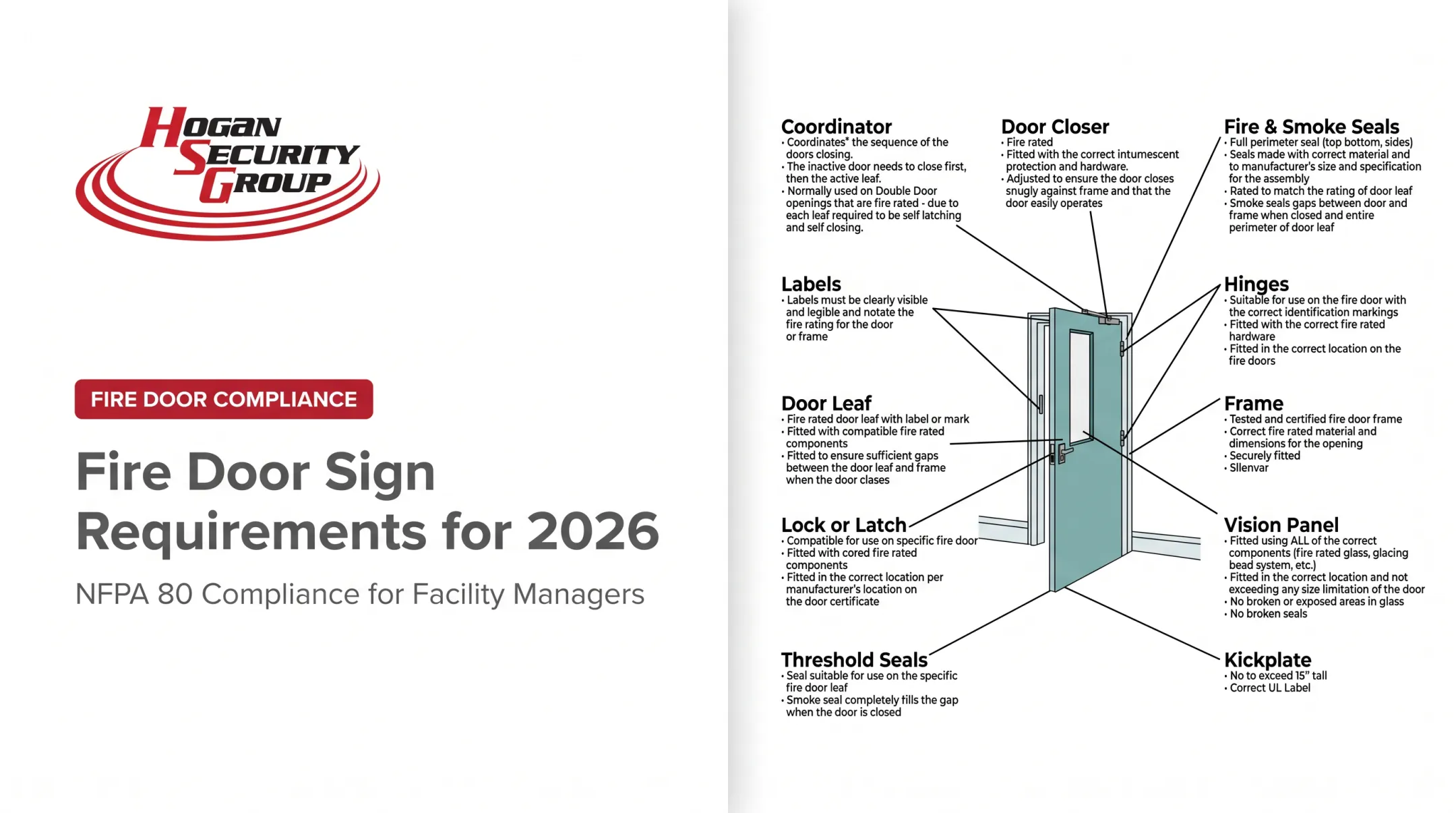
Every rated door and frame should carry a legible label identifying the assembly's fire-protection rating, commonly 20, 45, 60, 90, or 180 minutes depending on the opening. Labels are typically found on the hinge edge, top rail, or lock edge of the door, and on the frame itself.
A labeled frame without a labeled, compatible door doesn't make a rated opening. If a label is painted over, missing, or illegible, that's a deficiency, full stop.
Door, Frame, and Hardware as a Matched System
The door doesn't carry the rating by itself. The frame, anchors, wall condition, clearances, and alignment all need to support the assembly's listing. Replacement hardware has to be listed or otherwise approved for that specific assembly, installed per approved instructions, not whatever was in the maintenance closet.

Key hardware components inspectors check include:
- Hinges or pivots
- Latches and locks
- Door closers and coordinators
- Flush bolts (where applicable)
- Fire and smoke seals
Closing, Latching, and Glazing
A fire door that swings shut but doesn't latch isn't doing its job. Inspectors verify the door closes fully from a full-open position and the latch engages and secures it. For pairs with a coordinator, the inactive leaf needs to close before the active one.
Glazing and vision panels must be fire-rated and compatible with the specific assembly listing, since dimension limits and ratings vary by door and edition.
Conditions That Void the Listing
Some alterations turn a rated door into an unrated one. Watch for:
- Wedging or propping doors open
- Objects obstructing the closing path
- Unapproved field drilling or cutting
- Missing or damaged hardware components
- Excessive or unverified gaps around the frame
Any of these warrants a call to the manufacturer, listing agency, or AHJ before touching the opening further.
NFPA80 Inspection, Testing, Maintenance, and Records
Acceptance and Periodic Inspection Workflow
Acceptance testing happens right after installation, replacement, or major repair work. It sets the baseline. Periodic inspection then checks the same opening against that baseline going forward, not just a quick visual glance at the door slab.
A thorough inspection covers:
- Labels, damage, corrosion, holes, and glazing condition
- Seals, frame condition, hardware, fasteners, and clearances
- Obstructions in the door's swing path
- Operational testing: opening, closing, latching, and self-closing or automatic-closing function
NFPA80 requires fire door assemblies to be inspected and tested not less than annually, per NFPA's inspection checklist. That applies even to doors that stay closed and unused; a door nobody touches can still develop hardware or seal problems.

Any deficiency found should be:
- Documented and prioritized by its effect on fire protection
- Corrected with approved parts
- Verified with follow-up testing
Documentation Facility Teams Should Retain
A signed, written inspection record has to be available for your AHJ. At minimum, that record should capture:
- Facility and opening identification (consistent door numbering helps)
- Inspection date and inspector or company name
- Assembly type, location, and observed conditions
- Test results, deficiencies found, and corrective action taken
- Follow-up status once repairs are complete
Photographs, links to repair work orders, and copies of product listings make records far more useful during a fire marshal visit. Organize files so building owners, facility leadership, the AHJ, and insurers can all find what they need quickly. Confirm your local retention period requirement rather than guessing.
Maintenance and Repair Controls
Routine maintenance keeps a compliant door compliant: clear closing paths, properly aligned hardware, and manufacturer-approved cleaning. Damage gets worse, not better, the longer it sits.
Repairs and replacements must preserve the listed assembly. That means no incompatible hardware, no unapproved vision panels added after the fact, and no removing labels or making field modifications without proper approval.
This is where many facility teams get stuck: between a failed inspection and a repair that doesn't void the listing. Hogan Security Group's certified FDAI inspectors handle inspection, documentation, and repair coordination for fire door assemblies across New Jersey, Pennsylvania, and New York, alongside broader door hardware support.
No vendor can independently grant NFPA80 code approval, but having one team manage inspection through repair cuts down on the back-and-forth that lets deficiencies linger.
Common NFPA80 Deficiencies and a Practical Compliance Plan
Between formal inspections, these are the issues that show up again and again:
- Doors held open with wedges or kick-down holders
- Blocked or damaged openings
- Failed closers or latches that don't fully engage
- Missing, painted-over, or illegible labels
- Damaged glazing or vision panels
- Unauthorized field modifications
- Poor alignment or clearance issues
- Incomplete or missing inspection records
These are observations worth acting on, not a substitute for a formal inspection determination by a qualified professional.
Internal field data backs this up. Hogan Security Group's 2025 inspection data found that more than 65% of fire doors fail their annual inspection, yet over 90% of those failures can be fixed quickly within a standard facility maintenance budget. Most compliance gaps are overlooked maintenance items, not expensive disasters.

A Step-by-Step Compliance Plan
- Inventory every rated opening in the building, not just the obvious ones
- Identify the adopted code and NFPA80 edition that applies to your jurisdiction
- Schedule qualified inspections with a qualified fire door inspector
- Correct urgent operational issues immediately, especially doors that won't close or latch
- Obtain approved repair solutions that preserve the listed assembly
- Reinspect repaired doors to confirm the fix actually worked
- Maintain a recurring records process so next year's inspection isn't starting from zero
Prioritizing a Large Portfolio
If you're managing dozens or hundreds of openings, tackle these first:
- Doors that don't close or latch at all
- Openings protecting critical fire barriers or egress routes
- Doors with repeated high-use failures
- Any condition already flagged by the AHJ
Coordinate every decision with qualified professionals and your authority having jurisdiction. That coordination keeps you from fixing the wrong problem.
Frequently Asked Questions
What are the steps in an NFPA80 fire door inspection checklist?
A typical inspection identifies the opening, reviews labels and components, checks condition and clearances, tests operation and latching, then documents deficiencies and corrective action. The exact checklist depends on door type and the adopted edition.
What are the NFPA80 requirements for fire doors?
Requirements cover listed assemblies, legible labels, compatible frames and hardware, reliable closing and latching, unobstructed operation, and ongoing inspection, maintenance, and recordkeeping. Always confirm specifics against the current standard and your AHJ.
What does NFPA compliant mean?
It means meeting the applicable provisions of an NFPA document as adopted for your facility, including the correct edition, product listings, installation conditions, and your AHJ's interpretation of those requirements.
Is NFPA80 a code or a standard?
NFPA80 is a standard. It becomes legally enforceable only when a building, fire, or life-safety code adopts or references it.
What is the latest edition of NFPA80?
NFPA's current publication is the 2025 edition. That doesn't mean your jurisdiction has adopted it yet, so check your local adopted edition before relying on 2025 provisions.
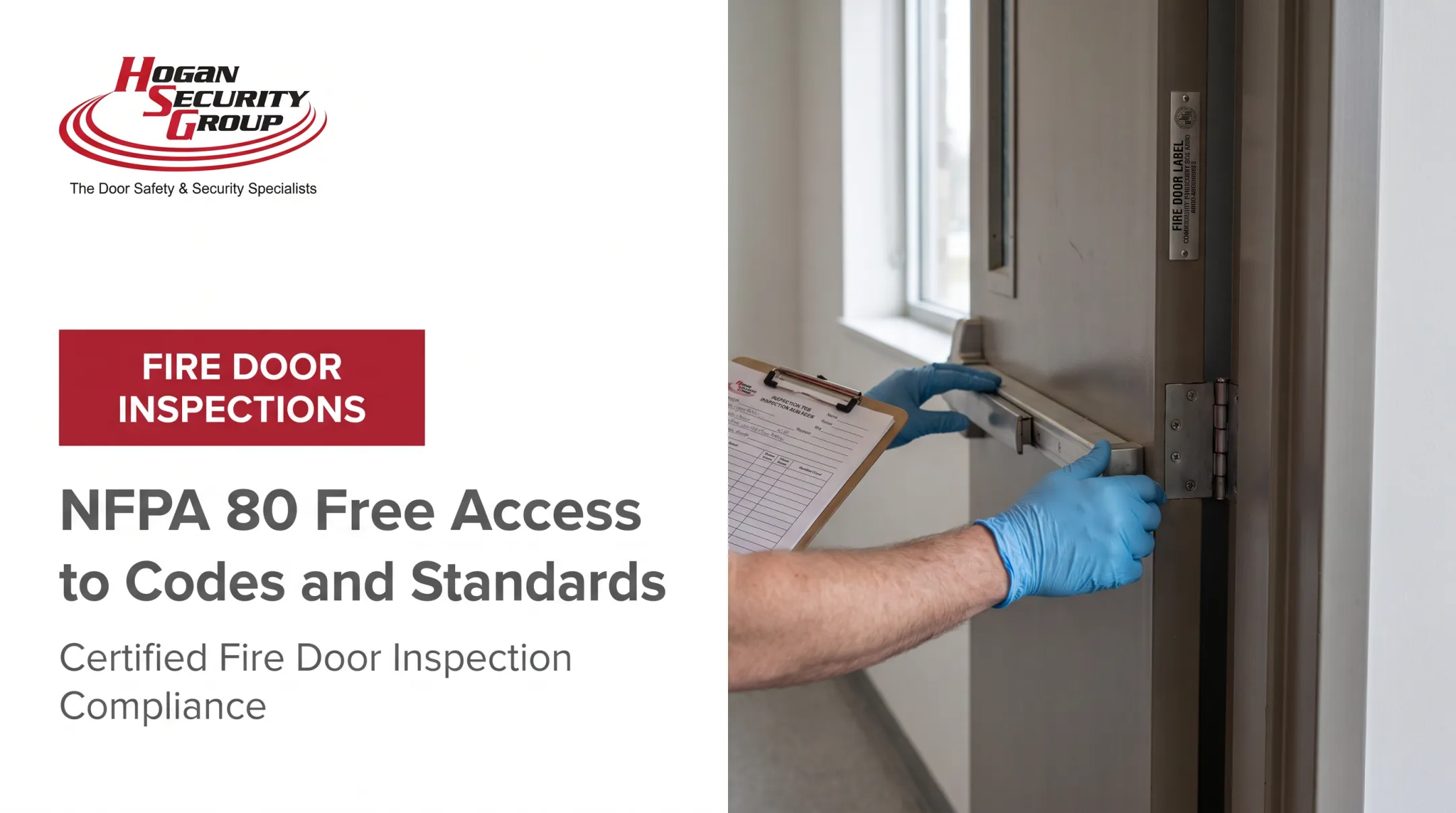
Can you view NFPA standards for free?
Yes. NFPA offers free, read-only online access after creating an account, though documents can't be downloaded or printed that way. Visit NFPA's free access page for current details.