
Many facility teams install a mag lock for access control and assume it automatically satisfies both. It doesn't. A magnetic lock may be permitted on certain rated openings, but it never replaces positive latching hardware, and it doesn't automatically meet egress requirements.
The real answer depends on your adopted code edition, occupancy type, door listing, product labeling, installation details, and what your local Authority Having Jurisdiction (AHJ) will actually sign off on. This article walks through each piece.
Key Takeaways
- A mag lock doesn't provide the positive latching a fire-door assembly requires
- Never remove or disable listed latching hardware without engineering review and AHJ approval
- Every component on a rated opening must match the door, frame, and hardware listing
- Fire-alarm release and emergency egress need a complete system design, not bolt-on fixes
- Confirm your adopted code edition and local amendments before specifying anything
What Are Magnetic Locks, and How Do They Differ From Fire-Door Holders?
An electromagnetic lock, or mag lock, consists of a magnet body mounted on the frame and an armature plate mounted on the door. Power creates the holding force; cut the power, and the lock releases. That's the entire mechanism — there's no bolt, no latch, no mechanical engagement.
UL classifies these locking arrangements under standards like UL 294 for access control units and UL 1034 for burglary-resistant electric locking mechanisms. Electromagnetic products are separately tested under UL 10C for fire-door applications.
Mag Locks vs. Fire-Door Holders
These two devices get confused constantly, but they do opposite jobs:
| Device | Normal function | What happens at alarm |
|---|---|---|
| Access-control mag lock | Keeps a closed door secured | Releases restraint (if fail-safe) |
| Fire-door holder/release | Holds an open door open | Releases so door can swing shut |
A fire-door holder is covered under UL 228, a category specifically built around holding doors open and then letting them close automatically. It's not an access-control device at all.
Fail-Safe Doesn't Mean Code-Compliant
"Fail-safe" simply describes behavior at power loss: the lock lets go. It says nothing about:
- Whether the required latching hardware is still present and functional
- Whether the complete opening retains its fire rating
- Whether egress controls, signage, and release circuits meet code
- Whether the release path has been reviewed by your AHJ
A fail-safe mag lock on a door with no working latch bolt is still a non-compliant opening.
Can Magnetic Locks Be Used on Fire Doors?
Short answer: sometimes, under specific conditions, and never as a substitute for required latching. Here's the detail.
The Positive-Latching Problem
Rated swinging fire doors generally need an active latch bolt that secures the door when it closes. This requirement exists because, during actual fire exposure, a door held shut only by magnetic force (or worse, by nothing at all) can pop open from pressure, heat warping, or impact — defeating the entire purpose of the rated assembly.
A magnetic lock supplies holding force, not a latchbolt. The two aren't interchangeable, and this distinction shows up directly in the current means of egress provisions of the 2024 IBC.
Labeling and Listing: The Whole Opening Counts
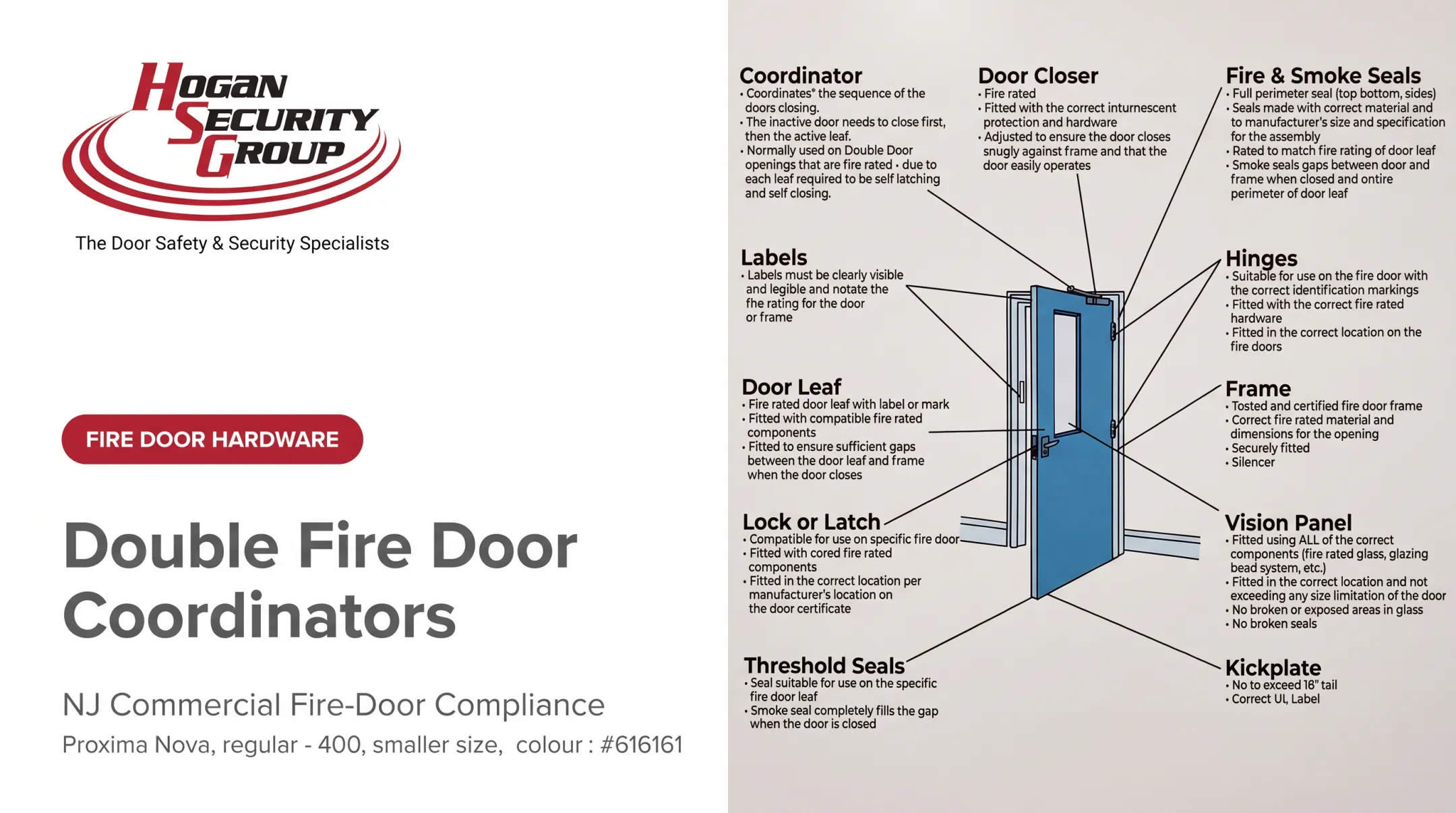
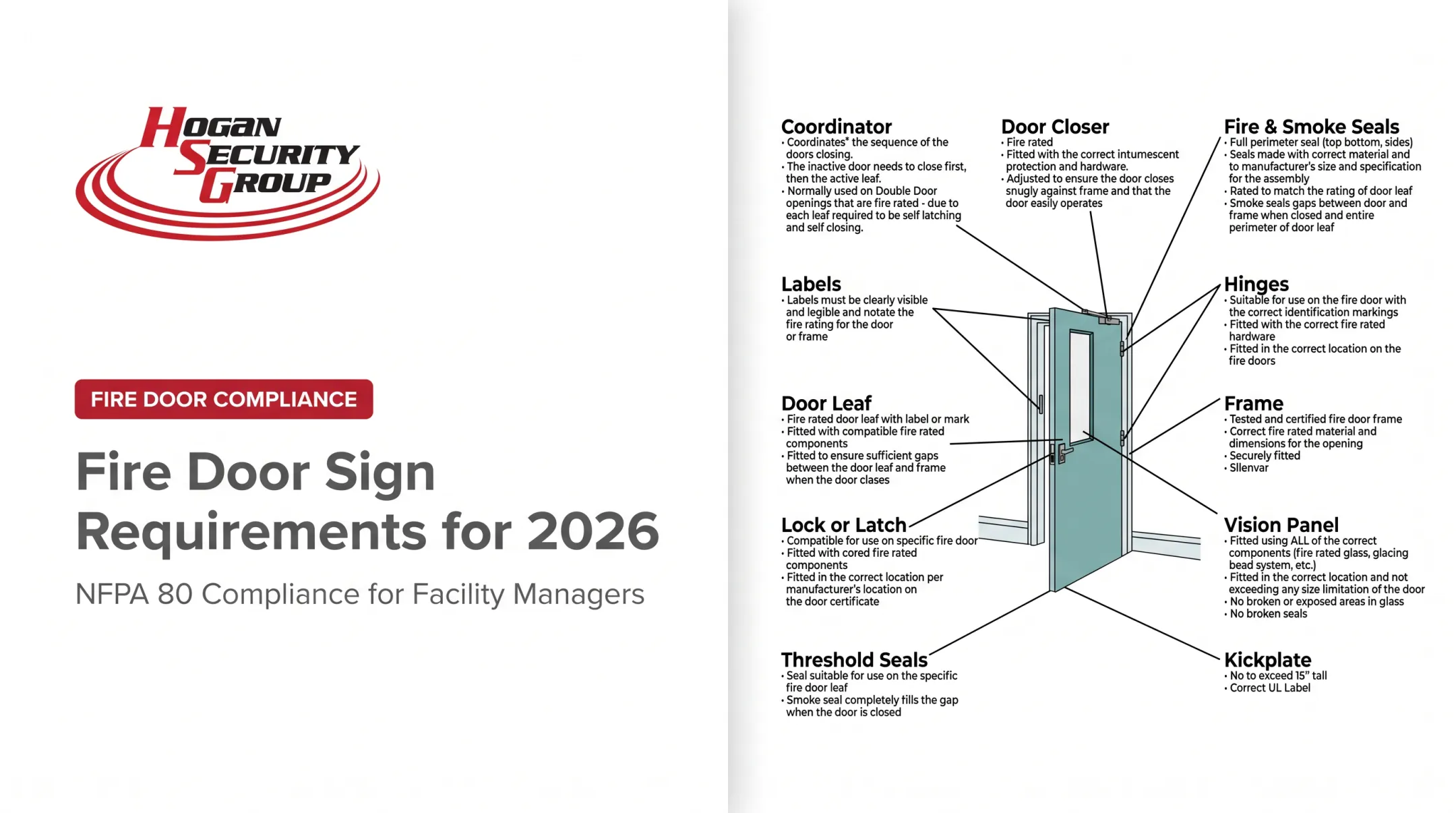
Every component installed on a rated opening has to be compatible with that opening's listing. That includes:
- The door leaf and frame labels
- The latching hardware and closer
- The magnetic lock's own fire-door-compatible listing
- Reinforcement, power supply, and wiring hardware
- Any glazing, seals, or vision panels already in the assembly
Swap one piece without checking compatibility, and you can invalidate the entire rating — even if the new piece is itself a listed product.

High-Risk Modifications to Avoid
Field crews sometimes take shortcuts that compromise a rated opening without anyone noticing until an inspection catches it:
- Removing or retracting required latching hardware to make room for a mag lock
- Drilling holes not permitted by the door or hardware listing
- Bypassing a closer or latch "temporarily" during installation and forgetting to restore it
- Mounting reinforcement plates that aren't part of the tested assembly
Any field change outside the manufacturer's instructions and listing requires sign-off from the listing laboratory or documented engineering judgment, not just a technician's best guess.
Quick Suitability Screen
Before specifying a mag lock on any rated opening, check:
- Door rating, label, and occupancy classification
- Occupant load and direction of travel
- Required egress hardware already installed
- Access-control purpose driving the request
- Fire-alarm connection and power supply available
- Your AHJ's specific approval process
Caution: Requirements differ meaningfully for access-controlled egress doors, delayed-egress systems, and occupancies like healthcare, education, and assembly spaces. Don't assume a rule that applies to one occupancy transfers to another.
How Should Fire-Alarm Release and Emergency Egress Work?
A single release mechanism rarely covers every scenario a mag-locked door will face. Normal access control, user-initiated egress, fire-alarm release, and power-failure behavior are four distinct events, and each needs its own documented response.

Three Recognized Release Paths
The current IBC distinguishes three main arrangements, and they are not interchangeable:
| Arrangement | How it releases | Key detail |
|---|---|---|
| Door-hardware release | One-handed hardware operation directly cuts lock power | Required panic/fire-exit hardware must also release the lock |
| Sensor release | Egress-side sensor detects approach and unlocks | Manual backup must cut power directly for at least 30 seconds |
| Delayed egress | Release after a timed delay following sustained push effort | 15 seconds standard, 30 seconds only where specifically approved |
Picking the wrong arrangement for your occupancy (or mixing elements from two different paths) is one of the most common compliance failures Hogan Security Group's fire-door assembly inspectors flag during site visits.
Fire-Alarm Interface Documentation
Your system documentation should clearly show:
- Connection between the fire-alarm panel (or an approved relay) and lock power
- The release circuit and what triggers it
- Reset behavior after an alarm clears
- Any required monitoring or supervision for the release circuit
Whether automatic release is required upon alarm activation specifically depends on which release arrangement you've selected and your occupancy type. It is not a universal rule applied identically everywhere.
Power-Loss Behavior
Backup power is supposed to protect operations, but a poorly designed system can accidentally block the exact release a fire alarm is supposed to trigger. Test your actual standby power configuration, not just the primary circuit, and confirm that a manual release genuinely interrupts lock power rather than sending a software command that could fail silently.
Accessibility for Emergency Controls
Release hardware has to actually be usable in an emergency, not just technically present. Under the ADA Standards, operable controls generally need:
- Unobstructed reach between 15 and 48 inches above the floor
- One-handed operation requiring no tight grasping or wrist twisting
- Activation force of 5 lbf or less
A push button mounted too high, blocked by furniture, or requiring a two-handed twist doesn't satisfy the intent of the requirement even if it's technically installed.
How to Design, Install, and Inspect a Compliant Magnetic-Lock Opening
Getting a mag-locked fire door right takes more than buying a listed product. It takes a documented process from design through ongoing inspection.
Pre-Installation Checklist
Before anyone touches the door, confirm:
- Door and frame label, rating, and condition
- Positive latch, hinges, closer, and seals are intact
- Glazing and clearances meet the listed assembly
- Mag lock listing matches fire-door compatibility requirements
- Power supply and fire-alarm interface are specified
- Manufacturer installation instructions are on hand
What Belongs in Submittals
Drawings and submittal packages should include:
- Door and hardware schedule
- Product listings and wiring diagrams
- Power calculations and the release sequence
- Fire-alarm connection details
- Emergency release device locations and signage
- A record of AHJ comments
Common Failures Inspectors Find
Hogan Security Group's team, which has worked on more than 65,000 doors across New Jersey, New York, and Pennsylvania, sees the same issues repeatedly:
- A mag lock used as the only latching mechanism
- Missing or miswired fire-alarm relay connections
- Release devices mounted out of reach or hidden behind furniture
- Software-only release commands where direct power interruption is required
- Field-drilled holes that void the hardware listing
- Disabled closers or latches left "temporarily" removed
Functional Testing
Test the complete sequence, not just the lock:
- Normal credentialed access
- Free egress under standard operation
- Fire-alarm activation and release
- Manual emergency release
- Power interruption behavior
- Alarm reset and door restoration
- Door closure and full latch engagement
NFPA's fire door FAQ confirms that rated openings need inspection and testing immediately after installation and at least annually after that, performed by someone who actually understands the operating components involved.
Records to Keep
Retain these records so you can produce them when the AHJ asks:
- Inspection reports and test results
- Product listings and as-built drawings
- Maintenance logs and service tickets
- Documentation of any corrective action
A missing paper trail is its own compliance problem, even if the hardware itself works fine.

If you manage rated openings across a school district, hospital campus, or multi-tenant property, a professional review catches these gaps before an inspector does. Hogan Security Group's certified FDAI inspectors and manufacturer-supported security team handle fire-door inspections and integrated access-control design for facilities throughout New Jersey, New York, Pennsylvania, and Connecticut.
Frequently Asked Questions
How do mag locks on fire doors work?
A mag lock uses energized electromagnetic force to hold a door shut; cutting power releases it (fail-safe behavior). That release doesn't by itself satisfy the fire door's separate latching and egress requirements.
What are the code requirements for mag locks on fire doors?
You need to verify your currently adopted code edition, occupancy classification, door listing, labeled hardware, positive latching, release method, fire-alarm interface, and your AHJ's specific approval process. There's no single nationwide answer.
Can I use mag locks on fire doors?
In some configurations, yes, but a mag lock can't substitute for required positive latching or compliant egress hardware. It has to work alongside listed latching, not instead of it.
Do mag locks on fire doors need to release when a fire alarm activates?
It depends on the release arrangement and occupancy involved. Sensor-release and delayed-egress systems handle alarm-triggered release differently, so confirm which pathway applies to your installation.
Do magnetic fire door holders need to be released manually?
Holders are typically built to release automatically through the fire-protection system rather than needing a manual trigger. Still, verify manual-release provisions for your specific product and local requirements.
What is the best magnetic door latch for heavy doors?
"Best" depends on door weight, traffic volume, frame type, fire rating, access-control needs, and power supply, not holding force alone. A professional specification review beats picking by spec sheet.