
Fire door inspection cost is rarely a single flat fee. The scope can include dozens of openings, travel across buildings, escort coordination, photo documentation, and follow-up visits after repairs.
This guide is for facility managers, school district administrators, healthcare facility directors, commercial property managers, manufacturers, warehouse operators, and public-sector organizations who need a straight answer on what drives the price. We'll cover the cost factors, the actual inspection process, the repair expenses that typically follow, the legal backdrop, and how to compare proposals without getting burned.
Key Takeaways
- Inspection pricing is quoted per opening, hourly, by building, or as a flat project fee
- The inspection fee covers assessment only, not repairs, replacement doors, or reinspection
- Fire-rated openings are the focus, but scope depends on your adopted code and AHJ
- Every opening needs signed, dated documentation your facility can produce on request
- Roughly 65% of fire doors fail their first annual inspection, per Hogan Security Group's 2025 field data
What Determines Fire Door Inspection Cost?
The single biggest cost driver is opening count. A quote covering 20 doors looks nothing like one covering 400 across a five-building campus. Paired doors, fire-rated access panels, and rolling or sliding assemblies each add inspection steps a standard single-leaf door doesn't require.
One public example shows how localized these numbers get. A February 2026 bid for a West Virginia correctional facility quoted $40 per annual inspection unit, with 10 estimated units totaling $400 for the year.
That figure is one submitted bid for one facility type in one market, not a national average. Do not plug it into your own budget without verifying how "unit" is defined in that contract.

Labor and Access Complexity
Several factors push time, and therefore cost, upward:
- Damaged or heavily used doors that need more diagnostic time
- Older assemblies with unclear or missing labels
- Security-controlled areas requiring escorts or badges
- Infection-control procedures in clinical settings
- Weekend or overnight scheduling to avoid disrupting operations
Deliverables and Proposal Models
What you get back from the inspection affects price too. These deliverables all take time to produce:
- Door inventory
- Photographs of every deficiency
- Barcode asset tagging
- Digital reports with code references
- Reinspection scheduling
Most proposals fall into one of three models:
| Model | Budget certainty | Cost risk |
|---|---|---|
| Per-opening | High: scales predictably with door count | Low if the count is accurate upfront |
| Hourly or day rate | Variable | Higher if access delays or complexity run long |
| Fixed project fee | High for the buyer | Vendor absorbs scope surprises, may price conservatively |
Ask any vendor to confirm which model they're using before you compare numbers side by side.
How to Inspect a Fire Door: Process and Checklist
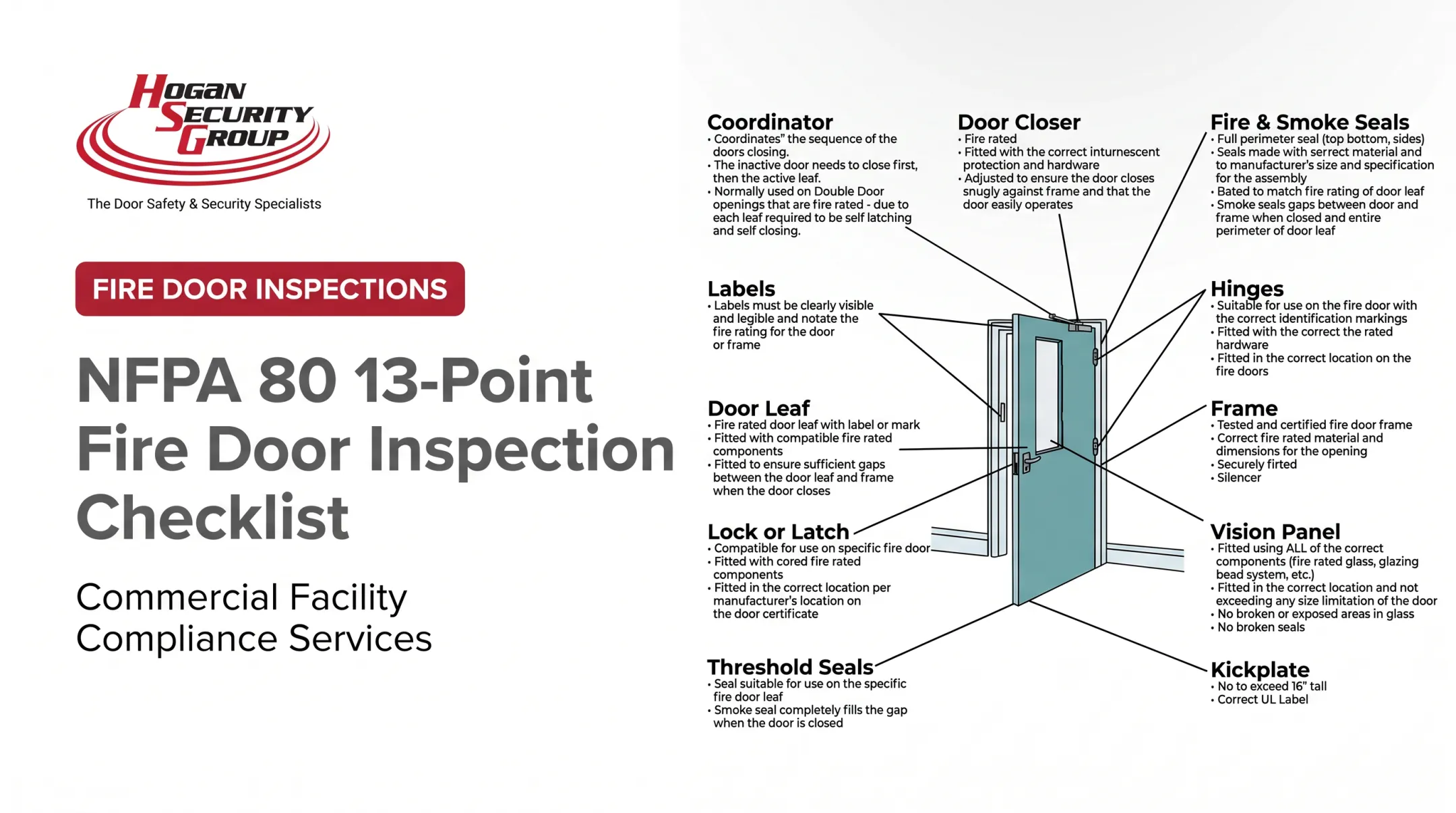
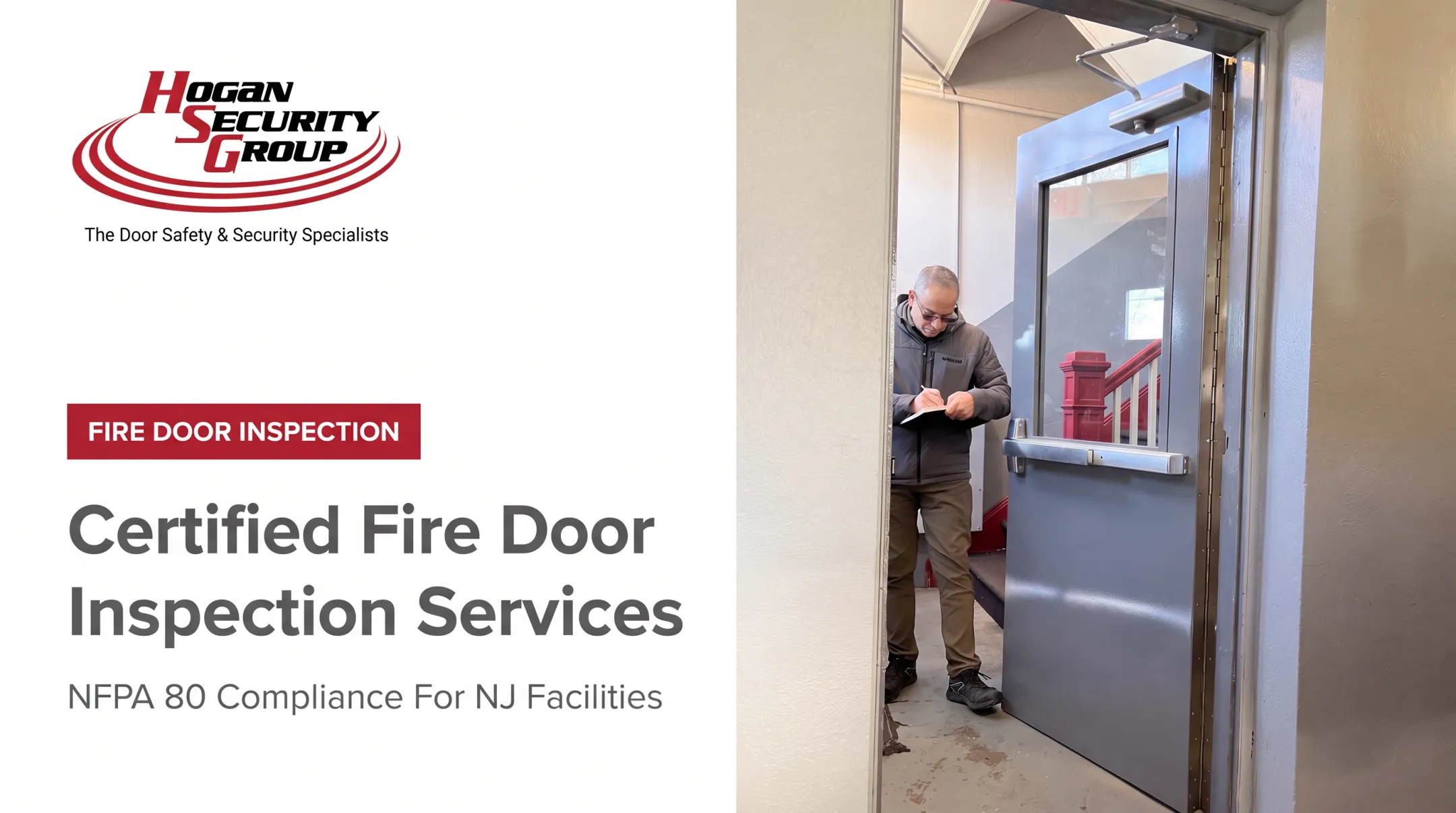
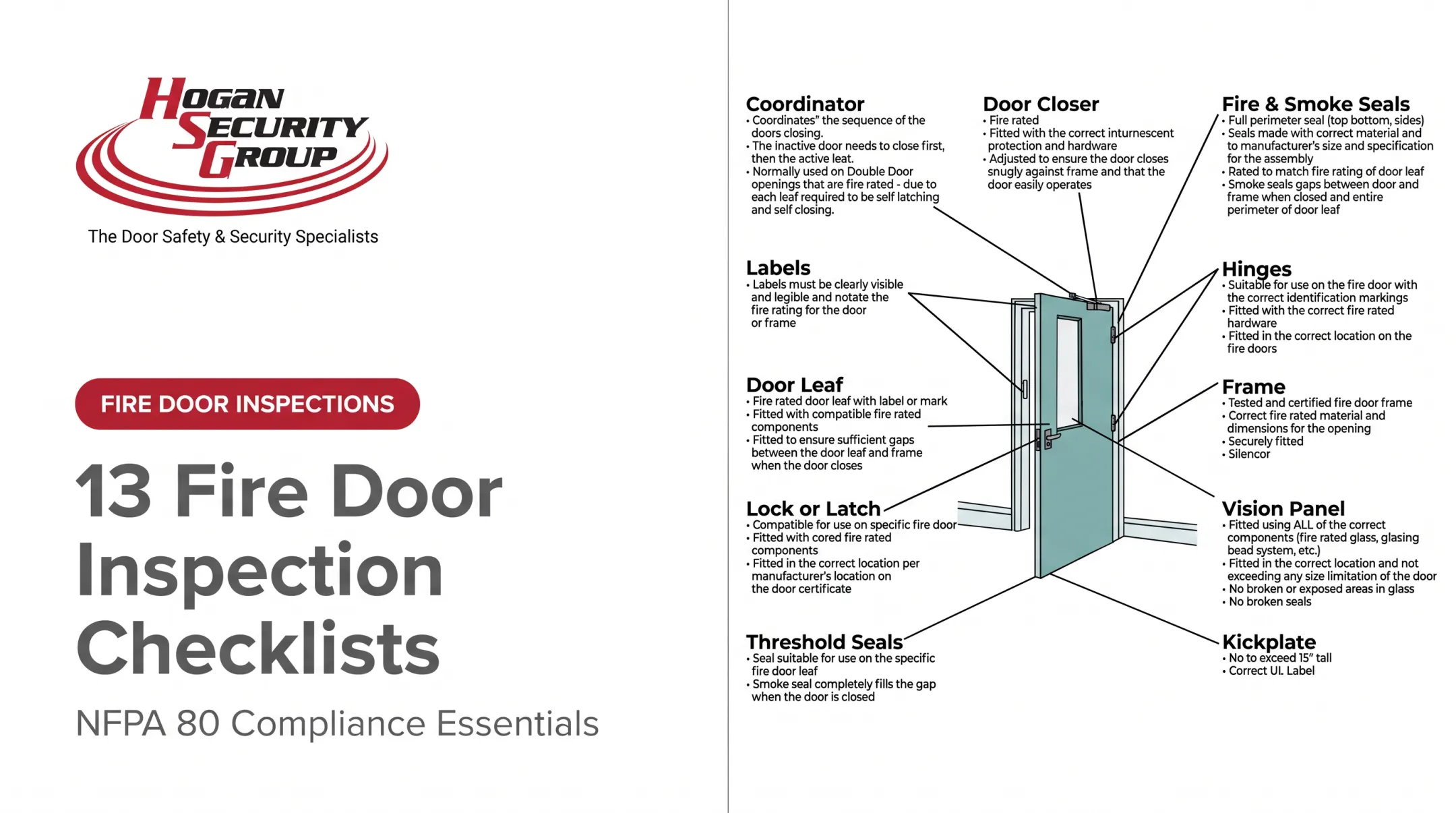
A real inspection goes well beyond a glance at the door. The Steel Door Institute's checklist calls for a visual review from both sides paired with functional testing, not a photo of the hardware alone.
Preparation
Before anyone touches a door:
- Identify the rated openings using door schedules or as-built drawings
- Confirm the applicable code edition and any AHJ-specific expectations
- Coordinate access for occupied spaces, security zones, or clinical areas
- Establish a deficiency-recording method before the walk begins
Visual and Functional Checks
The visual pass covers both sides of the assembly:
- Door and frame
- Labels and glazing
- Hinges and hardware
- Gasketing and thresholds
- Any unapproved field modifications
Functional testing confirms the door actually works:
- Closes fully from its required open position
- Latches positively without forcing
- Operates free of obstruction
- Closers, coordinators, and exit devices function as designed
Paired, sliding, rolling, elevator lobby, chute, and smoke-rated openings each carry their own standards. A generic checklist won't catch a rolling fire door's annual drop test or a paired door's closing sequence requirement, so verify manufacturer listings for anything beyond a standard single-leaf door.

Reporting
Each opening record should include:
- Location and unique identifier
- Pass or deficiency status
- Photos of significant findings
- Corrective actions for any deficiencies
Sign, date, and file the report where the AHJ can retrieve it on request.
A quick visual check by facility staff does not replace a required formal inspection, and it does not qualify anyone to sign off on a deficient assembly. Confirm acceptable inspector qualifications with your AHJ before assuming an in-house walkthrough counts.
Budget for Repairs, Reinspection, and Fire-Rated Door Replacement
The inspection fee and the repair bill are two different conversations. Hogan Security Group's 2025 field data found that more than 90% of fire-door failures can be fixed within a standard facility maintenance budget.
Common, manageable fixes include closers, latches, hinges, gasketing, glazing clips, labels, and fasteners.
What Pushes Costs Higher
Repair pricing depends on:
- Availability of listed or manufacturer-approved replacement parts
- In-place repair versus removal of the opening
- Assembly age, plus whether the frame is still plumb, level, and square
- Full replacement cost compared with patching an aging door
Reinspection Isn't Automatic or Free
After corrections, expect a return visit, updated photos, a revised report, and verification that the door now closes and latches correctly. Some vendors bundle this into the original scope; many don't. Ask before you sign.
When Replacement Beats Repair
Full door and frame replacement becomes the right call when:
- Damage is severe or the core is compromised
- Labels are missing and can't be restored through field labeling
- Components are incompatible with the listed assembly
- Unapproved modifications have voided the fire rating
Budget in phases:
- Fix life-safety-critical deficiencies first
- Group similar repairs across buildings to save on mobilization
- Keep every inspection record
- Ask vendors to separate mandatory corrections from recommended maintenance
Legal Requirements and Choosing a Qualified Inspector
Fire door inspection obligations aren't identical nationwide. They hinge on which NFPA standards and building codes your jurisdiction has adopted, your occupancy type, healthcare accreditation requirements, insurer conditions, and your local AHJ's interpretation.
Confirm the governing requirements for your specific facility rather than assuming a neighboring district's schedule applies to you.
That said, NFPA80 is the standard most jurisdictions reference. According to NFPA's 2025 fire door guidance, fire door assemblies require inspection and testing immediately after installation and not less than annually thereafter. The inspector must be qualified and familiar with the specific door type.
New Jersey, for instance, requires annual NFPA80 inspections. Noncompliance fines can climb into the tens of thousands of dollars.
Vetting an Inspector
Before hiring, verify:
- Documented fire door inspection training or certification
- Familiarity with the standards your facility is held to
- Manufacturer knowledge for your specific door and hardware brands
- Insurance coverage and documented safety practices
- Ability to produce defensible, AHJ-ready records
Proposal Checklist
Compare apples to apples by confirming each proposal states:
- Exact opening count and assembly types covered
- Inspection scope and explicit exclusions
- Report format and repair pricing structure
- Travel, after-hours, and reinspection terms
- Who's responsible for corrective work
Facilities seeking a qualified inspection partner can consider Hogan Security Group. The team includes FDAI-certified fire door inspectors, among them founder Dan Hogan, plus manufacturer certifications with brands such as Allegion, Assa Abloy, and dormakaba.
Those credentials are a solid starting point for vetting. You still need to confirm project-specific scope with your own AHJ.
How to Control Fire Door Inspection Costs Without Cutting Corners
The cheapest quote usually isn't the cheapest outcome. A few practical moves keep costs down without sacrificing compliance:
- Build an accurate door inventory first. Vendors price unexpected scope at a premium; a known opening count removes that guesswork.
- Prep access in advance. Grouping buildings, arranging escorts efficiently, and scheduling during normal hours cuts avoidable labor and travel time.
- Combine inspection with planned maintenance. Keep findings and repair proposals transparent, and require written approval before any unplanned replacement work.
- Train staff on routine observation. Prompt reporting of obvious damage supplements formal inspection; it doesn't replace it.
- Compare total value, not the lowest per-opening rate. Factor in inspector qualifications, report quality, corrective-action support, and reinspection policy.
Hogan Security Group's own field data backs this up: with the right vendor relationship, the vast majority of deficiencies get resolved inside a normal maintenance budget rather than triggering surprise capital spending.
Build Fire Door Inspection Into the Facility Maintenance Plan
The real cost of fire door compliance goes well beyond the site visit. Inspection, documentation, repairs, reinspection, and ongoing maintenance keep your openings compliant year after year.
Get a site-specific proposal that names:
- Number and type of openings
- Applicable code requirements
- Deliverables and exclusions
- Who handles repairs
A vague quote today becomes an expensive surprise later.
Hogan Security Group has engineered, installed, and serviced more than 65,000 doors across New Jersey, Pennsylvania, and New York. If you need to talk through a facility-specific fire door inspection scope, call 609-737-8100.
Frequently Asked Questions
How much does it cost to have a fire door inspected?
Cost varies by opening count, assembly type, location, access requirements, and documentation needs. Request a written, scope-specific quote and confirm it separates inspection fees from any repair pricing.
How long does it take to inspect a fire door?
Time depends on the door's condition, assembly type, access, and reporting requirements. A single straightforward opening takes far less time than a multi-building survey with hundreds of doors.
Is it a legal requirement to inspect fire doors?
Requirements depend on the adopted code edition, occupancy type, jurisdiction, accreditation status, insurer conditions, and your local AHJ. Confirm the applicable inspection schedule and documentation rules for your specific facility.
What is the average cost of a fire-rated door?
Replacement cost varies widely based on door and frame type, fire rating, hardware, glazing, labor, and site conditions. Treat any national average with caution, and always separate replacement pricing from inspection fees.