
Introduction
A fire marshal pulls a tape measure to a door edge, squints, and asks where the label went. Maybe it was painted over during a hallway refresh. Maybe it never existed on that particular door. Either way, the inspection stalls, and so does the renovation permit or insurance renewal riding on it.
Many facility managers assume a fire-rated door label is the whole story. It isn't. The label tells you a door or frame was tested and listed as part of a fire-resistance assembly. It doesn't confirm that the hardware, seals, clearances, or installation still meet requirements today.
This guide covers how to locate and interpret a fire door label, what information it typically carries, which surrounding components actually determine compliance, and what to do when a label is missing or unreadable.
Key Takeaways
- A compliant label is permanent, legible, and matched to the listed assembly — a printed sticker doesn't qualify.
- Labels confirm identity and listing, not ongoing compliance; hardware, seals, and clearances matter just as much.
- Never paint over, remove, or replace a label without manufacturer and listing-agency confirmation.
- Missing or unreadable labels require documentation and verification, not guesswork or a generic replacement decal.
What a Fire-Rated Door Label Means
A fire-rated door label is the manufacturer and certification marking applied to a door, frame, or component showing it was evaluated as part of a tested fire-resistance or fire-protection assembly. Organizations like UL and Intertek test representative samples, then audit manufacturing sites periodically to confirm products keep meeting the standard.
That's a very different thing from the signage and stickers facility teams see every day.
Label vs. Everyday Signage
Don't confuse these with a certification label:
- "Fire door - keep shut" placards (occupant instructions, not product certification)
- Annual inspection tags or maintenance stickers
- Installation decals from a hardware vendor
- Paint pen markings left by a contractor
Labels matter during inspections because they provide traceability: the agency, manufacturer, product family, and any stated limitations. Formats vary. UL's embossed metal frame labels look different from a printed door label, and Intertek's Warnock Hersey mark differs from both. The 2024 IBC requires labels to identify the manufacturer, the approved third-party agency, and the fire-protection rating, but it doesn't dictate one universal layout.
A label can't be bolted onto an ordinary door after the fact to make it fire-rated. Any replacement marking has to trace back to legitimate manufacturer or listing documentation, reviewed by a qualified party, not improvised in a maintenance shop.
How to Read a Fire-Rated Door Label
Once you've found a label, there's a logical order to reading it.
- Certification mark: identifies the listing agency (UL, Intertek/WH, or another AHJ-accepted organization)
- Manufacturer identification: the company name or a code traceable to it
- Fire-protection rating: commonly shown as 20 MIN, 30 MIN, 3/4 HR, 1 HR, 1-1/2 HR, or 3 HR
- Serial or issue number: supports traceability back to the manufacturer's records
Confirm the exact rating meaning against the specific label, the listing directory, and your adopted code. Don't assume every "1 HR" marking carries identical restrictions.
Markings That Don't Appear on Every Label
Some labels include extra fields; others don't, and that's normal:
- Temperature-rise rating (250°F, 450°F, or 650°F): limits heat transfer to the unexposed face during the first 30 minutes of fire exposure, per UL's marking guide
- Smoke/draft "S" designation: tied to gasketing requirements under UL 1784
- Maximum glazing size: governs vision panels and lites
- Frame type: a frame label can be valid even without a printed hourly rating, with suitability depending on the wall and anchor conditions
Where to Look
Door labels are typically found on the hinge edge, often just below the top hinge; some assemblies use the top rail instead. Frame labels usually sit on the jamb. Exact placement can vary by manufacturer, so check the full perimeter rather than one spot.
Field check process:
- Photograph the label on the door and the frame
- Transcribe every visible field, even partial text
- Confirm the door and frame markings correspond to each other
- Cross-check against building records or manufacturer resources
- Escalate anything unclear to a qualified inspector instead of guessing
Fire-Rated Door Requirements Beyond the Label
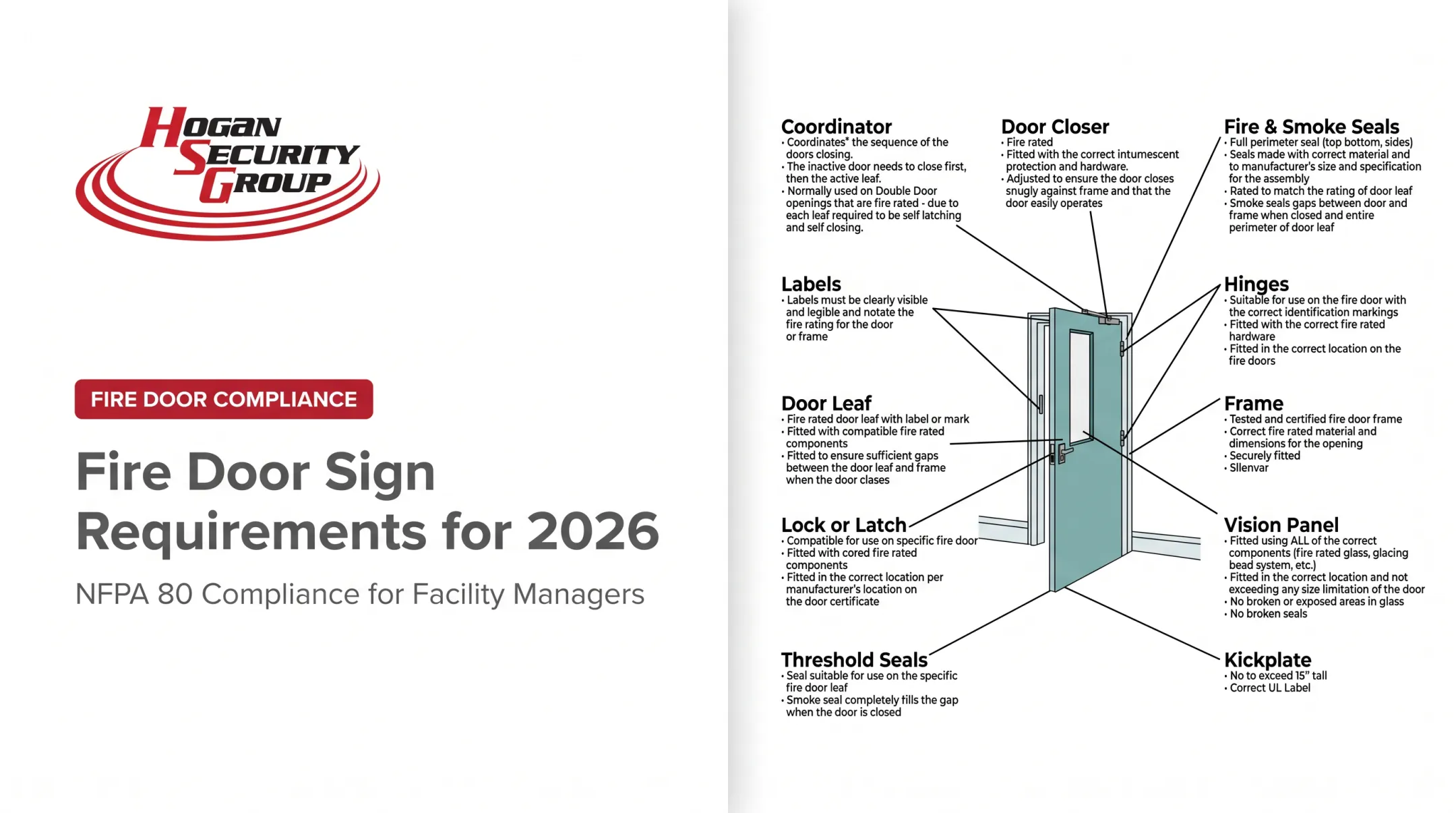
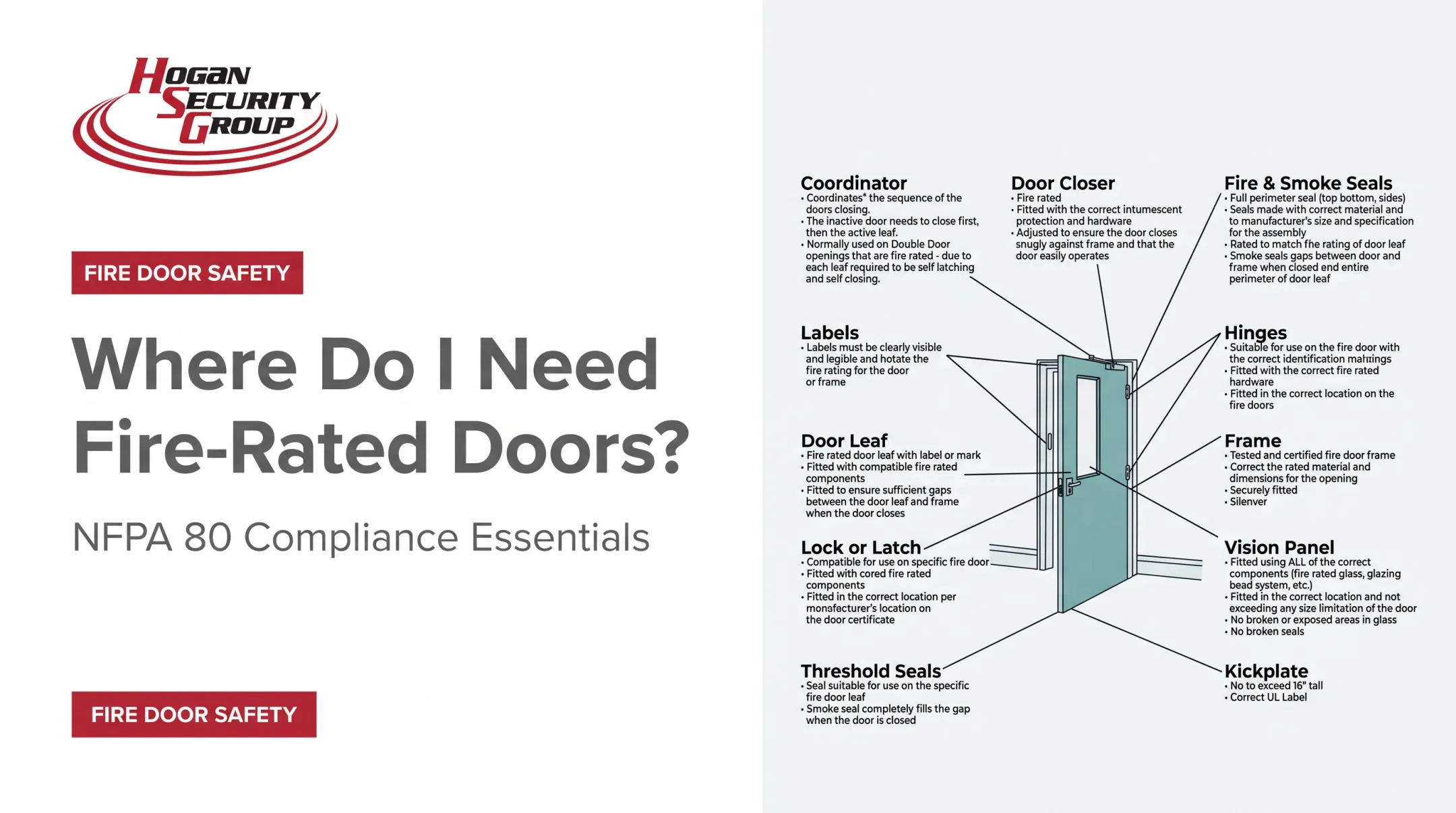
A fire door doesn't earn its rating alone : it functions as an assembly. That includes the door leaf, frame, hinges, latching hardware, closer, panic hardware where required, seals, glazing, astragals, and the surrounding wall interface.
A door can carry a flawless label and still fail inspection because something around it changed.
Operational red flags to watch for (not a substitute for formal inspection):
- Door doesn't close and latch on its own
- Door is wedged or propped open
- Visible damage, warping, or excessive gaps around the frame
- Missing or mismatched hardware
- Field modifications that weren't part of the original listing
Hardware compatibility deserves its own callout. Swapping a lock, closer, exit device, hinge, vision panel, louver, or access-control reader can void the listed assembly if the replacement isn't approved for that specific door and rating. A new electronic lock that looks identical to the old one can still be the wrong part for a rated opening.

NFPA's 2025 guidance confirms that fire doors must be inspected and tested immediately after installation, then at minimum annually, with a signed written record kept for the authority having jurisdiction.
One more myth worth killing: a door's weight or material doesn't establish its rating. Steel, wood, and composite doors can all be part of rated assemblies, but only the label and supporting listing documentation make that official, not how heavy the door feels when you push it.
Common Fire-Rated Door Label and Inspection Mistakes
Some mistakes show up again and again during fire door inspections:
- Assuming a heavy door must be rated
- Mistaking a "keep shut" sign for a certification label
- Checking the door but skipping the frame label entirely
- Accepting a faded, unreadable marking without attempting verification
- Installing a mismatched label, or finding a rated door with an unrated frame
Painting is a gray area, not a blanket rule. UL permits painting over legible, embossed metal frame labels — painting actually helps prevent corrosion. Printed labels without raised lettering shouldn't be painted, since that obscures the information outright. Document the label's condition with photos before any refinishing work touches it.
Watch out for online "replacement fire labels" and generic decals sold without manufacturer authorization or listing documentation. They might look convincing, but they carry zero verification weight with an inspector or AHJ.
Practical maintenance risks that show up constantly:
- Doors propped open with wedges or kick-down holders
- Damaged or disconnected closers
- Missing latching hardware
- Blocked egress paths
- Unapproved access-control modifications
- Damaged intumescent or smoke seals
Treat label issues and life-safety defects as separate problems evaluated together. A facility that fixes paperwork while ignoring a door that won't latch hasn't actually solved anything.
What to Do When a Label Is Missing, Damaged, or Unclear
Don't guess, and don't reach for a repair tool first.
- Photograph the door and frame from multiple angles, including any partial or damaged markings
- Record the location (building, floor, and room) along with the door's current condition
- Search construction and maintenance records for the original product data
- Note visible manufacturer or product information, even fragments
- Avoid altering the opening before a qualified review
From there, verification usually runs through the original manufacturer, the listing agency, the installer, or the building owner's records administrator. Any one of them may be able to confirm the product identity and rating from the information you've gathered.
A qualified inspector should evaluate:
- Door and frame condition
- Hardware function and compatibility
- Clearances and seals
- Glazing and installation details
- Labels and any modifications affecting the listing
Possible outcomes vary. The opening might be verified through existing documentation, repaired with approved components, evaluated for an authorized replacement marking, or, if the rating simply can't be established, replaced outright. Not every unidentified door gets a happy ending with a new label.

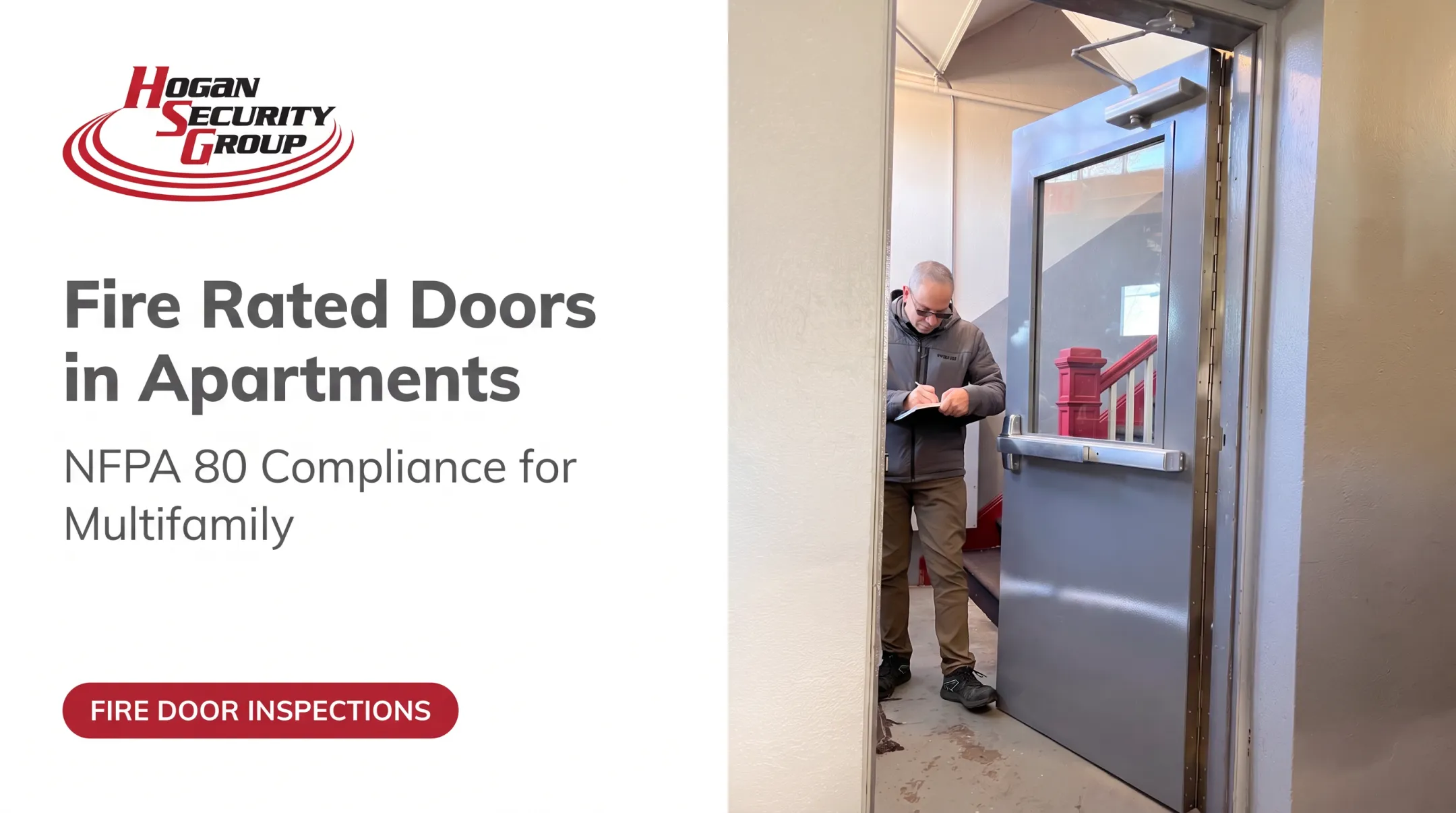
This is where Hogan Security Group's FDAI-certified fire door inspections come in. Hogan's team has inspected more than 10,000 fire-rated doors across multitenant and mixed-use housing, higher education, healthcare, and K-12 facilities throughout NJ, PA, NY, and DE, pairing documented assessments with integrated locksmith, hardware, and repair services.
Hogan can't independently create a certification label or "sell" a rating. Any replacement marking or certification decision has to come from the responsible manufacturer, listing agency, or AHJ process. Hogan's role is getting your documentation and corrective-action plan in order so that process moves faster.
Professional Inspection and Next Steps
A one-off inspection fixes one door. A property-wide inventory fixes the problem.
Build a record that tracks every rated opening:
- Building, floor, and room
- Door identifier and label condition
- Rating information and inspection findings
- Repairs completed and supporting photos
Prioritize by risk, not by convenience:
- Doors that fail to close or latch
- Openings with major physical damage
- Doors obstructing egress paths
- Assemblies protecting critical fire separations
- Lower-risk documentation gaps
Coordinate fire door findings with any planned locksmith, access-control, or renovation work. New card readers or exit hardware installed without checking the listing can undo an otherwise compliant assembly. Hogan Security Group has seen this repeatedly across schools and healthcare clients juggling security upgrades alongside compliance work.
Keep inspection reports, manufacturer correspondence, product data, repair records, photographs, and AHJ communications on file. They'll save time at the next inspection and during any future facility handoff.
If your facility has rated openings with missing, mismatched, or unreadable labels, or doors that simply won't close right, a professional fire door assembly assessment is the next step, not another round of guessing.
Frequently Asked Questions
Do fire doors need to be labeled?
Yes, rated doors generally require an appropriate identification or certification marking under applicable listing, code, and installation requirements. Exact requirements and acceptable verification methods can vary by assembly type and jurisdiction.
What are the requirements for fire-rated doors?
Requirements extend well beyond the label itself, covering the door, frame, hardware, closing and latching function, seals, glazing, and installation. NFPA80, local building codes, manufacturer instructions, and your AHJ set those requirements.
Can I buy a fire safety label?
A warning or maintenance sign is different from a certification label. A legitimate replacement marking isn't a generic product: it requires authorized documentation and qualified review before it can be applied.
What does a fire-rated door label look like?
Most are permanent metal or approved printed labels showing a certification mark, rating classification, manufacturer details, and traceability information like a serial number. Exact formats differ by agency and manufacturer.
How do you tell the rating on a fire door?
Locate and photograph the label, then identify the stated rating and verify it through the manufacturer or listing agency. Door weight, material, and appearance don't tell you anything reliable about the actual rating.
What does FD60 mean on a fire door?
FD60 commonly indicates a 60-minute classification in some non-US labeling systems, such as the UK's CERTIFIRE scheme. US readers should confirm the governing standard, listing, and manufacturer documentation before interpreting any FD-prefixed marking.