
Many facility managers struggle to find a reliable, current copy of the standard without paying for a subscription or stumbling onto an outdated PDF of unknown origin. NFPA's official free-access system solves part of that problem, but it's not the same as owning a downloadable or printed copy.
This article walks through how to find NFPA80 on NFPA's site, set up or use an account, understand what "free" actually means, and confirm which edition and requirements apply to your building.
Key Takeaways
- Access NFPA80 only through NFPA's official Codes & Standards pages, not third-party PDF sites
- Free access is read-only, online reference access, not a downloadable or printable copy
- Confirm which edition your jurisdiction has adopted before applying any requirement
- Pair NFPA80 with local fire and building codes, plus manufacturer listings, rather than using it alone
- Treat the standard as a planning tool, not a substitute for a qualified inspection
Why NFPA80 Matters to Facility and Security Teams
NFPA80 governs the installation, inspection, testing, and maintenance of fire doors, fire windows, dampers, fabric safety curtains, and related opening protectives, according to the NFPA80 overview.
These assemblies slow the spread of fire and smoke between spaces. That buys occupants time to get out and firefighters time to respond.
That matters in a lot of buildings, not just high-rises. Schools, hospitals, senior living facilities, warehouses, manufacturing plants, and multi-tenant office buildings all rely on rated openings in stairwells, corridors, and fire-rated separations.
Everyday Issues That Break Compliance
Fire-door compliance rarely fails because of one dramatic event. It usually fails from small, accumulating problems:
- Doors propped or wedged open for convenience
- Self-closing devices that no longer pull the door shut
- Labels painted over, removed, or too worn to read
- Damaged or mismatched hardware installed without checking the listing
- Clearances or gaps outside allowable limits
- Field modifications, like drilled holes for access-control wiring, that void the label
In Hogan Security Group's own 2025 field data, more than 65% of inspected fire doors failed their annual inspection on at least one of these points.
How NFPA80 Relates to Other Codes
NFPA80 doesn't operate alone. NFPA 101 typically drives egress and life-safety requirements. The International Building Code establishes when opening protection is required and references NFPA80 for installation.
Your local fire and building codes determine what's actually enforceable in your jurisdiction. None of these documents replace the others.
How to Get Free Online Access to NFPA80
NFPA hosts every current standard, including NFPA80, on its own site at no cost for online reading. Here's how to find it.
- Go to NFPA's List of Codes and Standards on nfpa.org, or search directly for "NFPA80."
- Open the NFPA80 document page, titled "Standard for Fire Doors and Other Opening Protectives."
- Select the edition year you need from the drop-down menu, since multiple editions may be listed.
- Choose "View Free Access." A new window opens with terms and conditions you must review.
- Accept the agreement, then sign in or create a free NFPA account if prompted.
- Navigate with the Table of Contents, page controls, and zoom tools built into the viewer.

This process works the same way on desktop and mobile browsers, though menu placement may shift slightly depending on screen size. Always double-check the current button labels and URLs on NFPA's site before relying on them, since interfaces change over time.
Once you're in the document, use the built-in search to jump to the topics you need: inspection, testing, maintenance, labels, self-closing, latching, hardware, or field modifications.
According to NFPA's free-access page, free online viewing is meant for quickly checking a requirement or getting familiar with a standard, not for extended offline work.
Bookmark the document page itself, not a session-specific link, and jot down the edition year you reviewed. That way your team can return to the exact same source during a project or inspection cycle.
What "Free Access" to NFPA80 Usually Includes—and What It Does Not
"Free access" gets used loosely, so it helps to separate the three ways people actually get NFPA80 content.
| Access Type | What You Get | What You Can't Do |
|---|---|---|
| Free online viewing | Full text, Table of Contents, search, zoom | Download, print, or save a local copy |
| Purchased print copy | A physical, owned edition | Reprint large portions without permission |
| NFPA LiNK (paid subscription) | Digital bookmarks, notes, project folders, team collaboration | Get LiNK tools through free viewing alone |
The free viewer is strictly read-only. You can't download the file, print pages, or circulate a saved copy to your team. Access to the text also doesn't give you permission to republish the standard, upload it to a shared drive, or pass around screenshots.
Using NFPA80 Content Without Overstepping
You can reference the standard's name, title, and general requirements in internal discussions or written commentary. Reprinting specific language beyond a brief quotation, or copying images, figures, or tables, requires permission through NFPA's copyright process.
For teams that need a durable record without copying the whole standard, log these details instead:
- Standard title and edition reviewed
- Relevant section numbers
- Date accessed
- Project address or asset identifier
- Source URL
If your team searches NFPA80 constantly, needs annotation tools, or wants offline access for field crews, evaluate NFPA's paid LiNK subscription or purchase options on NFPA's site. Pricing and features change.
How to Use NFPA80 Responsibly for Fire-Door Planning
Reading NFPA80 online tells you what the standard says. It doesn't tell you what's legally required for your specific building. That depends on which edition your jurisdiction has adopted, plus any local amendments, which only your Authority Having Jurisdiction (AHJ) can confirm.
What to Focus On First
When you're planning a project, zero in on the sections that affect your scope of work:
- Inspection and testing frequency and documentation
- Maintenance records and who's authorized to keep them
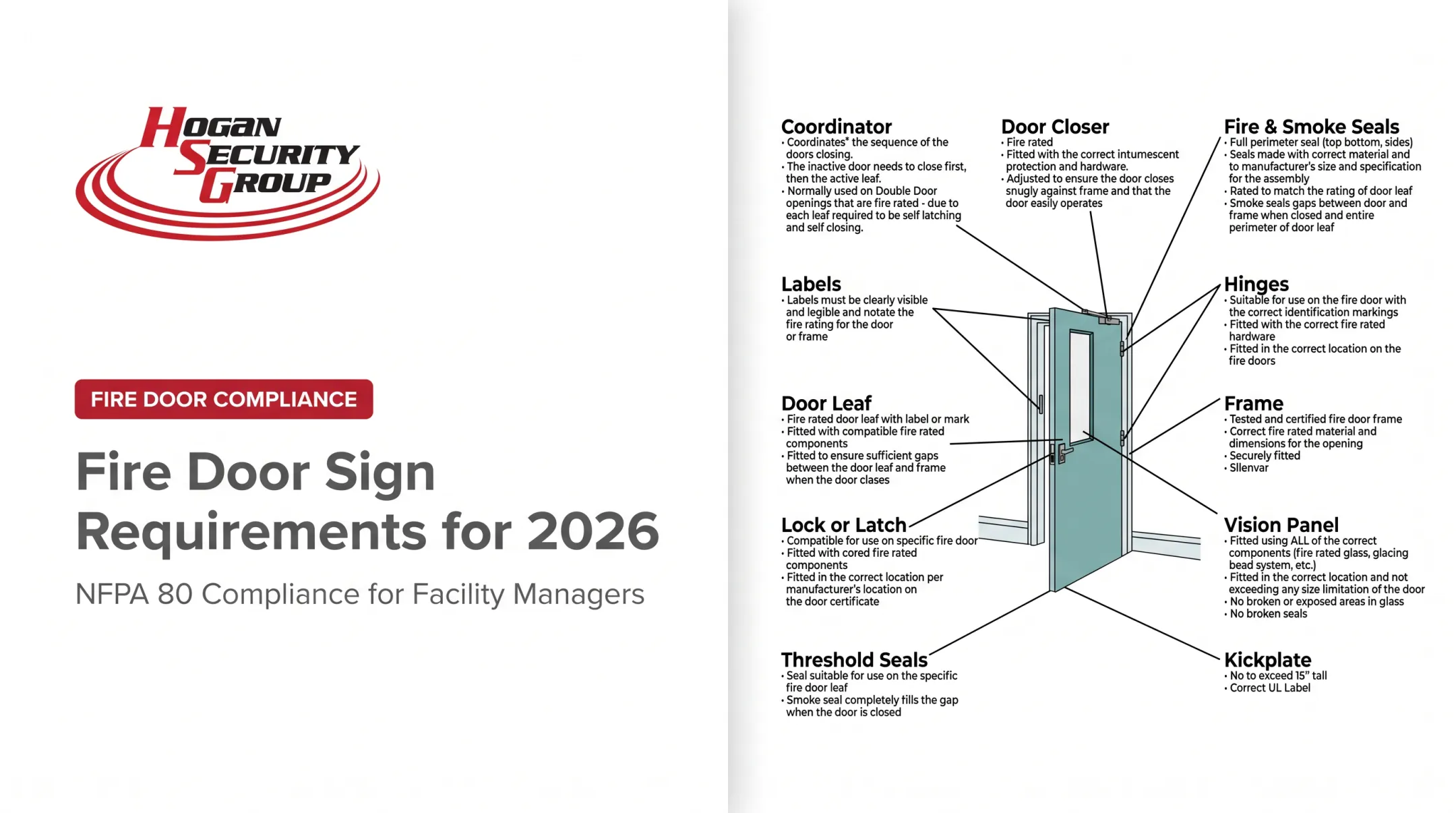
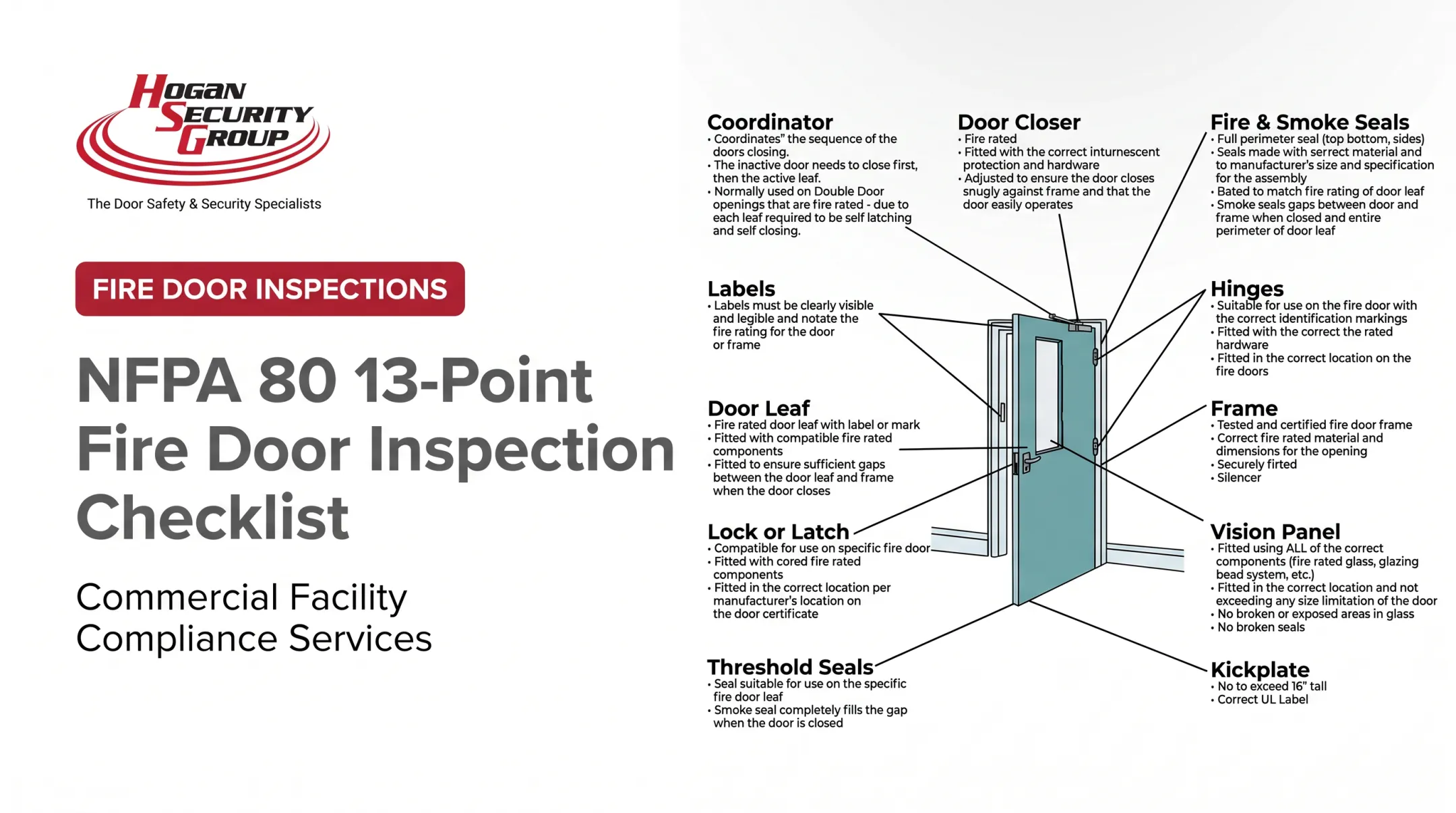
- Label presence, legibility, and placement on door and frame
- Listed hardware compatibility
- Closing, latching, and clearance requirements
- Glazing limits and required signage
- Field modifications and when they void a listing
According to NFPA's fire door FAQ, fire-rated openings need inspection and testing immediately after installation and at least annually after that, performed by someone qualified to evaluate that door type.
Coordinating Security Upgrades With Life Safety
Access-control upgrades create a specific risk: a security fix that unintentionally breaks fire-door function. Adding card readers, electrified locks, or exit devices without checking the listing can interfere with self-closing, positive latching, or fire-alarm release functions.
Before changing any hardware on a rated opening, review the manufacturer's installation instructions and listing information first. Whether you are inspecting or upgrading, document every opening:
- A unique identifier and location
- Door and frame condition
- Label information
- Installed hardware
- Deficiencies found
- Corrective action taken
- Inspector name and reinspection status
Healthcare occupancies, local enforcement policies, and edition-specific requirements can all shift the answer. When application is unclear, get guidance from a qualified professional or your AHJ rather than guessing.

What to Do After Reviewing NFPA80
Reading the standard is step one. Turning that into action looks like this:
- Inventory your rated openings: every door, shutter, and window that carries a fire rating.
- Flag missing or unreadable labels on doors and frames.
- Check for obvious problems: blocked doors, damaged hardware, excessive gaps.
- Pull existing inspection records and compare them against current conditions.
- Prioritize safety-critical deficiencies: failed closers and missing latching come before cosmetic issues.
Some of this you can handle internally. But annual inspections, complex assemblies, disputed deficiencies, or anything involving access-control hardware on a rated door usually calls for a qualified fire-door professional.
Hogan Security Group has performed certified fire-door inspections for almost 45 years, working with schools, colleges, healthcare facilities, hospitals, corporate offices, municipal buildings, and multitenant and mixed-use developments across New Jersey, Pennsylvania, and New York.
Its FDAI-certified inspectors evaluate doors and hardware against NFPA80's requirements, though final compliance determinations always rest with the AHJ.
Rather than making unsupported repairs that could compromise a listed assembly, request a documented assessment and corrective-action plan before touching hardware on a rated opening.

Frequently Asked Questions
Is NFPA80 available online for free?
Yes. NFPA offers official online reference access to the current edition, subject to account registration and its terms of use. Always access it through NFPA's own document page rather than a third-party site.
How do I access NFPA80 online?
Go to NFPA's Codes & Standards page, search for NFPA80, select the edition you need, and choose the free-access option. You'll sign in or create an account and accept the viewing terms before the document opens.
Do I need an NFPA account to read NFPA80?
Generally, yes. Free access requires signing in or creating an account and accepting NFPA's terms of use. Check the current sign-in requirements directly on NFPA's site, since processes can change.
Can I download or print the free NFPA80 text?
No, typically not. Free online access is read-only, and NFPA's documents can't be downloaded or printed through that system. For a physical or portable copy, review NFPA's current purchase options.
Is NFPA80 legally required?
NFPA80 is a consensus standard. It becomes legally enforceable when a jurisdiction's adopted fire or building code references it, or when a contract or AHJ requires compliance. Enforceability varies by location.
What does NFPA80 cover?
It covers installation, inspection, testing, and maintenance requirements for fire doors, fire shutters, fire windows, and other opening protectives. Specific requirements vary by edition, so confirm which one applies to your building.