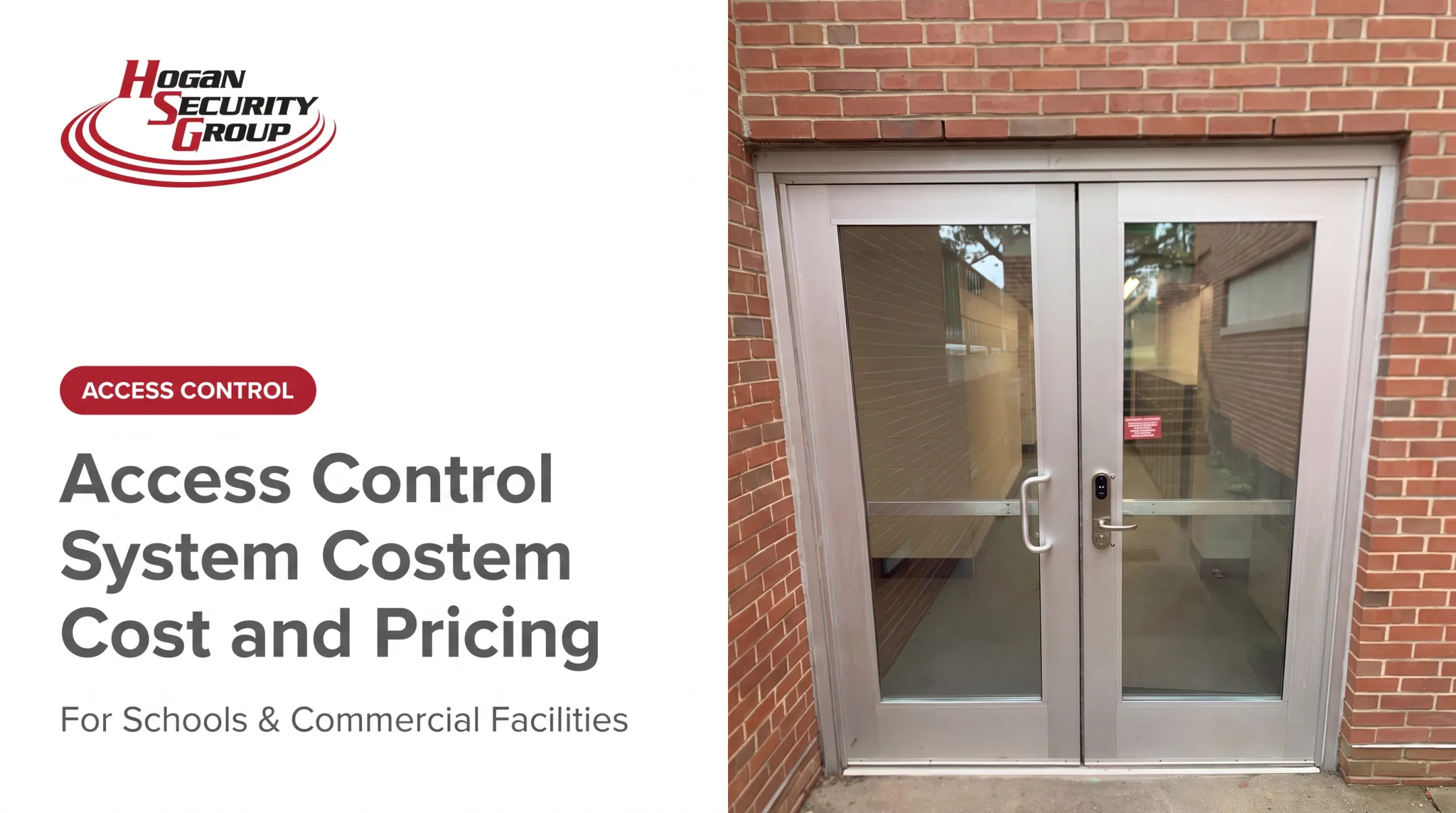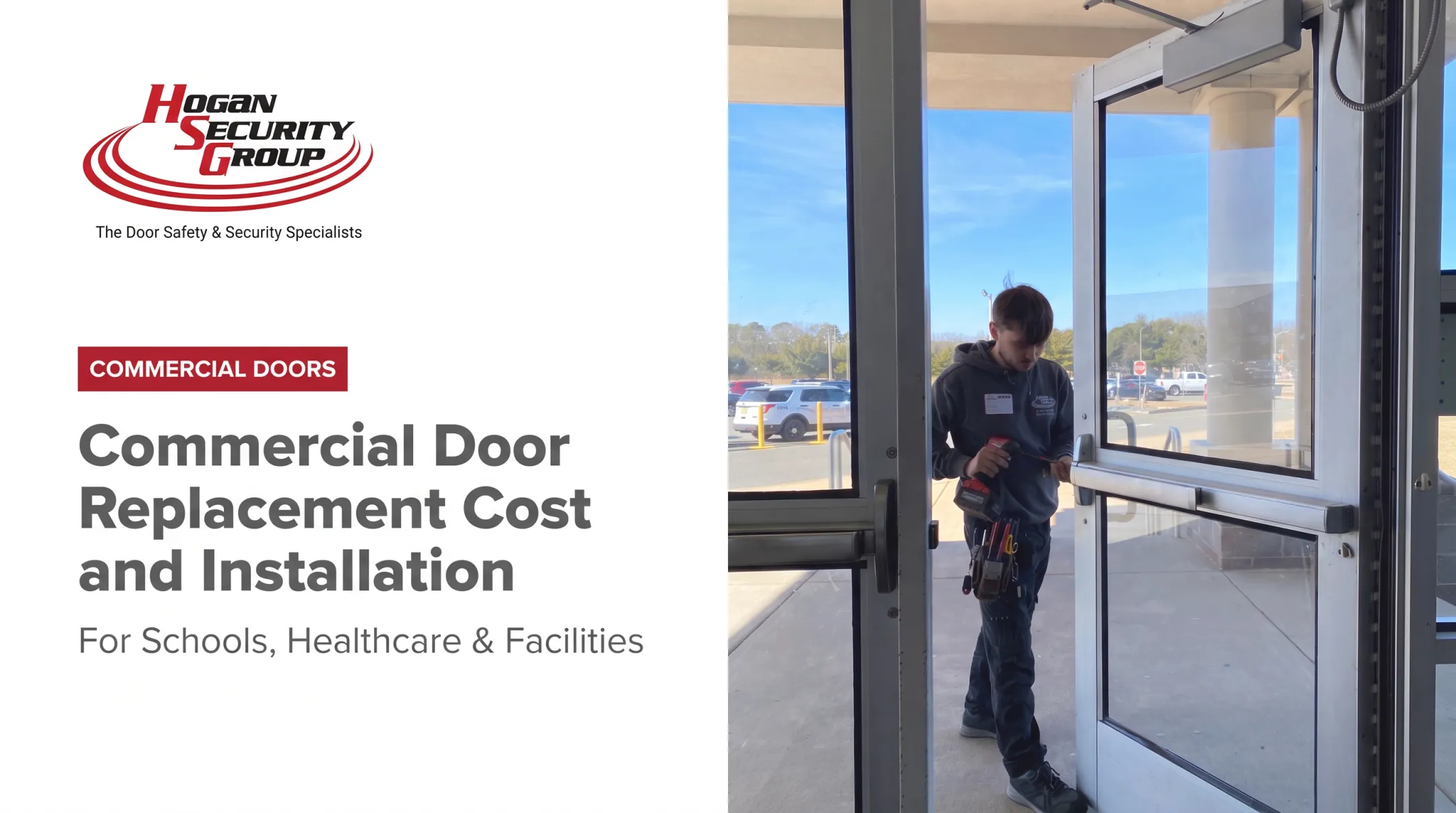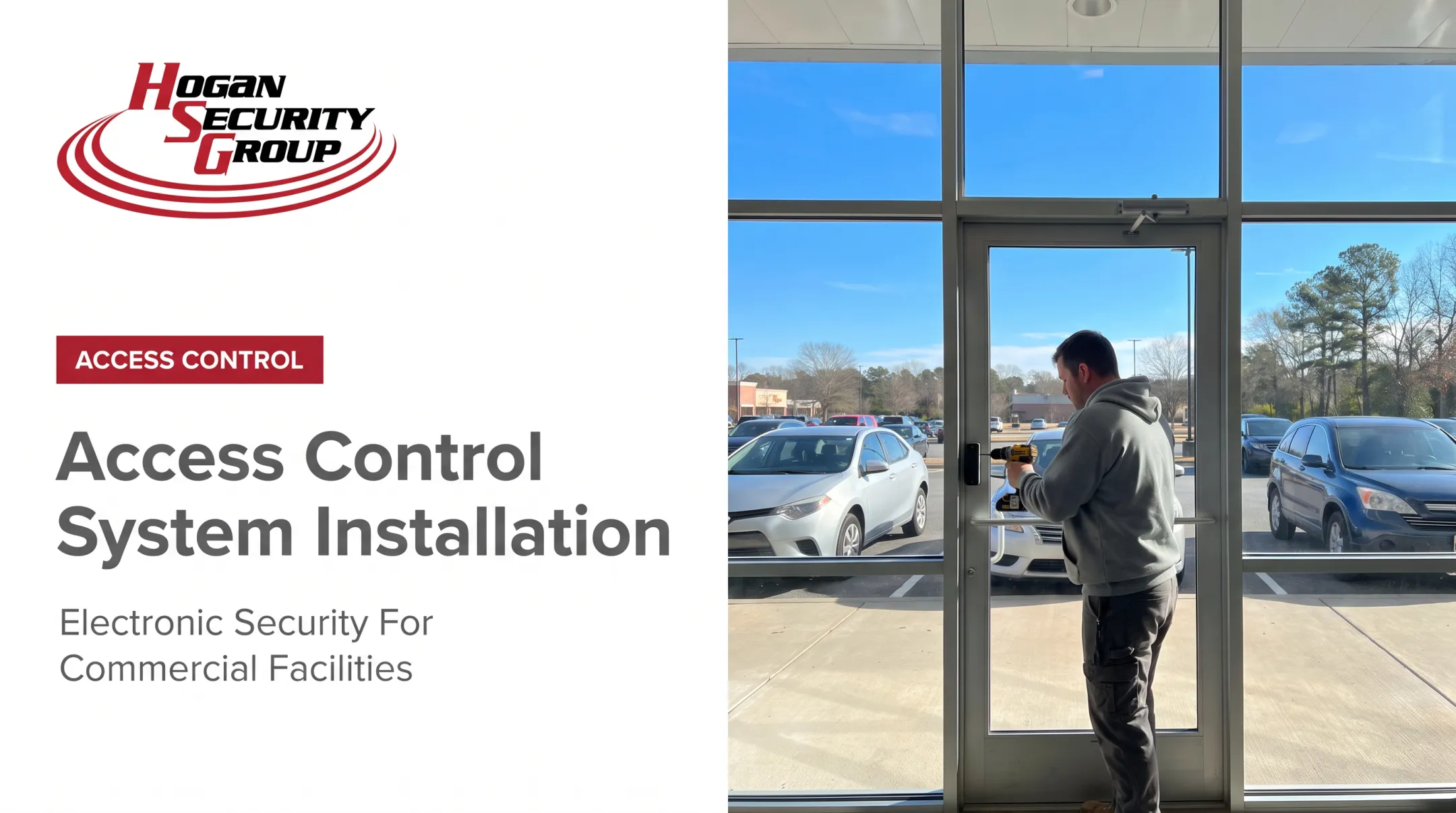

Schools, hospitals, warehouses, and multi-tenant buildings all face the same headache. Contractors need temporary access, staff turn over constantly, and one lost master key can force an expensive rekey of an entire building.
Princeton University ran into exactly this problem. When a contractor lost a card, administrators simply canceled that credential and issued a new one, no locksmith, no rekey, no downtime.
This guide compares leading commercial keyless entry systems and explains how to evaluate security, emergency egress, installation, scalability, and total cost before you sign a contract.
Key Takeaways
- Commercial keyless entry is a full access-control system, not just an electronic lock
- Keypad, card, mobile, biometric, and hybrid credentials fit different risk levels and budgets
- Emergency egress, fire-door rules, and backup power matter as much as the reader itself
- Compare installation, software, and maintenance costs, not only the sticker price on hardware
- A qualified integrator can survey aging buildings and phase upgrades over time
Overview of Commercial Keyless Entry Systems in the U.S. Market
A commercial keyless entry system replaces, or works alongside, physical keys with electronic credentials: PINs, proximity cards, key fobs, mobile phone credentials, biometrics, or a combination for multi-factor authentication.
Unlike a single smart lock, it's a networked system that gives one administrator control over every door in a building, or every building in a portfolio.
What's Actually in the System
Most commercial installations include:
- Electrified lock or exit device mounted at the door
- Reader or keypad that captures the credential
- Access controller that evaluates the credential and makes the entry decision
- Credential-management software for adding, scheduling, and revoking users
- Door-position and request-to-exit sensors
- Network or wireless connection linking the door to the controller
- Backup power to keep doors operating during an outage
- Audit-log functions recording every entry attempt
Why Commercial Systems Aren't Just Bigger Smart Locks
Residential smart locks handle one door and a handful of users. Commercial systems handle:
- Hundreds or thousands of users spread across dozens of doors
- Role-based permissions, so a teacher's badge behaves differently than a visitor's
- Audit trails needed for compliance and incident investigation
- Integration with alarms, cameras, and lockdown systems
- Emergency egress rules that can override normal locking logic
- Ongoing service contracts, not a one-time app download
Princeton's residence-hall rollout shows the scale difference. The university equipped 53 residence halls with roughly 3,700 locks serving about 9,000 students. Every entry is logged for audit, a scale of control no consumer smart lock is built to handle.

Top Commercial Keyless Entry Systems and Providers
The systems below are compared on credential flexibility, door compatibility, security features, scalability, integrations, and installation support. Product capabilities change frequently, so verify current specs, certifications, and warranties with each manufacturer before you buy.
Hogan Security Group — Commercial Keyless Entry Design, Installation, and Service
Hogan Security Group takes a different approach than the manufacturers below: it doesn't build the hardware, it designs, installs, and services it.
Founded in 1982, the company has engineered and maintained access-control systems across more than 65,000 doors for schools, hospitals, municipalities, and corporate clients throughout New Jersey, Pennsylvania, New York, Connecticut, and Delaware.
What sets Hogan apart:
- Licensed locksmith (NJ #34LX00017500) and licensed public works contractor, which matters for public-sector procurement
- Certified and direct with major manufacturers, including SALTO, dormakaba, Allegion, Assa Abloy, Vanderbilt, Kantech, and Genetec
- NJESC State Contract Vendor and Hunterdon County ESC Contract #218, so agencies can buy at pre-negotiated rates
- Builds phased migration plans from perimeter to interior doors as budget allows, without forcing a full-building replacement
| Comparison point | Hogan Security Group |
|---|---|
| Role | Integrator and service provider, not a lock manufacturer |
| Manufacturers supported | SALTO, dormakaba, Allegion, Vanderbilt, Kantech, Genetec, Assa Abloy |
| Public-sector purchasing | NJ State Contract Vendor; Hunterdon County ESC Contract #218 |
| Service area | New Jersey, New York, Pennsylvania, Connecticut, and Delaware |
| Service hours | Monday–Friday, 8 a.m.–4:30 p.m., with emergency call-out available |
For facilities that want one point of contact to survey doors, recommend hardware from multiple manufacturers, and manage the system for years afterward, Hogan functions as the implementation partner behind many of the brand names below.
Allegion / Schlage Commercial Access Control
Allegion's Schlage line spans standalone electronic locks to networked, cloud-managed hardware.
| Product line | What it does |
|---|---|
| NDE / LE | Mobile-enabled wireless locks (cylindrical and mortise) with Bluetooth, NFC, smart-card, and proximity credentials |
| AD Series | Offline (AD-200), hardwired networked (AD-300), and wireless networked (AD-400) locks, including exit-trim options |
| MTB readers | Multi-technology readers supporting proximity, smart-card, and Bluetooth with Wiegand, Clock & Data, or OSDP interfaces |
| ENGAGE | Cloud platform for managing users, schedules, audits, and mobile credential issuance |
This ecosystem suits offices, schools, healthcare facilities, hospitals, and multi-tenant properties that want one hardware family across many door types. The ENGAGE Gateway connects Bluetooth-enabled locks to the host system over Ethernet, or through an existing access-control panel using RS-485.
Supported card compatibility does not automatically mean secure, encrypted authentication. Allegion's own documentation separates basic card-serial-number reading from secure application support, so confirm which mode your reader actually uses.
dormakaba Commercial Access Control
dormakaba's commercial lineup centers on Keyscan controllers, Aurora management software, and the E-Plex 7900 electronic lock line, built for facilities mixing wired and wireless openings on one site.
- Keyscan KC controllers use built-in TCP/IP and Wiegand/OSDP interfaces, managed through Aurora or Aurora 2.0 software
- E-Plex 7900 locks run standalone or wireless in cylindrical, mortise, and exit-device configurations, with wireless models communicating over a two-way Zigbee network
- E-Plex 7900 fire-door listings include UL10/UL10C and ULC S104 ratings, relevant for any opening tied to a fire-rated assembly
- dormakaba is retiring its older E-Plex Enterprise software and E-Plex 3000/5000 Series, with a documented migration path toward the E7900 line
This system suits campuses healthcare facilities, and hospitals that need coordinated hardware across many openings, along with visitor access and scheduling features. Confirm which Aurora version your installer supports before committing to new hardware.
HID Global Commercial Access Control
HID specializes in credential security, which makes it a common pick for organizations managing access across many users or locations rather than a single building.
What to look for:
- Signo readers support contactless credentials plus HID Mobile Access IDs over NFC and Bluetooth LE
- Seos and MIFARE DESFire EV3 credentials use mutual authentication with per-transaction encryption, according to HID's security guidance
- Mobile IDs are signed and encrypted with AES and tied to a specific device, so a lost phone doesn't automatically mean a compromised credential
- Origo Management Portal issues and revokes Mobile IDs; HID recommends revoking the credential and removing it from the access-control system when a device is lost
- Mercury MP2500 controllers handle access decisions and event reporting on the Mercury hardware platform
HID isn't a complete system on its own. It supplies readers, credentials, and controllers that still need integration with a compatible access-control platform, so confirm compatibility before you purchase.
Avigilon Alta or Comparable Cloud-Managed Commercial Access Control
Avigilon Alta, formerly Openpath, is a cloud-managed platform: access control runs through a browser or app instead of an on-site server.
| Feature | What it offers |
|---|---|
| Administration | Remote configuration, mobile credentials, schedules, instant revocation |
| Multi-site management | Access groups and roles; Super Admins see all sites, local admins see only their own |
| Video/intercom | Optional Video Reader Pro and Video Intercom Reader Pro integration |
| Wireless locks | Supports offline Schlage LE/NDE and XE360 locks that need no gateway |
| Subscriptions | Feature tiers gate certain reporting and alarm functions behind higher plans |
The trade-off is internet dependence. During an outage, the local controller keeps making decisions with cached credentials and schedules, and Bluetooth or NFC mobile access keeps working. Remote unlocks, new users, and permission changes, though, wait until connectivity returns.

Cloud-managed systems fit organizations running multiple sites from one dashboard. They're a weaker fit for facilities with spotty internet or policies against storing access data off-site.
How We Chose the Best Commercial Keyless Entry Systems
Brand recognition and a low equipment price are two of the worst reasons to pick a system. Start with the building: door condition, user count, risk profile, emergency procedures, and existing infrastructure.
Security, Credentials, and Administration
Look past the marketing and check:
- Encrypted credentials (Seos, DESFire EV3) instead of legacy, clonable card technology
- Multi-factor authentication for perimeter doors, such as a card plus PIN
- Instant revocation that removes both the credential and its permissions
- Anti-passback tracking, which flags a credential used to enter without a matching exit
- Searchable audit logs covering entry attempts, propped-door alarms, and lockdown events
Tailgating deserves its own mention. A valid credential at a swing door doesn't stop someone from holding it open for an unauthorized follower. That's a training and policy issue as much as a hardware one.
Door, Life-Safety, and Installation Compatibility
This is where access control can go wrong fast. A site survey should cover door condition, frame type, fire ratings, exit devices, wiring, and fail-safe versus fail-secure behavior for every opening.

Non-negotiable life-safety rules:
- Fire doors need inspection at installation and at least annually by a qualified inspector, per NFPA's fire door guidance
- Fire doors must stay closed and latched, or close automatically; wedging them open is prohibited
- Monitored egress doors must meet specific electrical-locking code provisions or open from the inside without a key, tool, or special knowledge, under the 2024 International Building Code
- Accessible hardware generally sits 34 to 48 inches above the floor and operates with one hand, without tight grasping or twisting
Access control should never make it harder to exit a building during an emergency. Any integrator you hire should be able to explain exactly how each door behaves during a fire alarm or power loss.
Total Cost, Lifecycle Support, and Scalability
Equipment price is the smallest number on the invoice. Ask about:
- Cabling, wiring, and network upgrades needed for each door
- Software or subscription fees, and which features sit behind higher tiers
- Credential costs, including mobile credential packs that may run on 1-year or 5-year terms
- Installation, commissioning, and staff training
- Ongoing maintenance, battery replacement for wireless locks, and repair response times
Software licensing varies widely. Some platforms, like dormakaba's Aurora 2.0, advertise no recurring software fees, while cloud-managed platforms typically run on subscriptions. Neither model is automatically better; it depends on how many doors you manage and how often your access needs change.
Conclusion
The best commercial keyless entry system matches your building's risk level, door conditions, user population, and compliance obligations. A flashy app matters far less than fit.
Before signing anything, compare the full lifecycle: site assessment, design, installation, credential administration, emergency operation, and ongoing maintenance. A system that looks cheap on day one can get expensive fast if nobody's available to service it on day 400.
Hogan Security Group has spent more than four decades engineering, installing, and servicing access control across over 65,000 doors for schools, healthcare facilities, hospitals, municipalities, and businesses throughout New Jersey, Pennsylvania, New York, Connecticut, and Delaware. If you're weighing options for an aging building or planning a phased upgrade, reach out for a site assessment and a right-sized recommendation instead of guessing online.
Frequently Asked Questions
How much does it cost to install a keyless entry system?
Cost depends on the number of doors, lock and reader hardware, wiring, network work, software or subscription fees, credentials, and any door repairs needed first. Get a site-specific quote rather than relying on a generic per-door price online.
How do you use a keyless entry system?
An authorized user presents a credential such as a card, fob, mobile phone, PIN, or fingerprint at the reader. The controller checks it against stored permissions, then unlocks the door. Administrators add, schedule, and revoke users in management software instead of cutting physical keys.
What is the difference between keyless entry and smart entry?
Keyless entry simply means no traditional metal key is required. Smart entry usually adds connected features on top of that, such as remote management, mobile credentials, automated schedules, and activity logs.
What does a "keyless access system problem" mean?
It typically points to an expired credential, incorrect permissions, a dead battery, a network or power outage, or a reader fault. A qualified technician should diagnose the cause rather than resetting the system blindly.
Are commercial keyless door locks different from residential ones?
Yes. Commercial systems manage far more users and doors, with role-based permissions, audit trails, fire-door compliance, and centralized administration that residential smart locks don't need to handle.
What are the best keyless entry systems for commercial doors?
It depends on your facility. Keypad, card, mobile, biometric, and cloud-managed systems each solve different problems, so compare security, door compatibility, life-safety rules, and total cost before choosing one.