
Many property teams assume a door is fire-rated because it's heavy or has a metal frame. In reality, fire protection comes from a complete, tested assembly: the door, frame, hinges, hardware, and seals working together. Hogan Security Group's internal inspection data shows more than 65% of fire doors fail their first annual inspection, often over something as simple as a propped door or a failed closer.
This guide covers what fire-rated doors protect, the US codes that apply to apartment properties, the assembly components worth checking, how inspections work, and when to repair versus replace a door. Exact requirements shift based on your building's construction, occupancy, height, sprinkler protection, and door location, so treat this as a starting point—confirm specifics with your local AHJ.
Key Takeaways
- Fire protection depends on the complete listed door, frame, hardware, and seal assembly—not just how the door looks.
- Apartment entry, stairwell, corridor, and mechanical-room doors often carry different required ratings.
- Doors must close and latch fully; wedges, damaged closers, and missing seals compromise performance.
- More than 65% of inspected fire doors fail on their first check, usually from fixable issues.
- Confirm requirements with your local AHJ before specifying, repairing, or replacing any assembly.
What Fire-Rated Doors Do in Apartment Buildings
Passive Protection, Not Suppression
Sprinklers and alarms are active fire protection: they detect a fire and fight it. Fire-rated doors are passive protection. They don't extinguish flames; they buy time by containing smoke and heat inside a compartment.
A fire door's job is simple: keep a fire in one unit, one corridor, or one stairwell long enough for residents to get out and firefighters to get in.
Common Locations That Need Protected Openings
Not every apartment door is fire-rated, but several locations typically require protected openings:
- Unit entry doors that open into a rated corridor
- Interior exit stairway doors
- Elevator lobby and shaft enclosure doors
- Mechanical, utility, and laundry room doors
- Doors in walls separating different occupancy types within the building
Which specific openings require protection depends on your building's construction type, height, and the rated wall or barrier the door sits in. There's no single list that applies to every property.
One Tested Assembly, Not Just a Door
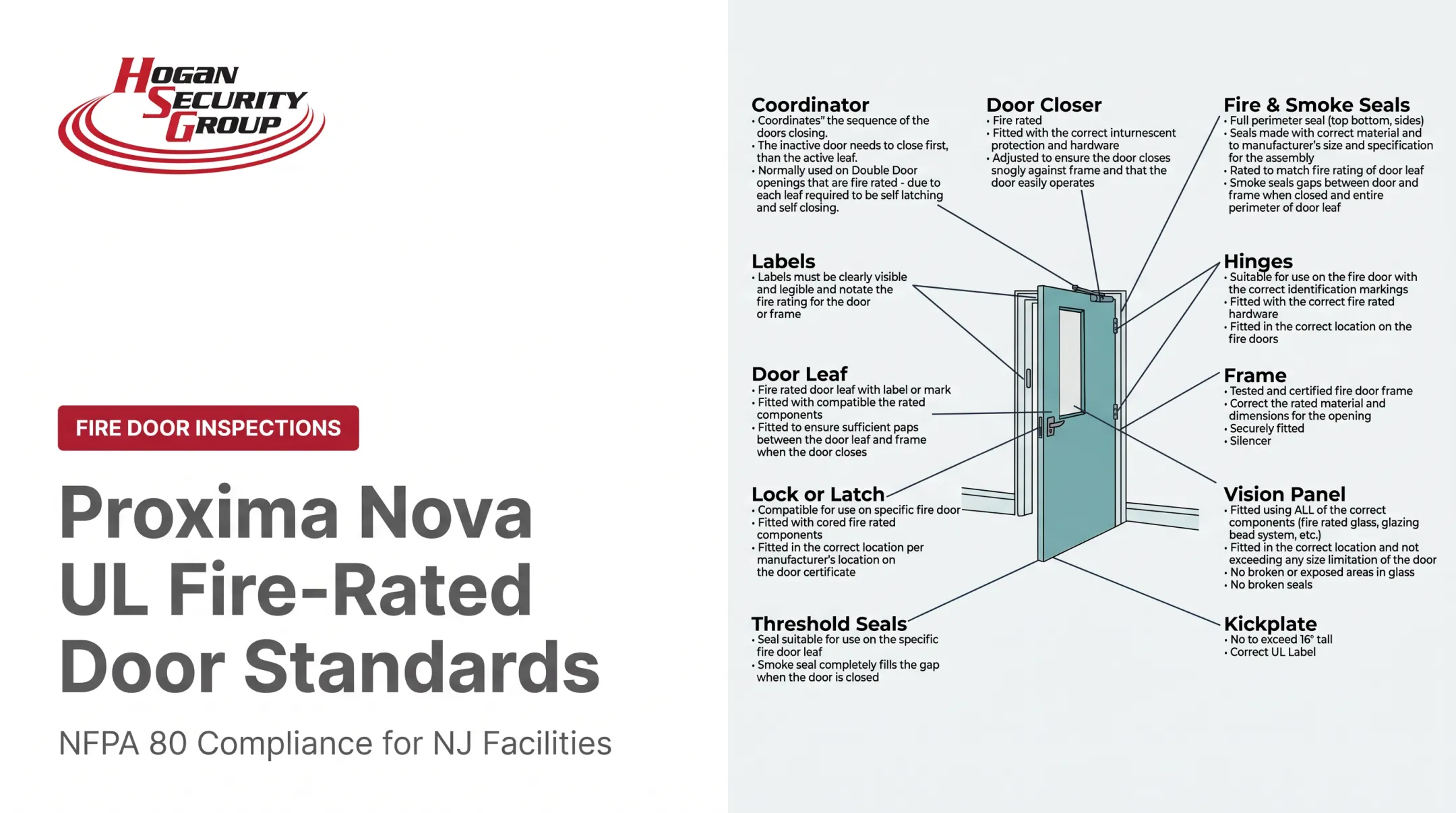
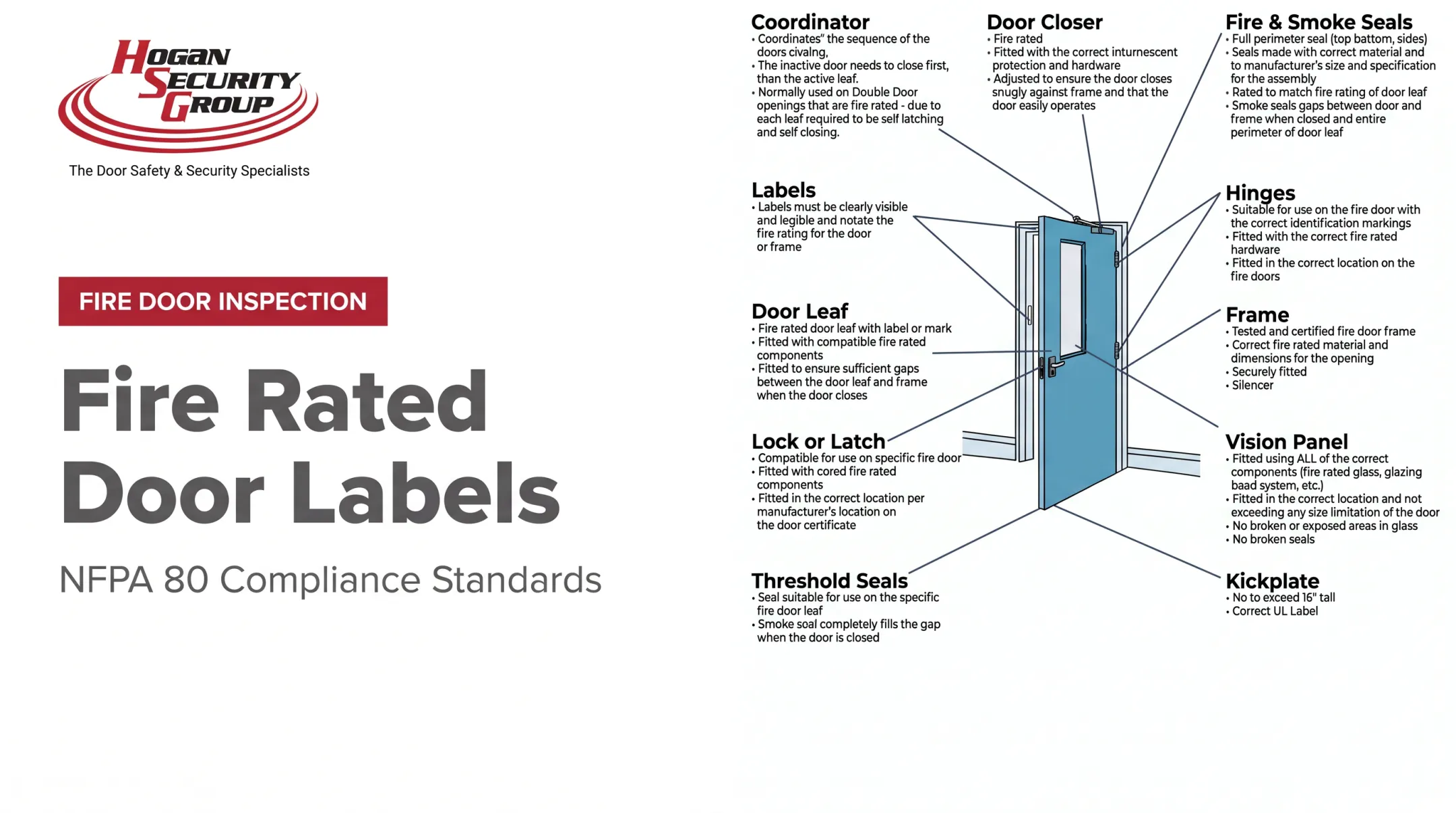
A fire rating belongs to the complete assembly: door leaf, frame, hinges, latching hardware, closer, and seals, all tested together. Swap in an incompatible hinge or an unlisted closer, and you can void the rating even if the door itself still carries its original label.
Some apartment doors, like those on a shaft enclosure, can stay open during normal use when wired to an approved hold-open device. That device must release and close the door automatically on alarm activation. A wedge-propped door is different: it has no fail-safe release built in.

Why This Matters in Practice
Picture a corridor fire door propped open with a rubber wedge so residents can move furniture. A fire starts two doors down. Instead of staying contained, smoke fills the open corridor and drifts toward the stairwell exit, exactly the path residents need to escape through. The door didn't fail. It was never allowed to do its job.
US Fire-Rating and Code Requirements for Apartment Doors
The Code Framework You're Working With
Three documents typically govern apartment fire doors in the US:
- The adopted building code (usually the IBC or a state variant) determines where protected openings are required
- NFPA80 governs installation, inspection, testing, and maintenance of the assembly
- NFPA 101 (Life Safety Code) and local fire codes may add further requirements
The 2024 IBC sets opening-protection requirements in Chapter 7, tied directly to the fire-resistance rating of the wall or barrier the door sits in.
How a Required Rating Gets Determined
There's no single "apartment door rating." The required number depends on:
- The fire-resistance rating of the wall, barrier, or shaft the door protects
- The building's construction type and height
- Occupancy classification and whether the building is sprinklered
- The door's exact function in the means of egress
A door's fire-protection rating (how long the assembly resists fire under test conditions) is a different figure from the fire-resistance rating of the surrounding wall. A 2-hour rated shaft wall doesn't automatically mean a 2-hour rated door. Check the applicable code table for the actual requirement.
A "minute" rating of 20, 45, 60, or 90 minutes describes how the assembly performed in a standardized lab test. It's a comparative benchmark, not a promise of how long you'll have to evacuate during an actual fire.
Verifying Requirements Before You Order
Skip the guesswork. Before specifying or replacing a door, work through this sequence:
- Locate the rated wall on your building plans
- Identify the opening's function (unit entry, stair, shaft, or mechanical room)
- Confirm the required rating against the applicable code table
- Review the manufacturer's listing to verify the door, frame, and hardware are tested together
- Get AHJ sign-off before ordering or modifying the assembly

Fire Door Assembly Components and Features to Evaluate
Door, Frame, and Hardware
The door leaf and frame need to match: same listing, compatible material, properly anchored into the rated wall. A steel frame that's out of alignment or pulling away from the wall undermines the rating, regardless of what the label says.
Hinges, latches, locks, and any panic or exit hardware must also be listed for use with that specific assembly. Positive latching matters. A door that swings shut but doesn't actually catch the latch isn't doing its job.
Closers and Hold-Open Devices
Every fire door needs a reliable way to close:
- Self-closing doors close after every single use, no exceptions
- Automatic-closing doors stay open for convenience during normal use, then release and close when the fire alarm activates
Accessibility features and convenience hold-opens are fine, as long as they're wired into an approved release system. A door chocked open with a wedge has neither function. It's just open.
Seals, Glazing, and Field Modifications
Intumescent and smoke seals, drop seals, and vision panel glazing are all part of the certified assembly, not optional add-ons. Field cutting a hole for a new access-control reader or drilling for a different strike can affect the listing if done outside manufacturer instructions, per UL's fire door guide.
One detail that trips up a lot of property teams: painting over an embossed, raised label is generally fine as long as the text stays legible. Painting over a flat printed label that obscures the information is not.
A Practical Checklist
Before signing off on any apartment fire door, confirm it:
- Closes fully from a wide-open position without assistance
- Latches without anyone pushing or forcing it
- Has no wedges, kickdowns, or unauthorized hold-open devices in place
- Shows no unapproved holes, cuts, or penetrations
- Has no severe warping, splitting, corrosion, or impact damage
Inspection, Maintenance, and Defect Correction
What Inspection Actually Covers
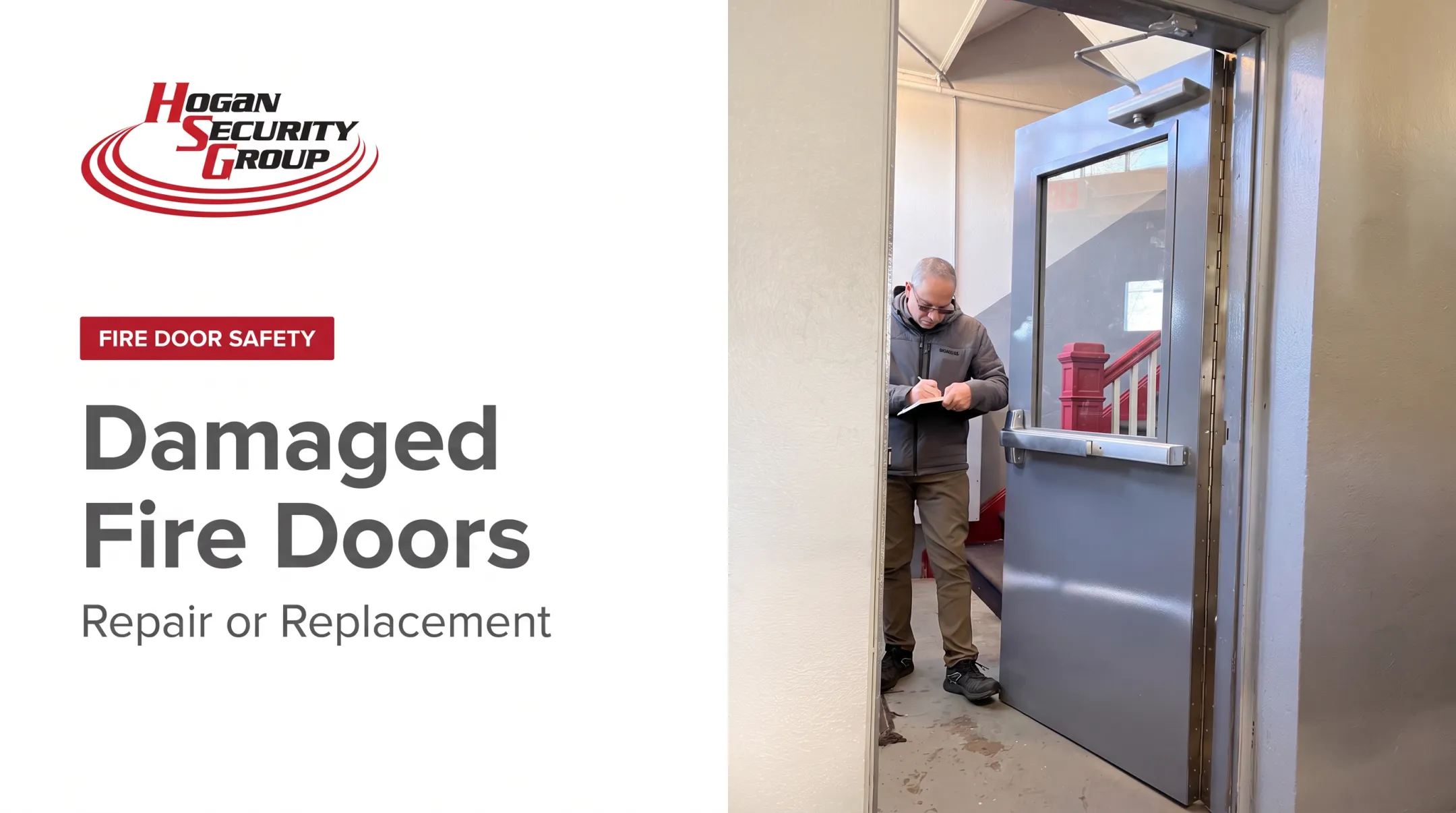
Daily staff observations and formal code-compliance inspections aren't the same thing. Staff should flag obvious problems, like a propped door or a broken closer, as part of routine operations. Formal inspections go deeper.
NFPA's 2025 FAQ confirms that fire door assemblies require inspection and testing immediately after installation and at least annually after that, even for doors that stay closed and are rarely used. A qualified person, in-house or third-party, can perform the work, provided the AHJ accepts their qualifications.
A thorough inspection checklist covers:
- Labels, signage, and glazing
- Door and frame condition, gaps, and clearances
- Hinges, closer operation, and latching function
- Seals and any unauthorized modifications
Hogan Security Group's certified FDAI inspectors run more than 20 diagnostics on each opening, from the coordinator and closer down to the threshold seal and kickplate, all built around this same NFPA80 framework.
Defects We See Most Often
Across more than 10,000 inspected fire-rated openings in multitenant and mixed-use and other facilities, a handful of problems show up repeatedly:
- Doors propped open with wedges or furniture
- Closers that leak fluid or no longer pull the door shut
- Doors that swing closed but fail to latch
- Missing fasteners or damaged frames
- Worn-out or missing seals
- Painted-over, illegible labels
- Access-control hardware added without coordinating with the door's listing
More than 65% of fire doors fail their first annual inspection. Over 90% of those failures are quick, affordable fixes well within a standard maintenance budget, not full replacements.

Correcting a Defect
- Document it: photograph the defect and note the opening's location
- Classify urgency: a door that won't close is a bigger priority than a worn kickplate
- Identify a listed repair path using compatible, listed replacement parts
- Complete the repair with qualified technicians
- Recheck the assembly to confirm it closes, latches, and meets the listing again
Having one team handle both inspection and repair saves time here. Hogan Security Group's FDAI-certified inspectors identify deficiencies and coordinate fixes with manufacturer-supported door and hardware technicians and licensed locksmiths, rather than handing over a report and walking away.
Choosing, Repairing, or Replacing Apartment Fire Doors
Repair or Replace?
Not every defect means a new door. Repair usually makes sense for a worn closer, a damaged seal, loose hardware, or a frame that's slightly out of alignment.
Replacement or specialist evaluation becomes necessary when:
- The label is missing, painted over, or unreadable
- The door or frame has severe structural damage
- Previous modifications are incompatible with the listing
- The assembly can't reasonably be restored to its original rating
Cost Drivers to Expect
Costs vary too much to quote a flat number, but the real drivers include:
- Number of openings needing work
- Door and frame material and required rating
- Hardware complexity, including access-control integration
- Site conditions and custom sizing
- Removal, disposal, and any code corrections
- After-hours or emergency scheduling
An on-site assessment will always beat a guess based on averages.
Questions to Ask Any Contractor
Before signing off on a repair or replacement, ask:
- What rating and listing apply to this opening?
- Is the frame included, or just the door?
- Are all hardware components compatible with the listed assembly?
- Who coordinates with the AHJ?
- What documentation, warranties, and post-installation testing will I receive?
Phasing Work Across a Portfolio
For multi-building properties, fixing everything at once isn't realistic. A more workable approach:
- Prioritize openings that failed inspection or pose the highest risk
- Put AHJ-approved temporary safeguards in place where needed
- Schedule follow-up inspections rather than treating installation as the finish line
Installation isn't the end of compliance. It's the start of the maintenance cycle.
Keeping Apartment Fire Doors Ready to Perform
Fire-rated doors only work if every part of the assembly is specified correctly, installed by someone who understands the listing, inspected on schedule, and left alone by residents and staff in between.
That last part is harder than it sounds. A wedge under a corridor door seems harmless until the one night it isn't.
Arrange a documented evaluation when apartment doors are:
- Damaged or failing to latch
- Repeatedly propped open
- Tied into a new access-control project
- Part of an active renovation
Acting before a fire marshal flags the issue keeps remediation on your schedule instead of theirs.
Hogan Security Group has inspected more than 10,000 fire-rated openings across multitenant and mixed-use developments in New Jersey, New York, Pennsylvania, and nearby states. FDAI-certified inspection is paired with licensed locksmith and door-hardware repair, so deficiencies get identified and fixed by the same team instead of bouncing between vendors.
That combination does not replace your AHJ's approval. It does close the gap between finding problems and resolving them.
Frequently Asked Questions
How much do fire doors in apartments cost?
Cost depends on the required rating, door and frame material, hardware complexity, dimensions, access-control integration, and whether you need a repair or full replacement. An on-site assessment gives a far more accurate number than any standard price list.
Are apartments required to have fire doors?
US apartment buildings typically require rated opening protectives at specific locations, such as corridor entries, stairwells, and shaft enclosures, but not every interior door is automatically fire-rated. Check your building plans and confirm final requirements with your AHJ.
Do fire doors in apartments need to be self-closing?
Required fire doors need to close and latch as designed, whether through a standard self-closing device or an approved automatic-closing arrangement tied to the fire alarm. Hold-open devices are acceptable only when properly listed and coordinated with that release system.
What is an emergency door release, and what do exit doors need?
Emergency release hardware lets occupants exit without a key or code, even as the door maintains its fire-rated and access-controlled function. Specifics around fail-safe versus fail-secure operation and panic hardware depend on occupancy and code, so AHJ review is required.
Do BS 476 or BS EN 1634 apply to US apartment fire doors?
No. BS 476 and BS EN 1634 are British standards. US apartment projects rely on the adopted building and fire codes, NFPA80, NFPA 101 where applicable, and test standards such as UL 10C, subject to AHJ approval.
What's the best fire-rated entry door for an apartment?
The best option is a complete, listed assembly matched to the opening's required rating, wall construction, hardware, accessibility needs, and security system, not simply the highest-rated or priciest door on the market.