
Many facility managers aren't sure who's actually responsible for inspections, what happens when a door fails, or whether an internal walkthrough satisfies their obligations. Add in documentation requests from a fire marshal or other authority having jurisdiction (AHJ), and the uncertainty multiplies fast.
This guide covers U.S. fire door inspection requirements, what inspectors actually check, inspector qualifications, the inspection and repair process, cost considerations, and how to choose a qualified provider.
Key Takeaways
- Fire door inspections evaluate the entire assembly: door, frame, glazing, hardware, labels, clearances, seals, and closing/latching function
- Inspection frequency and recordkeeping depend on adopted codes and your local AHJ's expectations
- Qualified inspectors document every opening individually and recommend repairs that preserve the fire rating
- Professional services help facilities manage recurring inspections, repairs, and compliance records across one or many buildings
Why Fire Door Inspections Are Required and Why They Matter
A fire-rated door assembly exists to slow the spread of smoke and flame long enough for occupants to evacuate or for a defend-in-place strategy to hold. That only works if the door closes completely and latches on its own.
In practice, assemblies take a beating. Frequent use, door propping, impact damage, hardware swaps, and deferred maintenance all chip away at performance. More than 65% of fire doors fail their annual inspection, according to Hogan Security Group's own 2025 field data from the facilities it services. That's a striking number given how routine these doors look on a daily walkthrough.
The Code Landscape
Several standards govern fire door compliance, and they overlap:
- NFPA80 sets installation and maintenance requirements for fire door assemblies
- NFPA 101 (Life Safety Code) and NFPA 105 address broader egress and smoke-door requirements
- The International Building Code and International Fire Code reference these standards and get locally amended
Jurisdictions don't all adopt the newest edition. NFPA's 2025 guidance confirms annual inspection as the baseline, but your facility's actual obligation depends on whichever edition your local AHJ has adopted. Always verify the current edition in force before assuming a requirement applies.
When Inspections Happen
Fire doors generally need evaluation at three points:
- After installation - confirming the assembly was built and hung correctly
- After maintenance or modification - verifying any hardware change or repair didn't compromise the rating
- Recurring intervals - typically annual, per the applicable adopted code

New Jersey, for example, requires fire doors to be inspected at least once a year under its adoption of NFPA80. Noncompliance fines can reach tens of thousands of dollars. Owners stay on the hook even when they outsource the work. The 2024 International Fire Code places the inventory, inspection, and repair obligation squarely on the building owner, regardless of who performs the labor.
What a Certified Fire Door Inspection Checks
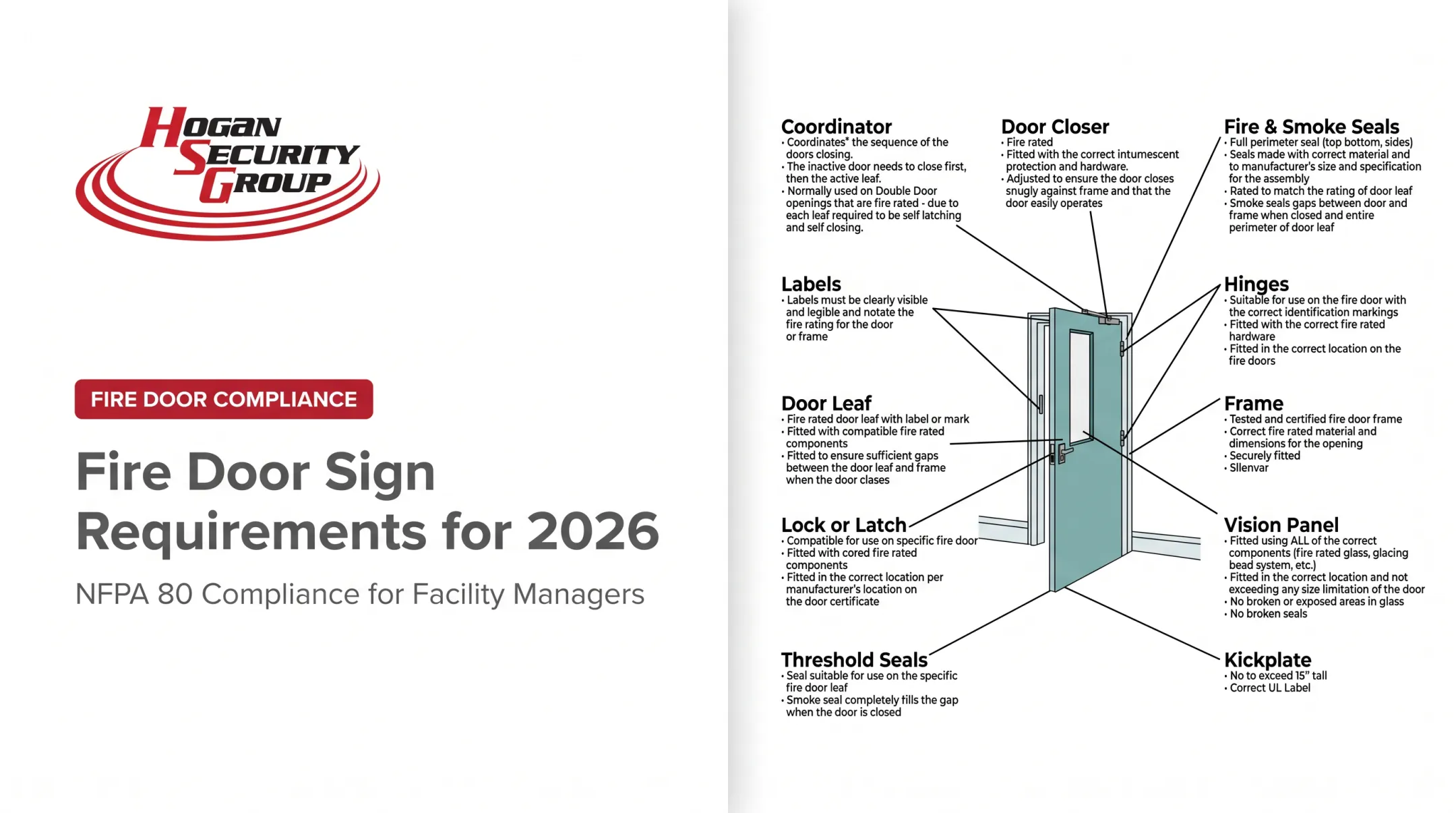
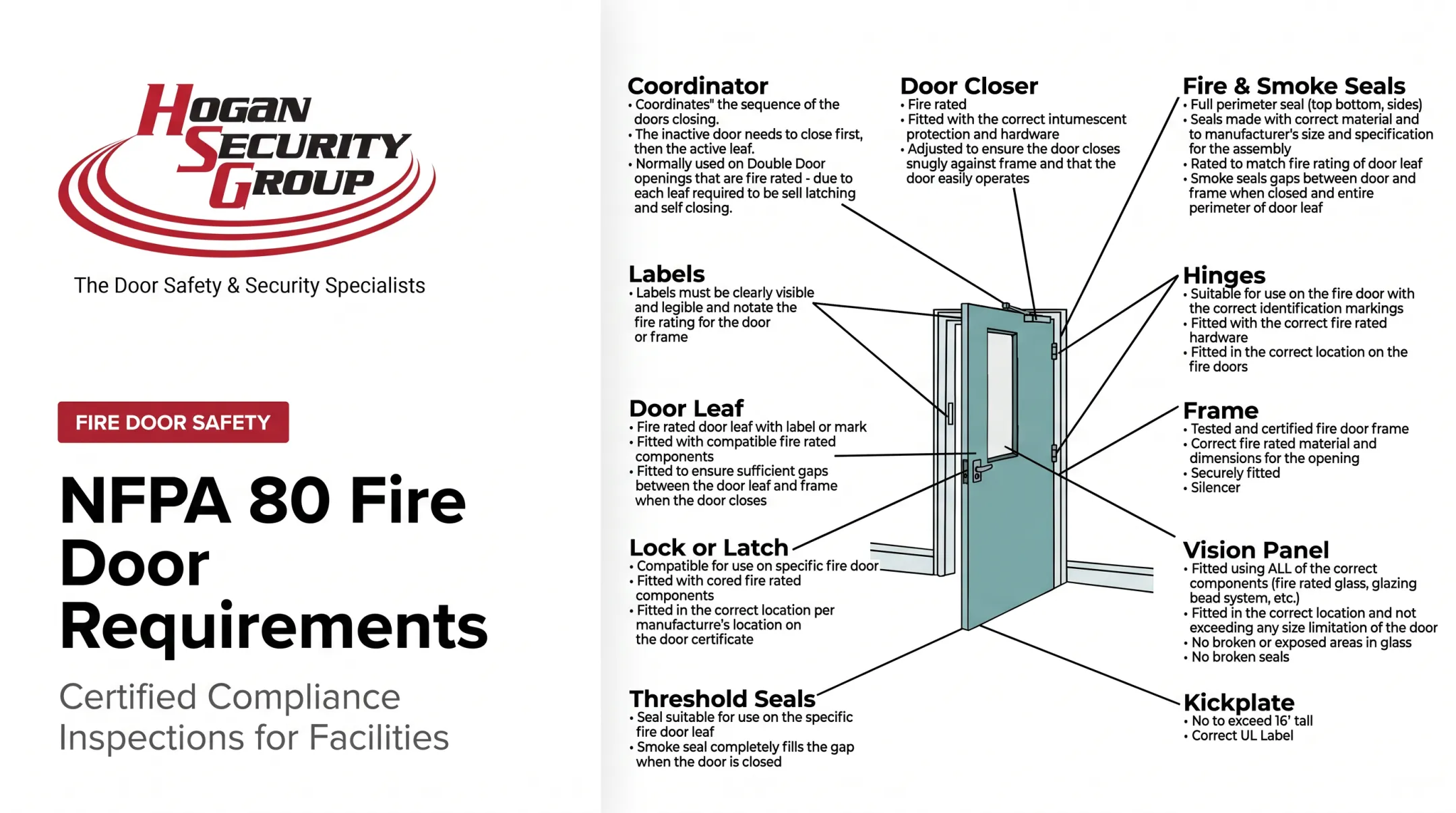
A fire door assembly is far more than the slab you walk through. It includes the frame, hinges, closer, latch, coordinator (on pairs), glazing, seals, threshold, signage, and any auxiliary hardware attached to it. Inspectors evaluate all of it, not just the door leaf.
Labels and Identification
Every rated door needs a legible, uncovered label identifying the manufacturer, rating, and test standard. Inspectors check that:
- The label is present on both door and frame
- It hasn't been painted over, covered, or damaged beyond legibility
- It matches the assembly's actual installed condition
Labels typically show a duration rating, commonly 20 minutes to 3 hours depending on the opening's location and purpose.
Physical Condition and Operation
Hogan Security Group's inspectors work from a checklist with more than 20 diagnostic points, covering both visual condition and functional testing. Locksmith Ledger's checklist breaks this down into 13 core categories that most certified inspections follow, including:
- Visual checks: holes, breaks, corrosion, cracked panels, missing parts, unauthorized field modifications
- Functional tests: full closing from an open position, proper latching, correct sequencing on pairs with a coordinator
- Installation checks: clearances around the perimeter, frame alignment, secured glazing kits, intact gasketing or edge seals
A door can look fine and still fail. A warped frame that prevents full latching, or a hold-open device wired incorrectly, won't necessarily jump out during a casual glance.

Items That Interfere With Function
Inspectors also flag anything that could block the door from closing or latching properly:
- Door wedges or unauthorized stops
- Improperly installed access-control hardware
- Signage mounted where it obstructs hardware
- Hold-open devices not tied to the fire alarm system
Important: Clearance tolerances and permissible field modifications are edition-specific and tied to the manufacturer's listing. Don't rely on a single universal gap measurement; verify against the applicable NFPA80 edition and the door's actual listing documentation.
What Happens During and After a Professional Inspection
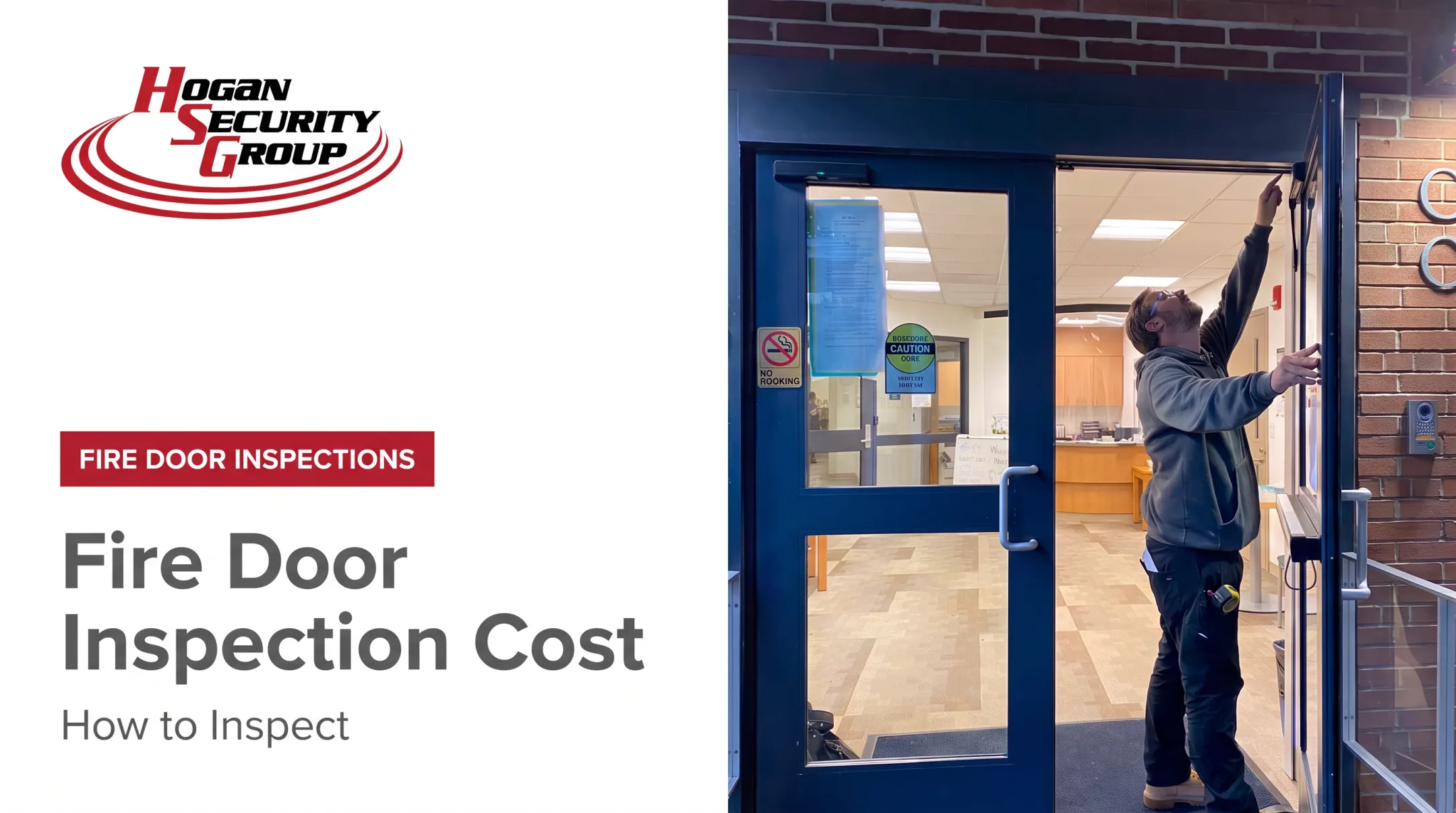
A thorough inspection starts before anyone touches a door. Inspectors typically request floor plans or an existing door inventory, identify which openings are actually rated, and coordinate site access with facilities staff.
On-Site Process
During the visit, inspectors:
- Examine both sides of each assembly, since damage or modifications on one face aren't always visible from the other
- Test operation by opening, releasing, and confirming full closure and latching
- Photograph deficiencies and document findings per individual opening, not just per building
Each door gets its own record. A typical report includes:
- Facility name and inspection date
- Inspector credentials
- Unique door ID and location
- Pass/fail status and specific deficiency observed
- Supporting photos
- Recommended corrective action
Prioritizing Repairs
Not every deficiency carries equal weight. A door that won't latch at all is a more urgent life-safety issue than a slightly loose kickplate. Prioritization generally follows:
- Closing/latching failures (highest priority - the door can't do its core job)
- Obstructed or blocked openings
- Damage that compromises structural integrity
- Cosmetic or minor hardware issues
There's no single universal correction deadline across every jurisdiction, so check what your AHJ or facility policy requires.
More than 90% of failures can be remedied quickly within a standard facility management budget, based on Hogan Security Group's 2025 field data. Most issues are closer adjustments, latch repairs, or seal replacement, not full door swaps.

Repairs That Preserve the Rating
Here's where things get strict. Drilling new holes, installing unapproved hardware, swapping glazing, or removing a label can void the fire rating entirely. Proper repair work:
- Uses listed or manufacturer-compatible replacement components
- Follows the door's original listing documentation
- Requires technicians familiar with NFPA80 repair provisions
Hogan Security Group's FDAI-certified inspectors work with manufacturer partners, including Allegion, Assa Abloy, dormakaba, and Special-Lite, to source compliant parts rather than guessing at a fix.
Closing the Loop
Once repairs are complete, facilities should reinspect the affected openings, update the deficiency log, and retain records ready for AHJ review or internal compliance audits. Skipping this last step is how facilities end up with "repaired" doors that were never actually verified.
How to Choose a Certified Fire Door Inspection Service
Picking the right provider comes down to more than a certification on a business card. Before hiring, verify:
- Relevant training and experience with your specific door types and occupancy class
- Fire door inspection credentials, such as FDAI
- Insurance and references from similar facilities
- Reporting practices that document each opening individually with photos
- Repair capability so the same team can fix what they find
A provider that only identifies deficiencies leaves you scrambling to find a second contractor for repairs, parts, and verification. A provider that handles inspection, repair, and replacement under one roof keeps the whole process moving.
Questions Worth Asking
When comparing quotes, ask providers to address:
- Number of openings and buildings covered
- Whether photos and digital records are included in the report
- How they handle urgent failures or doors that are temporarily inaccessible
- Whether follow-up inspections after repair are included or billed separately
- How they coordinate with facilities, maintenance, and safety teams across multiple sites
Quote factors typically include the number of openings, assembly complexity, travel distance, and whether repairs are bundled in or billed separately.
Why Hogan Security Group
Hogan Security Group has been inspecting fire doors for schools, colleges, healthcare facilities, hospitals, municipalities, and corporate offices for almost 45 years across New Jersey, New York, and Pennsylvania. The company has inspected more than 10,000 fire doors across multitenant and mixed-use housing, self-storage, education, and healthcare settings, including ambulatory surgery centers and nursing homes.
Founder Dan Hogan is an FDAI-certified fire door inspector with more than 45 years of locksmith and security industry experience. The company's manufacturer relationships with Allegion, Assa Abloy, dormakaba, and Special-Lite mean deficiencies get fixed with compatible, listing-preserving parts.
If your facility needs inspection scheduling, deficiency repair, or a second opinion on compliance documentation, contact Hogan Security Group at 609-737-8100 or info@hogansecurity.com to discuss scope and next steps.
Frequently Asked Questions
How much does it cost to have fire doors inspected?
Pricing depends on the number of openings, building size, hardware complexity, site access, and whether repairs or follow-up testing are included. Request a site-specific quote rather than relying on a flat per-door estimate.
How long does a fire door inspection take?
Timing varies with the number of assemblies, building layout, and access coordination. The on-site visit is typically separate from the time needed for report generation and any follow-up repair work.
What is required for fire door inspections?
Inspectors must evaluate the complete assembly, test closing and latching function, document each opening individually, and address deficiencies according to the code edition your local Authority Having Jurisdiction (AHJ) has adopted.
What does a fire door inspection checklist include?
Core items include labels, door and frame condition, glazing, hardware, clearances, closing and latching function, coordinators, seals, signage, auxiliary hardware, and any unauthorized field modifications.
Do you need to be qualified to inspect fire doors?
Yes. Inspections should be performed by someone with knowledge and training specific to the assemblies involved. Credentials such as FDAI certification demonstrate competence, but your AHJ decides what is acceptable.
Can you repair a damaged fire door?
Many deficiencies can be corrected, but repairs must use approved or compatible components that preserve the assembly's listing. Have a qualified inspector evaluate the door before modifying or replacing any rated component.