
Requirements vary significantly based on your building's use, the specific codes adopted by your state and city, and the final interpretation of the Authority Having Jurisdiction (AHJ). This guide provides a general preparation checklist for businesses in the U.S. that you must verify against your local codes. We'll cover what to inspect, how to document your findings, when to call in qualified professionals, and how to manage the process before and after inspection day.
Key Takeaways
- Use this checklist year-round to review egress, fire doors, alarms, suppression equipment, and electrical hazards.
- Separate visual checks your staff can do from servicing and repairs that require qualified professionals.
- Document every finding with its location, condition, photo, responsible party, and a correction deadline.
- Treat blocked exits, inoperable alarms, and compromised fire doors as urgent issues needing immediate action.
- Always confirm requirements with your local AHJ, as inspection criteria vary by jurisdiction.
What You Need to Check in a Business Fire Marshal Inspection
Think of this checklist as a tool for your own repeatable, internal walk-throughs. It complements, but doesn't replace, the official fire marshal inspection or the specialized testing required for your systems.
Egress, Exits, and Occupancy
Your first priority is ensuring people can get out. Walk every escape path from the perspective of an occupant and an emergency responder.
- Clear Routes: Exit routes, corridors, stairwells, and final discharge areas must be completely clear. According to OSHA regulations, there should be no storage, equipment, or debris blocking the path.
- Functional Doors: Exit doors must open easily from the inside without keys or special knowledge. Confirm panic bars and levers work, and remove unapproved locks, chains, or wedges.
- Accurate Postings: Verify that posted occupant load signs (especially in assembly areas), evacuation maps, and emergency plans are current and match the building’s layout.
Fire Doors and Rated Openings
Fire doors are critical for compartmentalizing a building and stopping the spread of smoke and fire. However, our field data shows that over 65% of fire doors fail their annual inspection.

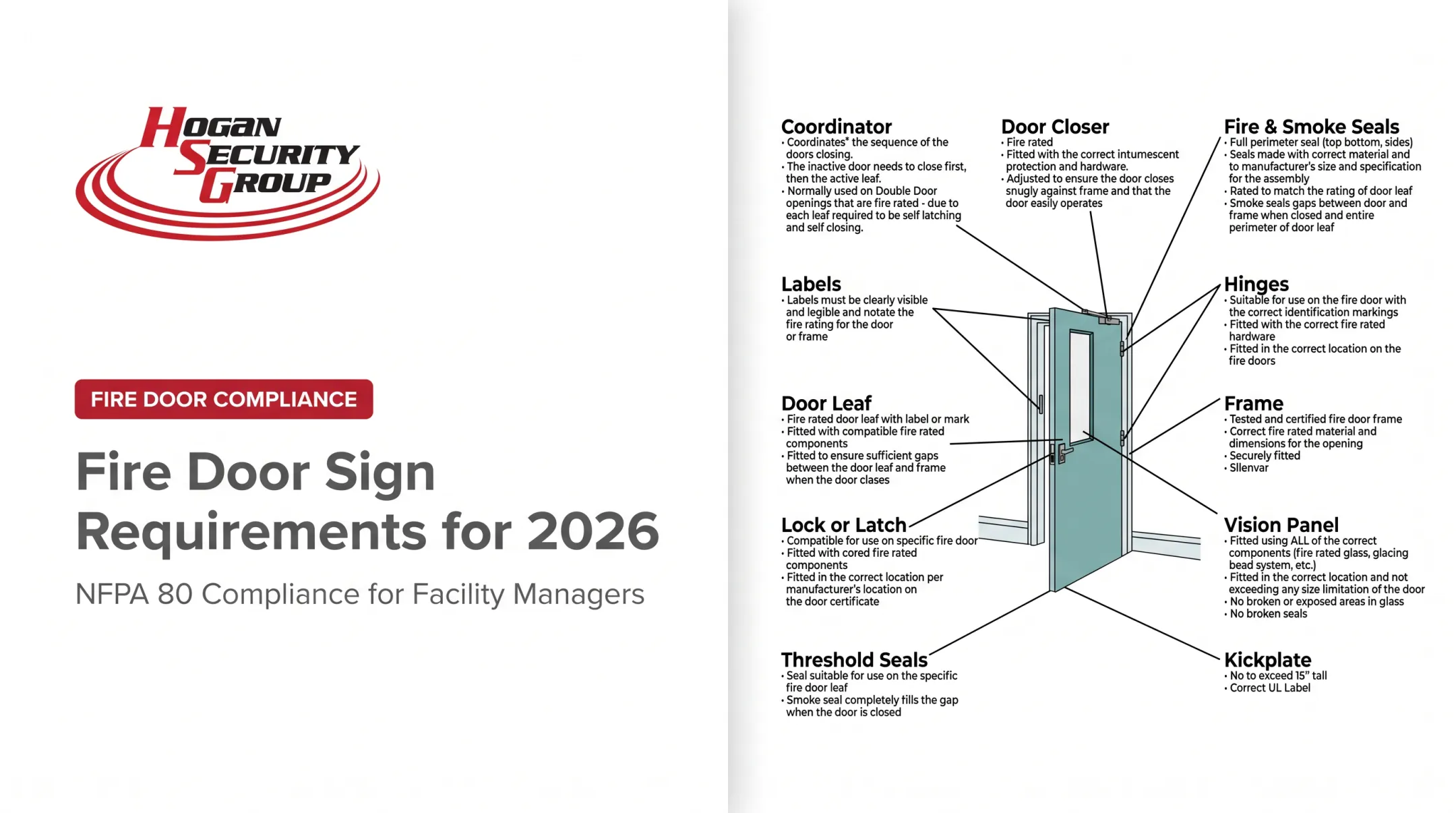
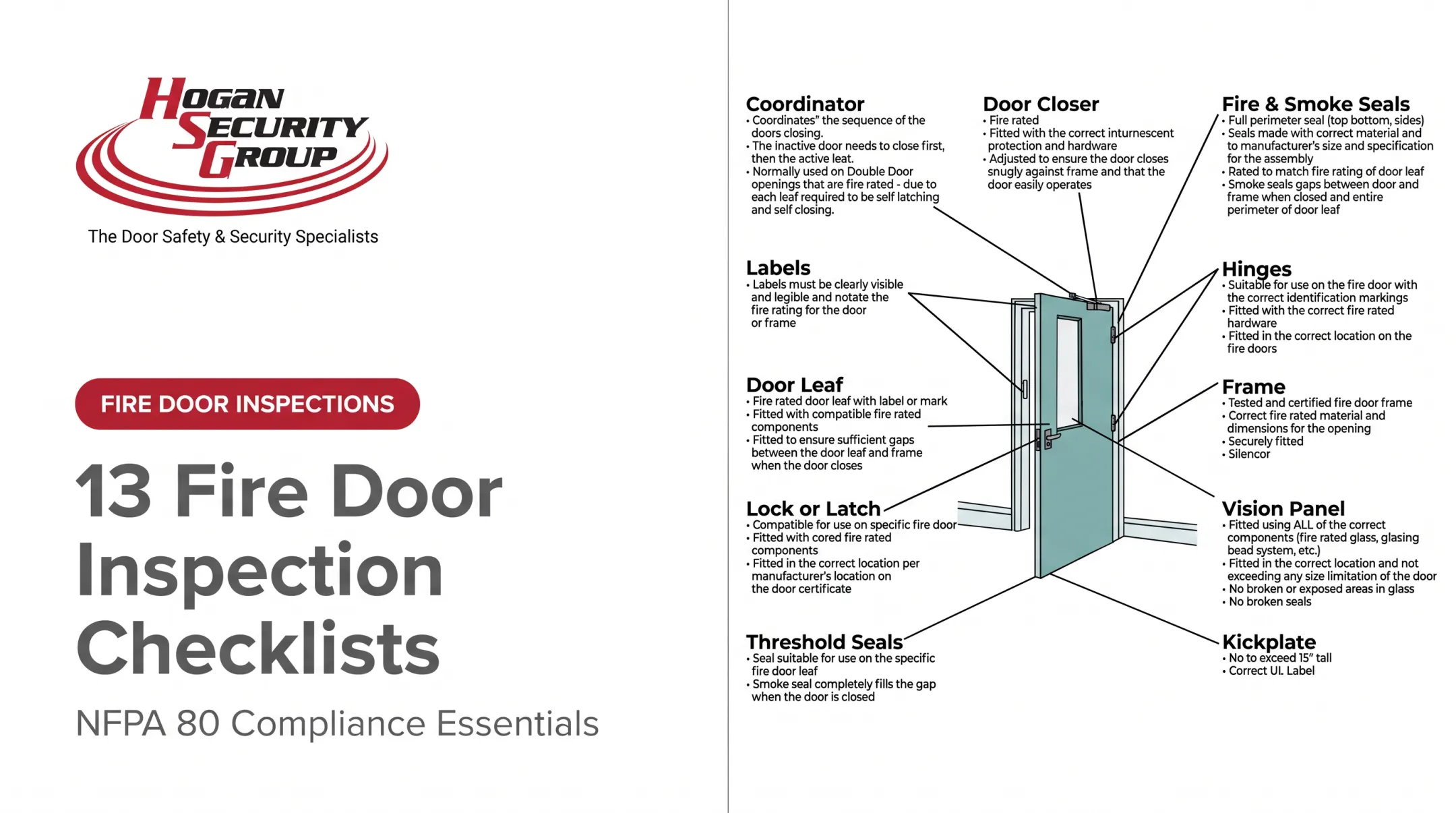
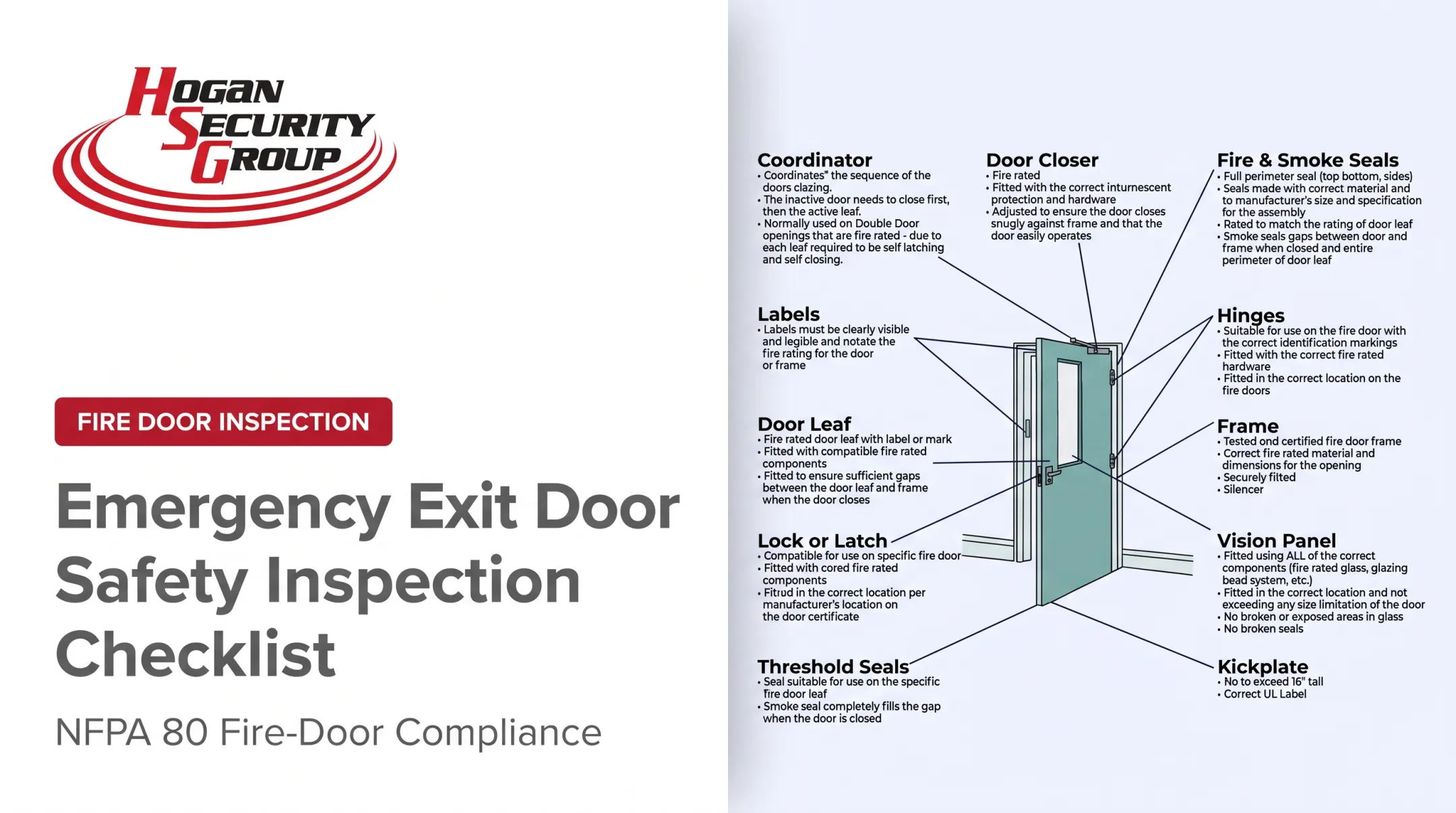
- Visual Inspection: Check the door, frame, and hardware for damage. Confirm the self-closer works, the door latches fully, and rating labels are present and unpainted.
- No Propping: Fire doors must never be propped or blocked open. Document any door found with a wedge, stop, or other unapproved hold-open device.
- Professional Inspection: A visual check is not enough. NFPA80 standards require an annual inspection by a qualified person. Hogan Security Group provides certified FDAI inspections for facilities in New Jersey, Pennsylvania, and New York.
Fire Extinguishers and Emergency Equipment
This equipment must be ready and accessible at a moment's notice.
- Fire Extinguishers: Confirm each unit matches area hazards, is visible and properly mounted, shows green on the gauge, and has a current service tag.
- Exit Signs & Emergency Lights: Confirm exit signs stay illuminated and emergency lights activate on power loss. NFPA often requires a 30-second monthly test and a 90-minute annual test.
- Manual Pull Stations & Alarms: Ensure manual fire alarm pull stations are visible and unobstructed. Check the main alarm panel for any trouble signals or supervisory alerts that indicate a problem.
Fire Alarm, Sprinkler, and Suppression Systems
Your internal check is visual, but it can still flag issues that need a licensed technician.
- Visual Review: Confirm inspection tags on alarm panels, sprinkler risers, and kitchen hoods are current. Keep sprinkler heads clear of storage or decorations, and keep control valves accessible.
- Professional Servicing: Do not test these systems yourself. Alarm testing, sprinkler maintenance, and fire pump work require licensed technicians and coordination with your monitoring company.
Electrical, Heating, Storage, and Housekeeping Hazards
Many fires start from simple, preventable hazards. Data from the U.S. Fire Administration shows that cooking, electrical malfunctions, and heating are leading causes of nonresidential fires.
- Electrical Safety: Look for overloaded outlets, daisy-chained power strips, and damaged cords. Use extension cords only temporarily, and keep at least 36 inches of clearance at electrical panels.
- Hazardous Materials: If your business uses flammable or combustible materials, confirm they are stored in approved, labeled containers and cabinets.
- Housekeeping: Keep mechanical rooms, kitchens, and storage areas free of combustible debris so clutter cannot fuel a fire or block responders.
Records and Emergency Readiness
Keep documentation current and make sure key staff know the plan.
- Assemble a Compliance Binder: Keep permits, prior inspection reports, alarm and sprinkler service records, fire door reports, and drill logs in one accessible place.
- Confirm Staff Knowledge: Ensure key employees know the evacuation plan, emergency contacts, and where to find compliance documents for the inspector.
Methods to Use the Checklist
A strong fire safety program combines routine internal checks with professional servicing and a final review before the AHJ arrives.
Internal Facility Walk-Through
This is your first line of defense, designed to catch day-to-day issues.
- Description: A systematic walk-through where a designated staff member uses a standardized checklist to examine every part of the facility.
- Tools Needed: Your AHJ’s checklist (if available), a floor plan, a flashlight, and a mobile device for taking photos.
- Step-by-Step:
- Start with prior findings. Review your last inspection report and focus on previously cited issues.
- Walk the path. Follow a consistent route, covering all exit paths, equipment areas, and stairwells.
- Document everything. For each item, note its location, condition (compliant or deficient), and a photo.
- Assign and track. Assign every deficiency an owner, priority, and due date. Follow up to ensure corrections are actually completed.
- Pros & Cons:
- Pro: Great for frequent checks and catching housekeeping problems.
- Con: Staff may not be qualified to identify complex code issues with fire doors, alarms, or sprinklers.

Professional Pre-Inspection Assessment
For critical systems, you need an expert.
- Description: Engaging qualified specialists to inspect and test systems that require technical knowledge, like fire doors, alarms, and sprinklers.
- Tools Needed: The expert will bring their own tools, but you should provide them with prior reports, service records, and the specific requirements from your local AHJ.
- Step-by-Step:
- Define the scope. Tell the vendor what you need inspected, referencing your building type, system age, and any known issues.
- Facilitate the inspection. Have the qualified technician inspect, test, and document their findings.
- Act on the report. Use the professional report to prioritize repairs and get the necessary work done before the fire marshal arrives. Keep the report for your records.
- Pros & Cons:
- Pro: Provides deep technical insight and certified proof of compliance.
- Con: Requires planning and a budget, yet remains the only reliable way to verify life-safety systems.
Inspection-Day Documentation Review
This final check ensures you present a complete and organized picture to the inspector.
- Description: Using the checklist as a final document-control tool to ensure all records are present, current, and accounted for.
- Tools Needed: A physical or digital compliance folder with all permits, certificates, maintenance logs, and vendor contact information.
- Step-by-Step:
- Match records to reality. Make sure your paperwork matches the equipment you have on-site.
- Flag missing documents. If a service record is expired or missing, contact the vendor immediately.
- Assign an escort. Have one knowledgeable person accompany the inspector, take notes, and collect the final report.
- Pros & Cons:
- Pro: Helps the inspection run smoothly and shows the fire marshal you are organized.
- Con: Perfect paperwork cannot make up for a blocked exit or a broken fire door.
How to Interpret the Results
Your internal checklist isn't a "pass/fail" test. It's a tool for decision-making. Every finding should lead to a documented action.
- Compliant/Acceptable: The item is clear, accessible, and appears operational. You have current service records. Action: Document it and continue to monitor.
- Minor or Correctable Deficiency: This includes issues like a missing sign, a burnt-out light bulb in an exit sign, or an outdated logbook. Action: Assign an owner and a deadline, then verify the fix.
- Urgent Life-Safety Concern: Immediate risk to people, such as a blocked exit, failed panic bar, fire door that won't close, or active alarm trouble signal. Action: Escalate now, set interim safety measures, and call a qualified professional for emergency service.
- Code-Interpretation Question: If you're unsure whether something meets code, don't guess. Action: Document the condition with photos and ask your fire-safety professional or the AHJ for clarification.

After the official inspection, compare the fire marshal's report to your internal checklist, then:
- Correct all cited deficiencies by the deadline
- Keep records of the repairs
- Schedule a reinspection if required
Common Errors and Safety Best Practices
Avoid these common mistakes that create a false sense of security or put your team at risk during an inspection.
- Don't rely on a generic checklist. Your local AHJ has the final say. Always use their specific requirements as your guide.
- Inspect everywhere, not just the front office. Problem areas are often found in basements, storage rooms, and mechanical spaces.
- Treat expired tags as failures. An out-of-date service tag means the system fails inspection until a qualified technician retests and retags it.
- "Closed" doesn't mean "fixed." Don't just mark an item complete. Verify that the repair was done correctly and the system is functional.
Safety practices matter as much as the checklist itself.
- Do not operate equipment unless you are qualified. This includes opening electrical panels, shutting off sprinkler valves, or running fire alarm tests.
- Use safe access practices. When inspecting roofs or high areas, use proper ladders, lighting, and a buddy system.
- Keep everything accessible. The inspection itself shouldn't create a hazard. Do not block exits, panels, or fire department connections.
- Document in detail. Record the exact location, date, equipment ID, and a photo for every finding. That record cuts confusion and speeds repairs.
Your Partner in Fire Safety Preparedness
A fire marshal inspection checklist is most powerful when used as a continuous improvement tool. It helps you identify hazards, maintain records, and prove that you’ve taken corrective action long before an inspector walks through your door.
Reliable preparation is a cycle of safe internal walk-throughs, qualified professional servicing, and organized documentation. By addressing issues proactively, you not only prepare for the inspection but also create a genuinely safer environment for everyone in your building.
While your team can handle visual checks, complex components like fire doors require specialized knowledge. Hogan Security Group helps commercial and public facilities in NJ, PA, and NY evaluate rated openings with FDAI-certified fire door inspection services. You get the detailed reporting needed to prove compliance, while your local AHJ remains the final authority.
Frequently Asked Questions
What does a fire marshal inspection consist of?
A fire marshal reviews your facility's overall fire readiness. Inspectors check egress paths, exits, fire doors, alarms, extinguishers, sprinklers, electrical and storage hazards, occupancy limits, and maintenance records.
What should be included in a fire extinguisher inspection checklist?
Check the extinguisher's type, accessibility, visibility, mounting condition, and physical state. Verify the pressure gauge is in the green and the service tag is current. This visual check does not replace annual maintenance by a qualified professional.
How often should a business use a fire marshal inspection checklist?
Run internal reviews regularly based on your facility's risk and occupancy; monthly or quarterly is common practice. Official equipment testing and AHJ inspections follow schedules mandated by local fire codes.
What happens if a business has fire code violations?
The AHJ will issue a report detailing the violations, a deadline for correction, and any requirements for reinspection. Depending on the severity, penalties can range from simple correction notices to fines or other enforcement actions.
Who is qualified to inspect a business’s fire alarm, sprinkler, or fire-door systems?
Qualifications are set by jurisdiction, industry standards like NFPA, and manufacturer requirements. Always use licensed or certified professionals for this work; a staff checklist is not a substitute for required technical inspections and testing.
How should a business prepare its records for a fire marshal inspection?
Organize all current documents in a binder or digital folder for quick access. This should include permits, prior inspection reports, service records for all fire protection systems, fire door inspection reports, evacuation plans, and proof of corrective actions.