
Introduction
Walk up to a pair of fire doors and they can look perfectly fine. Both leaves are shut, the gap at the meeting stile seems tight, nothing looks broken.
But push on them, or watch them cycle through a full open-close swing, and a different story emerges. One leaf slams into the other, a latch bolt catches on the wrong edge, and the assembly never actually locks together.
That's a sequencing problem, and it's exactly what a double fire door coordinator is built to solve. The device manages which leaf closes first so the pair can latch the way the assembly was tested and labeled to do.
Many facility teams have never heard the term until an inspector flags it. This article covers how coordinators work, when codes and hardware configurations call for one, how they differ from door closers, and what to check before installing or replacing one.
Key Takeaways
- A coordinator controls closing sequence — it doesn't provide the closing force; closers do that job
- The inactive leaf typically must close before the active leaf when an astragal or projecting latch could block the pair
- Coordinator requirements depend on the specific hardware configuration, not a blanket rule for all double doors
- Fire-rated hardware installation and adjustment calls for a qualified professional, not guesswork
What Is a Double Fire Door Coordinator?
A double fire door coordinator is a mechanical device mounted on a pair of fire-rated leaves that forces them to close in a specific order. Without it, either leaf could close first, and on many hardware configurations that creates a problem.
DHI's Glossary of Architectural Hardware Terms defines the coordinator as a device that makes sure the inactive leaf closes before the active leaf. The DHI glossary identifies the active leaf as the one that opens first and carries the lock.
Active Leaf vs. Inactive Leaf
- Active leaf: opens first, used most often, holds the lock or exit device
- Inactive leaf: normally stays closed, opens less frequently, and in a coordinated pair must close before the active leaf
Why Sequence Matters
The problem shows up when hardware physically interferes with out-of-order closing:
- An overlapping astragal on the active leaf can land on top of the inactive leaf if it closes second
- A projecting latch bolt can strike the wrong stile
- Automatic flush bolts or vertical rod exit devices on the inactive leaf may not have anywhere to seat if the active leaf gets there first
You'll also see the terms "fire door coordinator" and "door selector" used loosely across catalogs and spec sheets. ASSA ABLOY, for instance, markets a product called a Sequence Selector. That naming overlap doesn't change the underlying requirement: the device and its listing have to match the actual opening, not just share a similar name.
One more distinction worth nailing down early: a coordinator is not a closer. Closers control the speed, force, and arc of each leaf's swing. A coordinator sits on top of that system and decides which leaf gets released to close first. Both leaves still need their own closers. The coordinator doesn't replace them.
How Does a Double Fire Door Coordinator Work?
Picture both leaves standing open. In the correct sequence, the coordinator intercepts the active leaf and holds it back momentarily. The inactive leaf swings closed under its own closer.
Once it reaches a certain point, it trips the coordinator's release mechanism. The active leaf is then freed to finish closing over or against the inactive leaf, and both latch.
Different coordinator designs trigger that release differently:
- Bar-style coordinators mount along the head of the frame. A lever near the active leaf holds it open until the inactive leaf's closing motion trips the mechanism.
- Gravity coordinators use an exposed arm. The inactive leaf's strike plate contacts a cam, lifting the arm and releasing the active leaf. The roller then rides over the strike plate as the inactive leaf finishes closing.

What Happens Without Coordination
If the active leaf gets to the frame first, its astragal or latch hardware can physically block the inactive leaf from closing behind it. The result: the pair sits partly open, or it looks closed but never actually latches. That's the exact failure a coordinator exists to prevent.
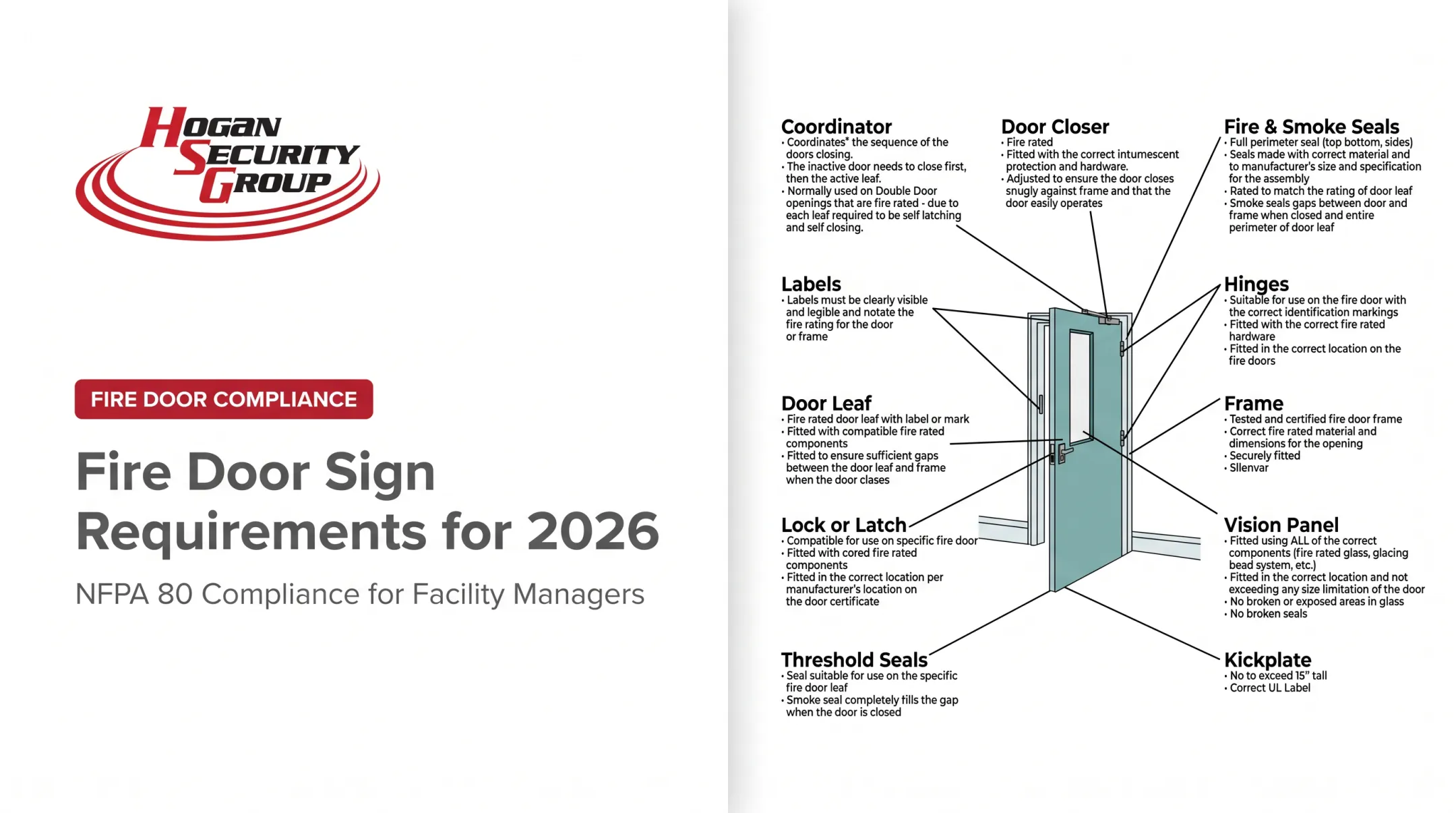
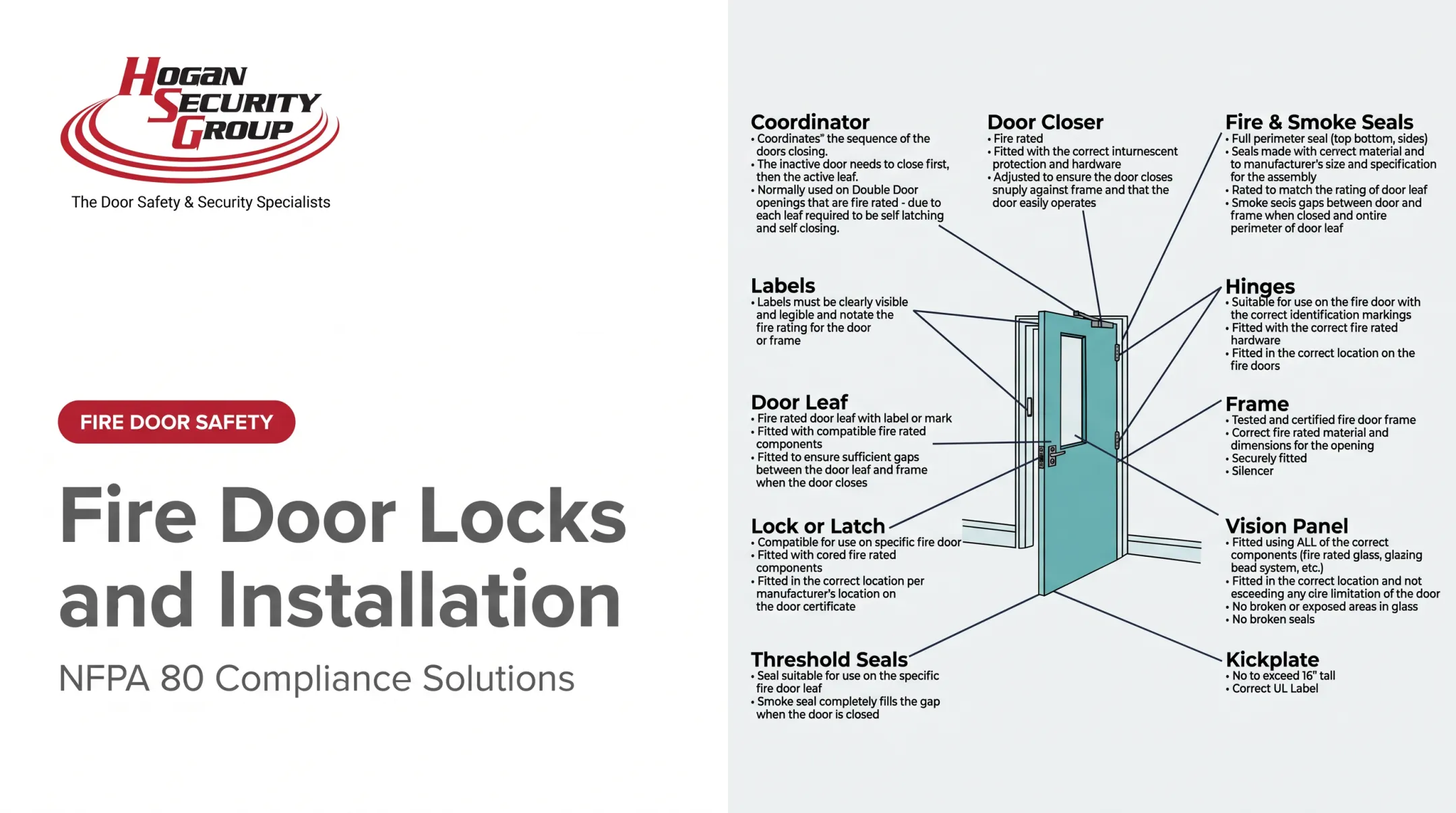
A coordinator doesn't operate in isolation. It has to work in concert with:
- Door closers (speed and force)
- Hinges and the frame (alignment)
- Astragals and seals (physical clearance)
- Latches and exit devices (final engagement)
Actual timing varies by door weight, closer adjustment, friction, and how square the opening is. A coordinator fixes sequencing. It won't fix a dragging door or a misaligned frame. If those issues exist, they need their own repair.
When Is a Coordinator Required on Double Fire Doors?
Not every pair of fire doors needs a coordinator. The deciding factor is whether the hardware configuration physically prevents the inactive leaf from closing and latching if the active leaf arrives first.
Allegion's code reference guide summarizes the NFPA80 requirement this way: coordination is required where a latch bolt or astragal can obstruct the inactive leaf's closing and latching. Where both leaves latch independently of each other, it's not required.
Configurations That Typically Need Review
- Pairs with an overlapping astragal
- Pairs with automatic flush bolts on the inactive leaf
- Vertical rod exit devices that depend on sequence
- Any hardware combination where one leaf's closing depends on the other arriving in a specific order
Edge Cases Worth a Closer Look
- Manual flush bolts: permitted in some configurations, but only where the AHJ accepts them and the space isn't one with life-safety concerns
- Removable mullions: don't assume this eliminates the coordinator requirement; the test is still whether each leaf latches independently
- Infrequently used inactive leaves: still subject to the same functional test, since the door still has to perform correctly when used
Adopted code editions vary by jurisdiction. NFPA currently publishes a 2025 edition of NFPA80 alongside earlier editions still in use in many places, and the specific requirements that apply depend on what your local authority has adopted.
Fire doors must close and latch properly to limit the spread of smoke and fire between compartments. That functional need is why the requirement exists, separate from claims about exact evacuation times or specific regulatory penalties.
Confirm the complete listed assembly, the manufacturer's instructions, and your AHJ's expectations before adding, omitting, or substituting a coordinator. Don't rely on a rule of thumb from a different building.

Types of Fire Door Coordinators and Related Hardware
Coordinators aren't one-size-fits-all. Selection depends on the opening's geometry, visibility preferences, and what other hardware is already on the door.
| Type | How it mounts | Typical fit |
|---|---|---|
| Bar/soffit-mounted | Along the frame head | Less visually prominent; common on standard commercial pairs |
| Gravity (exposed arm) | Visible arm across the head | Simple mechanism; arm exposure may be a factor in high-traffic or high-impact areas |
| Concealed/integrated | Built into the slide or frame channel | Used where headroom or architectural constraints limit surface hardware, subject to listing and manufacturer approval |
Related Hardware, Not Substitutes
It helps to know which component does what:
- Door selector: overlapping term in some product lines; verify listing regardless of name
- Door closer: controls speed and force, not sequence
- Automatic/manual flush bolts: secure the inactive leaf into the frame or floor
- Exit devices: provide egress hardware, sometimes tied to sequence
- Self-closing hinges: return a leaf to closed position without a separate closer unit
BHMA's exit device standard, ANSI/BHMA A156.3, covers coordinators and carry-open bars within its scope, including cycle and strength performance criteria. Manufacturer type designations and UL listings vary by product line, so confirm the specific certification for the hardware you're specifying rather than assuming it across brands.
Selection factors to weigh:
- Door material and fire rating
- Leaf size, weight, and traffic level
- Available mounting space and headroom
- Compatibility with existing closers and exit devices
- Exposure to impact from carts, gurneys, or equipment
How to Select, Install, and Maintain a Double Fire Door Coordinator
Before Installation
Document the opening thoroughly:
- Identify the door label and rating: check both the door and frame; a labeled frame requires a fire-rated door to match
- Photograph existing hardware: astragal, flush bolts, exit devices, current coordinator if any
- Confirm active and inactive leaf designation
- Check the latching arrangement for interference points
- Measure the opening and available head space for the new coordinator
Installation Considerations
Coordinators need accurate positioning, secure fasteners, and alignment with both leaves. They also need to be compatible with the frame, closers, exit devices, flush bolts, and seals already in place. Some coordinators don't work correctly with certain hinge types, such as swing-clear hinges. Manufacturer compatibility notes matter here.
Fire-door modifications should follow the manufacturer's instructions and the applicable listing. Don't drill, cut, or substitute components without confirming the assembly stays approved. An unapproved change can void the label entirely.
Functional Testing
After installation, cycle the door:
- Open both leaves fully
- Release them and observe which leaf closes first
- Confirm complete latching on both leaves
- Repeat several cycles to check consistency
- Test under normal traffic conditions, without forcing or slamming
Common Problems to Investigate
- Active leaf closes first despite the coordinator
- Inactive leaf stops short of full closure
- Coordinator arm sticks or binds
- Latch bolts fail to seat
- Coordinator shows impact damage from carts or equipment
Hogan Security Group's technicians are certified FDAI fire-door inspectors and work directly with manufacturers including Allegion, ASSA ABLOY, dormakaba, and Special-Lite on coordinator and hardware repairs.
Not every pair needs professional service to diagnose a sequencing issue. When testing reveals a fault that doesn't resolve with basic adjustment, a qualified inspector can determine whether the cause is the coordinator itself or something upstream, like frame alignment.

Signs a Double Fire Door Coordinator Needs Attention
Watch for these warning signs during routine walk-throughs:
- One leaf consistently closes before the other, every cycle
- The pair won't latch, even when both leaves appear shut
- A visible gap remains at the meeting stile
- The coordinator arm or bar is loose, bent, or visibly damaged
- Staff have started manually pushing or holding doors closed
What Usually Causes It
Facility conditions that contribute to coordinator failure include:
- Hinge or frame misalignment
- Worn or improperly adjusted closers
- Damaged astragals
- Floor settlement changing the door's swing
- Paint buildup or debris adding friction
- Hardware swapped in without checking listing compatibility
Document the opening and arrange a qualified inspection. Repeated adjustment without diagnosis masks the real problem instead of fixing it.
Annual fire-door inspection programs catch these issues early. Hogan Security Group's field data from 2025 found that more than 65% of fire doors fail their annual inspection, often for sequencing and latching issues that aren't obvious from a quick visual check.
NFPA80 requires fire-rated openings to be inspected and tested at least once a year, including doors that stay closed and see little use, with signed written records kept for the AHJ's review. Schools, healthcare facilities, hospitals, offices, warehouses, and multi-tenant buildings all benefit from putting double fire doors on a standing preventive-maintenance schedule rather than waiting for a failed inspection to surface the problem.
Frequently Asked Questions
What is the role of a fire door coordinator?
It controls the closing sequence of a pair of fire doors, ensuring the inactive leaf closes before the active leaf when hardware like an astragal or projecting latch requires that order. Without it, the pair may not latch correctly.
Do I need a fire door coordinator if my doors have closers?
Yes, possibly — closers and coordinators do different jobs. Closers provide closing force and speed, while a coordinator manages sequence; check the astragal, latching hardware, and your AHJ's expectations to confirm.
Can anyone install a fire door?
Fire-door work should be handled by a qualified installer familiar with the listed assembly, manufacturer instructions, and local inspection requirements. Improper installation can void the fire rating entirely.
What are the different types of door hardware?
Coordinators, closers, hinges, locks and latches, flush bolts, exit devices, astragals, and seals each play a distinct role in a double fire-door assembly. Getting the combination right matters more than any single component.
How does a double fire door coordinator work?
It holds the active leaf back until the inactive leaf closes and trips the release mechanism, then allows the active leaf to close and latch. The exact trigger mechanism varies by coordinator type.
When is a coordinator required on a pair of fire doors?
It depends on whether an astragal or projecting latch hardware would prevent the inactive leaf from closing in the wrong order. Always confirm against the adopted code edition, the manufacturer's listing, and your AHJ's interpretation.