
That's also why quoting is messy. U.S. pricing swings with the fire rating, materials, hardware, opening condition, labor, building type, and whether you're doing one opening or two hundred. Hogan Security Group's 2025 field data shows 65%+ of fire doors fail annual inspection, and many of those failures trace back to hardware, clearances, or frames rather than the door itself.
This article covers what the 2026 evidence does and doesn't support on price, what a quote should include, the factors that move the total, repair versus replacement, and how to build a realistic budget.
Key Takeaways
- No verified national 2026 installed range exists, so treat any single figure with suspicion.
- Rating, frame condition, listed hardware, and access often outweigh slab price.
- Standard replacements in sound frames cost least; new frames, glazing, and custom sizes cost most.
- Pay more only for the correct listed assembly and documented compliance.
How Much Does Fire Door Installation Cost in 2026? (Pricing Overview)
An authoritative 2025-26 U.S. installed or labor-only range for slab replacements, complete assemblies, or complex openings is hard to pin down. Any article promising a neat national average is guessing.
"Fire door installation" can mean labor only, a slab swap, or a full door, frame, hardware, and compliance project. Misreading the scope leads to underbudgeting, wrong ratings, missing hardware, surprise frame repairs, and extra inspection costs.
What Published Pricing Shows
The tiers below are defined by scope. Dollar figures are limited to amounts backed by a dated source.
| Tier | What it covers | Published pricing |
|---|---|---|
| Basic replacement | Rated door in a sound, compatible frame | No published installed range; get a written quote |
| Standard complete assembly | Door, frame, rated hardware, removal, installation, adjustment, documentation | No published installed range |
| Complex or custom | Pairs, glazing, higher ratings, new frames, difficult access, multi-opening work | No published installed range |
Some anchors exist, but none is an installed price:
- A vendor lists metal fire doors from $350, pairs from $780, and doors with glass from $480. These are undated starting prices for the product only.
- Allegion's 2026 price book lists selected fire-rated closers at $272-$965, a fire-rated passage lock at $78, and fire exit devices at $432-$2,975. These are component list prices.

Costs Readers Shouldn't Confuse
- A slab, a complete labeled assembly, and labor alone are three different numbers.
- Campus, warehouse, hospital, and school projects often use per-opening, phased, or contract pricing that doesn't compare with a single-door quote.
- Local labor, building access, prevailing wage, and the authority having jurisdiction (AHJ) can make a site quote differ sharply from any benchmark.
On covered federal projects, Department of Labor rules require Davis-Bacon prevailing wages, which depend on local wage determinations. No universal labor premium exists.
Key Factors That Affect Fire Door Installation Cost and Total Ownership
The final price depends on technical requirements, opening condition, site conditions, and the ongoing cost of keeping the assembly compliant.
Fire Rating, Door Type, and Materials
Ratings come from the opening, not from a simple wall-to-door formula. The 2024 IBC table includes 20-, 45-, 60-, 90-, and 180-minute door ratings. A 2-hour shaft enclosure, for example, can use a 90-minute door. Confirm against the adopted code and your AHJ.
Common options include hollow metal, rated solid-core wood, and glazed assemblies. Appearance, impact resistance, visibility, and weight all affect price. There is no standard cost ranking among these materials, so price each option against your specs. Rated glazing over 100 square inches is restricted by type, so it needs a listed assembly.
FD30 is a UK designation for 30-minute resistance. It isn't a U.S. rating label or an automatic equivalent. Confirm the listed assembly and code requirement.
Complete Assembly and Listed Hardware
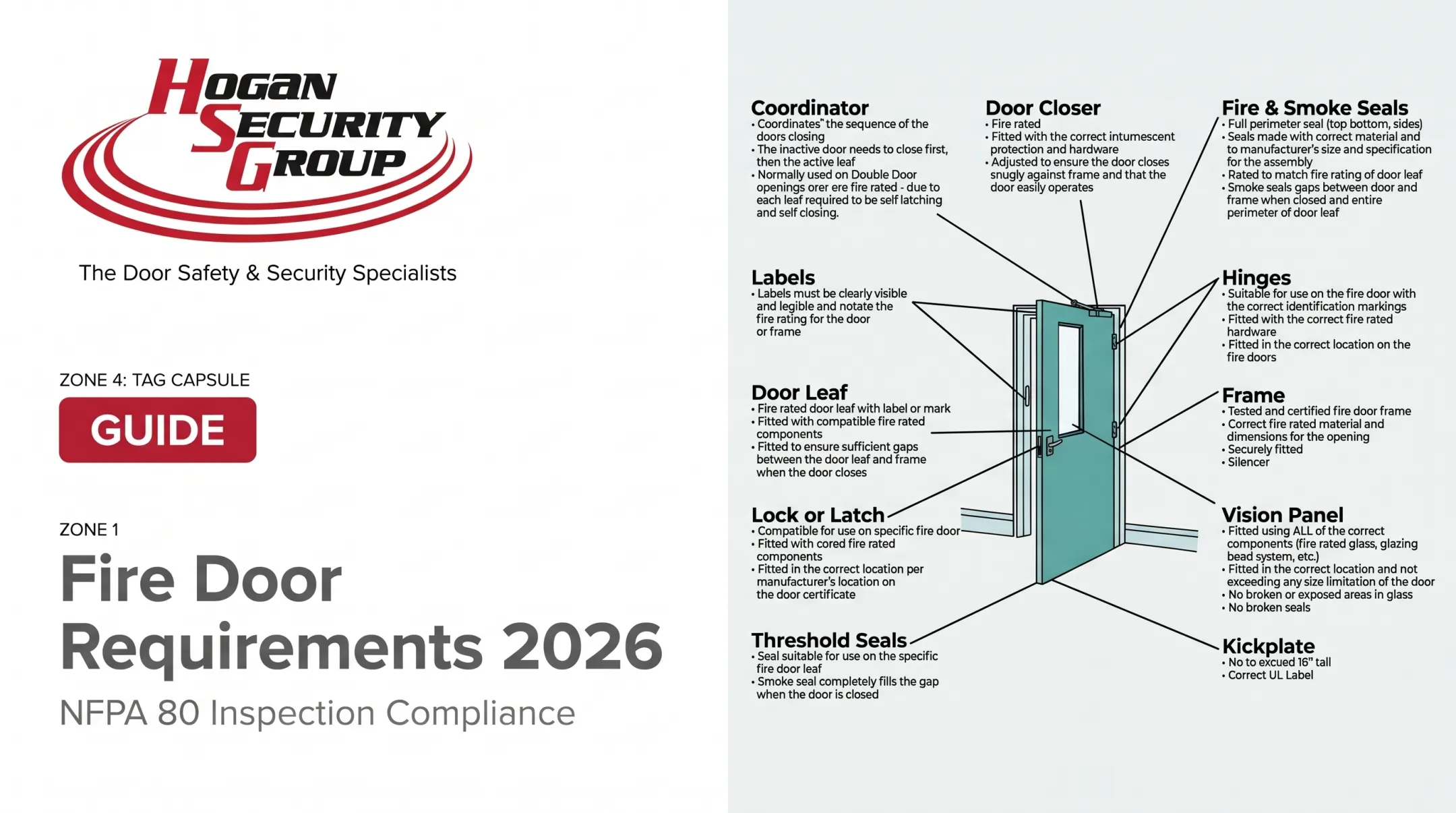
The door works as a system: slab, frame, hinges, closer, latch, seals, and glazing must be compatible and listed. Likely add-ons include:
- Closers
- Fire-rated locks and exit devices
- Coordinators and astragals on pairs
- Vision panels
- Accessibility-related hardware
Fire doors can be exempt from the 5 lbf opening-force limit, but hardware must still allow one-hand operation.
Opening Condition and Site Preparation
A sound, compliant frame cuts scope. Damaged, corroded, warped, or non-rated frames may need repair, reinforcement, or full replacement. Other variables:
- Removal and disposal
- Masonry or drywall repair
- Threshold work and alignment
- Asbestos procedures in older buildings, which require trained professionals under EPA and OSHA guidance
Labor, Access, and Complexity
Labor cost rises with:
- Door weight and double leaves
- Stairwells and occupied buildings
- Security coordination and inspector scheduling
Doing several compatible openings in one mobilization can help pricing. Campus or portfolio work adds planning overhead.
Permits, Documentation, and Compliance
Check which editions of NFPA 80, the IBC, the IFC, and accessibility rules your jurisdiction has adopted. NFPA 80 is currently the 2025 edition, but adoption varies. Labels, installation records, inspection findings, and closeout documents may be bundled or billed separately.
Operating and Lifecycle Costs
NFPA 80 requires inspection and testing after installation and at least annually. Budget for adjustments, hardware replacement, seals, and eventual replacement. Heavy-use openings in schools, hospitals, plants, and warehouses benefit from a maintenance plan, since deferred repairs create downtime and rework.

Cost Breakdown of a Fire Door Installation Quote
The lowest upfront quote isn't the lowest total cost if it omits compatible hardware, frame prep, documentation, or maintenance.
Door, Frame, and Assembly Components
One-time material costs include:
- Slab or labeled assembly, frame, and glazing
- Seals, hinges, closer, latch, and lock
- Exit device, threshold, and other specified hardware
Installation, Removal, and Site Preparation
One-time labor covers:
- Measuring, removal, disposal, and opening prep
- Frame setting, hanging, and hardware fitting
- Adjustment, testing, and cleanup
Permits, Inspection, and Documentation
Depending on the project, costs may include permits, inspections, engineering, certification, labeling, and closeout records. Confirm with the AHJ or contractor which apply.
Recurring Maintenance and Repairs
Ongoing work keeps the door closing and latching:
- Inspection and adjustment
- Closer, hinge, or seal replacement
- Damage repair
Hogan Security Group lists a minimum 4-hour call-out fee for emergency calls.
Periodic Upgrades or Replacement
Occupancy changes, code interpretation shifts, security needs, renovations, or repeated damage can justify replacement over another repair.
Low-Cost vs High-Cost Fire Door Installation: What's the Difference?
Judge options on suitability and lifecycle value, not invoice size.
Lower-Cost and Higher-Cost Options
- Lower cost: standard sizes, common ratings, sound frames, basic listed hardware, easy access.
- Higher cost: custom openings, higher ratings, glazing, reinforced frames, specialized hardware, difficult access, heavy documentation.
A pricier door isn't automatically safer, and a basic one isn't automatically noncompliant. Compare durability, adjustment needs, maintenance exposure, and warranty.
What Most People Miss
- Focusing on slab price while ignoring frame and hardware.
- Assuming a standard door can be modified freely. Field modifications beyond NFPA 80 allowances go back to the manufacturer or listing lab, per the Steel Door Institute.
- Accepting a quote that doesn't state the rating and listed assembly.
- Hiring the cheapest installer without fire-door experience, which risks failed inspections, rework, and voided warranties.
Cost also hinges on repair versus replacement. Repair suits limited, correctable defects. Severe damage, incompatible parts, missing labels, repeated failures, or an unsuitable opening usually mean full replacement is the better spend.
How to Estimate the Right Fire Door Budget
Start with required performance and scope, not a generic online price.
Define the Opening Inventory
Record for each opening: count, dimensions, single or pair, location, current rating, frame type, hardware, usage level, and whether it's replacement, repair, or new. Separate life-safety corrections from optional security or cosmetic upgrades.
Confirm Conditions With a Site Survey
A qualified survey checks labels, clearances, frame condition, hinges, closers, latching, seals, glazing, and damage before you accept firm pricing. Share drawings, prior inspection reports, access rules, and any fire marshal findings.
Compare Quotes Like for Like
Each quote should state:
- Rating and door and frame specifications
- Hardware
- Removal, disposal, and prep
- Labor, permits, and documentation
- Warranty, exclusions, schedule, and tax or prevailing-wage assumptions

If one quote omits what another includes, ask why.
Budget for Lifecycle and Contingency
Plan for inspections, repairs, replacement hardware, and hidden frame or wall conditions. Set a contingency percentage with your contractor after the survey based on the conditions found. Phasing, bundling openings, planned shutdowns, and fixing failed doors first all help control spend.
Select a Qualified Specialist
Hogan Security Group provides fire-door inspection and door safety services. It has FDAI-qualified inspectors, is a licensed New Jersey locksmith and public works contractor, works with major manufacturers, and has experience with more than 65,000 doors.
Facilities in New Jersey, New York, Pennsylvania, and Connecticut can request a site-specific assessment at 609-737-8100. Eligible New Jersey public-sector organizations should ask about applicable contract pricing.
Conclusion
Fire door installation cost in 2026 depends on the complete assembly, rating, opening condition, hardware, labor, compliance, and future maintenance, not the slab alone. No verified national installed price range covers every project, so a written, site-specific quote is the only reliable number.
Balance safety, listing requirements, durability, documentation, and lifecycle value. Then get a detailed quote from a qualified fire door professional.
Frequently Asked Questions
How much does a fire door cost?
It depends on whether you need a slab, a complete assembly, or an installed replacement. See the cost drivers above, and get a written quote for current pricing.
What is the cost of installing an FD30 fire door and frame?
FD30 is a UK or European 30-minute designation. U.S. buyers should confirm the equivalent listed assembly, local requirement, frame, hardware, and site conditions before comparing prices.
How much should you pay someone to install a door?
Installation-only labor differs from a full fire door project. Door weight, frame work, hardware, access, location, and documentation all affect the quote.
How much is a 1 hour fire rated door?
A 60-minute assembly varies with material, size, frame, hardware, glazing, and installation complexity. Confirm current U.S. pricing through a written quote.
Is it cheaper to fix a door or replace it?
Repair often fits limited, correctable defects. Severe damage, missing labels, incompatible parts, repeated failure, or an unsuitable frame may require replacement, so inspect first.
What is a 2 hour fire rated door?
It's a door assembly tested for a specified duration under the applicable listing and code. The required rating depends on the wall, opening, occupancy, and AHJ requirements.